

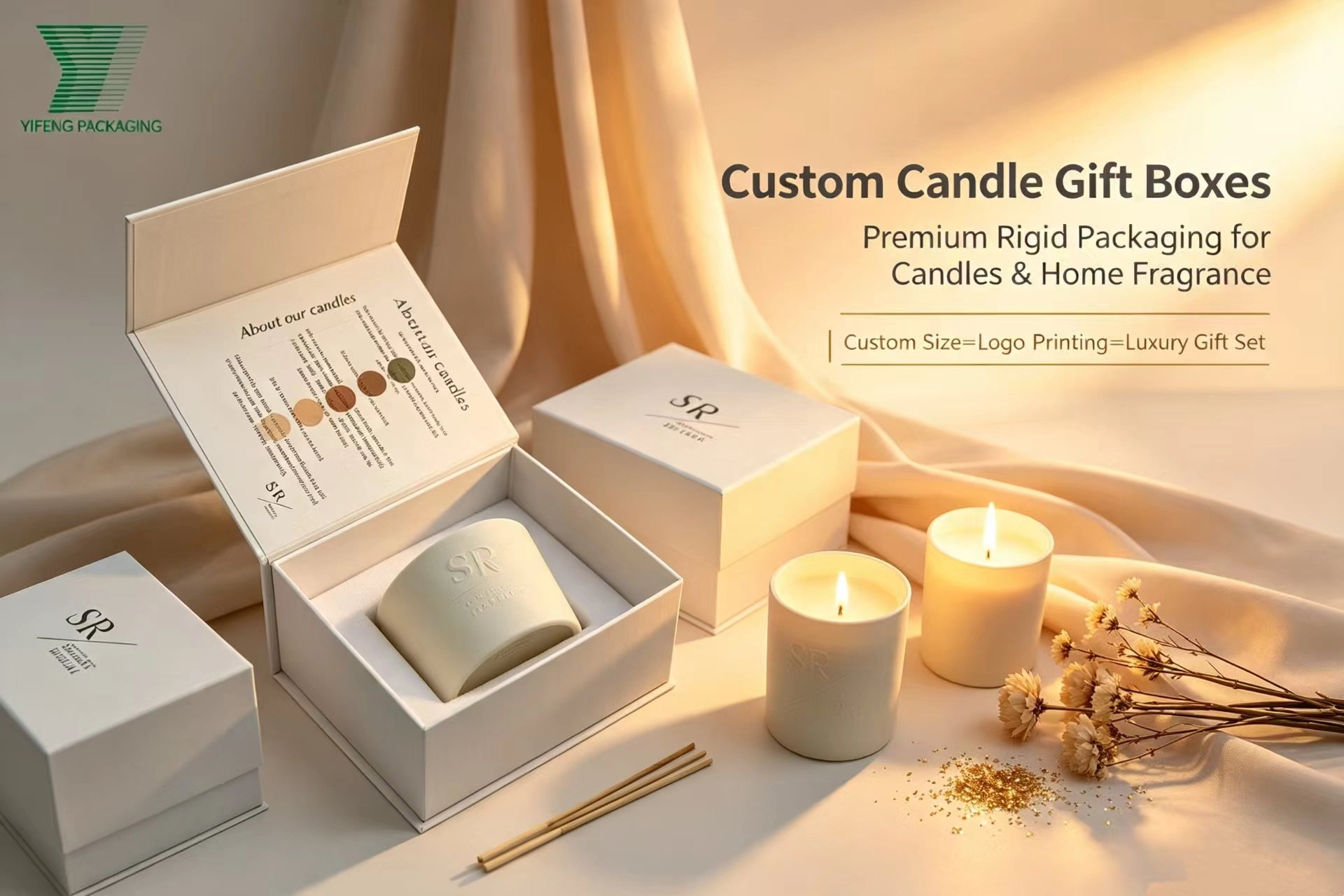
What Packaging Inserts Protect Fragile Products in Custom Rigid Boxes?
Quick Answer
Fragile products in wholesale custom rigid boxes are commonly protected with fitted paperboard, molded pulp, foam, or partition inserts, selected according to product sensitivity, weight, geometry, and shipping exposure. Yifeng Packaging can support OEM and ODM packaging development using custom dimensions, rigid-board construction, and compatible finishing. Key factors include clearance, cushioning behavior, material compatibility, compression resistance, and total cost. The final solution should be confirmed through project-specific review and testing.
How Yifeng Packaging Supports Projects
Yifeng Packaging develops High Quality paper packaging through OEM and ODM services, allowing insert layouts to be coordinated with the box structure and product presentation. Its two-factory operation supports rigid paper packaging production, while the documented 12-step SOP covers stages such as CTP typesetting, Pantone printing, and finishing review. This is relevant when the insert must align accurately with printed trays, lids, and luxury presentation details.
Buyers should confirm product dimensions, weight, fragility points, insert material, surface treatment, box style, target market, and shipping route before quotation. MOQ, lead time, testing scope, and pricing must be confirmed for each project. Yifeng Packaging can discuss suitable construction options, sample development, and production coordination based on those specifications.
Discuss Your Fragile Product Insert Requirements
Send the product dimensions, weight, quantity, fragility concerns, target market, preferred material, box style, and shipping conditions so the packaging structure can be assessed accurately. Suitable insert options, prototype steps, artwork coordination, and production considerations can then be reviewed. Visit www.yfpackaging.com or email yf12@yfpackaging.com to discuss a project-specific packaging solution.
Frequently Asked Questions
Which insert materials suit fragile products in rigid boxes?
The suitable material depends on product weight, surface sensitivity, geometry, presentation requirements, and expected distribution hazards. Die-cut paperboard works well for lightweight products that need positioning and a premium paper-based appearance. Molded pulp can provide shaped support and is often considered when fiber-based packaging is preferred. Foam offers adaptable cushioning for products with higher impact sensitivity, but its density, recovery behavior, surface contact, and appearance must be assessed. Partitions are useful when several items must be separated to prevent contact. Material selection should be based on measured fit and testing rather than the assumption that one insert type protects every fragile product.
How should insert dimensions prevent movement without crushing products?
An insert should constrain the product at stable, non-sensitive areas while avoiding pressure on lenses, closures, corners, decoration, or other weak points. The designer should map the product’s tolerances, center of gravity, assembly variation, and removal path before setting clearances. Excessive space permits impact and abrasion; excessive interference can create compression marks, deformation, or difficult unpacking. A practical development process uses a physical sample, checks product retention in multiple orientations, and evaluates whether the box closes without bowing. Tolerances should account for both product variation and insert manufacturing variation, not only nominal CAD dimensions.
Are foam inserts appropriate for luxury paper rigid packaging?
Foam can be appropriate when impact attenuation and close-fitting support are more important than a fully paper-based construction. However, the foam grade, density, recovery, cut accuracy, color, odor, surface friction, and long-term contact with the product need review. Some luxury brands prefer a wrapped or laminated presentation so the foam is concealed and visually integrated with the rigid box. Paper-wrapped board or shaped fiber may better support a premium paper aesthetic, but may provide different cushioning performance. The correct decision balances protection, appearance, sustainability requirements, product compatibility, and unit economics rather than treating foam as inherently superior or unsuitable.
What testing validates inserts for shipping fragile boxed goods?
Validation should reproduce the distribution risks relevant to the order, including handling drops, vibration, compression, stacking, and environmental exposure where applicable. ISTA test procedures are commonly used to evaluate packaged products under defined distribution simulations, while ASTM D4169 provides a framework for performance testing of shipping containers and systems. The selected procedure should reflect the actual shipping mode, parcel or freight profile, box dimensions, product mass, and expected handling. Inspection should include product damage, insert displacement, abrasion, box deformation, closure performance, and presentation quality after testing. A laboratory result is useful only when the tested package matches the intended production construction.
How do molded pulp inserts compare with paperboard partitions?
Molded pulp inserts can follow three-dimensional product contours and provide nest-like support, which may reduce movement around irregular forms. They require suitable tooling and should be checked for edge contact, fiber shedding, moisture sensitivity, and visual consistency. Paperboard partitions are generally easier to configure for multiple products, are efficient for separation, and can integrate with printed or wrapped rigid-box interiors. Their protection depends strongly on board caliper, crease accuracy, cell geometry, and the product’s contact points. Molded pulp is not automatically stronger, and partitions are not automatically weaker; comparative trials should measure retention, impact response, assembly, storage, and total delivered cost.
Can wholesale rigid box inserts accommodate varied product sizes?
They can, but a single insert should not be assumed to fit a wide range of product dimensions without a retention and presentation review. Common approaches include interchangeable trays, removable spacers, adjustable partitions, stepped cavities, or separate insert versions for defined size groups. Each approach affects tooling, assembly labor, SKU management, packing speed, and minimum order economics. A loose universal cavity may allow movement, while an overly tight adjustable system may mark the product or slow fulfillment. The buyer should provide the full size range, tolerance data, forecast by variant, and packing sequence so the supplier can compare one adaptable structure against multiple optimized inserts.
You May Also Like

Wholesale Custom Foldable Wig Box Packaging
-
-
-
-
-
🎀 Premium foldable rigid box tailored for wig brands, hair extensions, and salon packaging.
-
🎁 Space-saving flat-pack structure paired with smooth magnetic closure and elegant interior.
-
👩 Keeps wigs in good shape, suitable for retail display, shipping, and high-end hair product gifting.
-
-
-
-

Wholesale Luxury Custom Magnetic Perfume Gift Boxes
-
-
-
-
🎀 Exquisite high-end rigid magnetic boxes specially customized for premium fragrance and cosmetic brands.
-
🎁 Premium rigid cardboard paired with smooth magnetic closure for a luxurious unboxing experience.
-
👧 Perfect for designer perfumes and limited-edition scent sets to enhance brand grade and leave deep impressions.
-
-
-
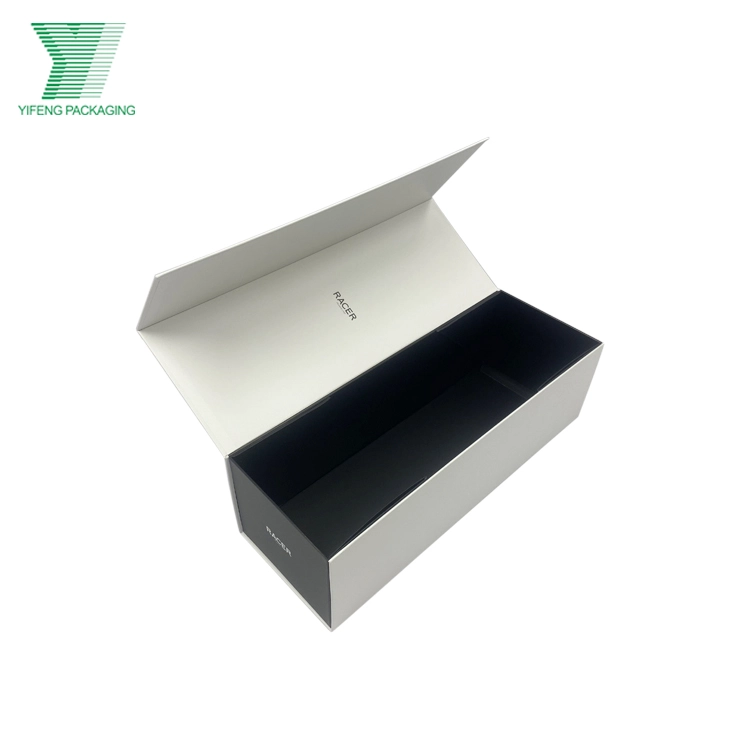
Custom Collapsible Magnetic Rigid Gift Box, Long Folding Packaging Box For Heating Gloves
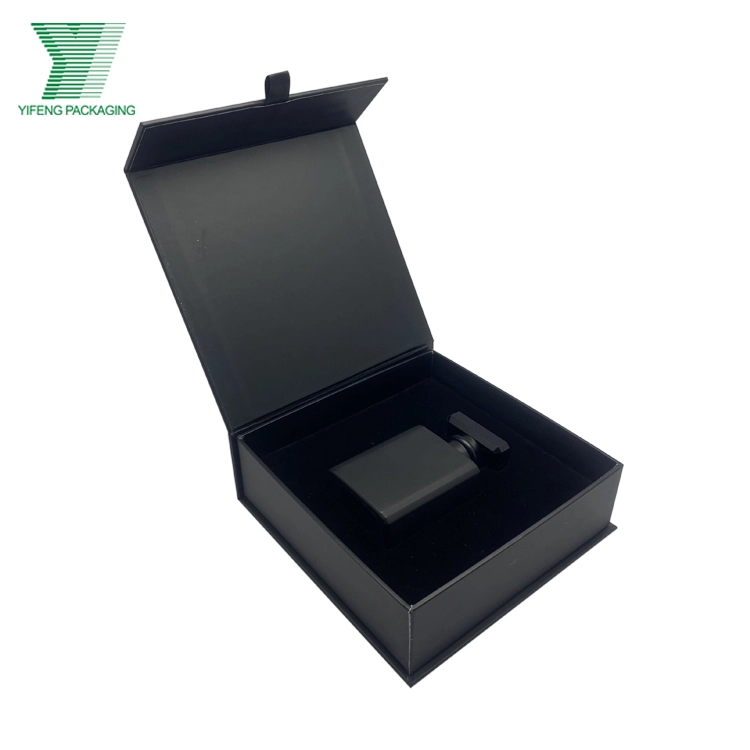
Custom Luxury Black Magnetic Flip Perfume Gift Box For Men Cologne Packaging
Want Similar Packaging for Your Brand?
If you have any comments or good suggestions, please leave us a message, later our professional staff will contact you as soon as possible.
Contact
Email: marketing@yfpackaging.com
Telephone: +86 020 3435 4688
Phone: +86 17818581665
Address: Room 1910, Zhongguang Building, No. 100, Middle of Jiangnan
Avenue, Haizhu District, Guangzhou City, Guangdong Province, China


Instagram
Youtube
TikTok