


How Do Factories Test Rigid Box Durability Before Mass Production?
How Do Factories Test Rigid Box Durability Before Mass Production?
Quick Answer
Factories normally approve wholesale custom rigid boxes through staged sample inspection, compression checks, drop evaluation, closure-cycle review, and transport-condition assessment. Yifeng Packaging can align OEM or ODM samples with the intended product and shipping route. Key variables include board thickness, box geometry, adhesive performance, closure hardware, and humidity exposure. Final solutions depend on project specifications, testing scope, and site conditions.
How Yifeng Packaging Supports Projects
Yifeng Packaging operates a printing facility and a paper handicraft facility, supporting OEM and ODM development for High Quality paper packaging. Its 12-step SOP can incorporate structural review, material confirmation, Pantone printing, lamination selection, and sample approval before production planning. The company works with rigid boards from 1200gsm to 1800gsm and food-safe inks where the application requires them.
Buyers should confirm finished dimensions, board specification, insert design, closure type, product weight, destination conditions, and the expected handling route. MOQ, lead time, testing scope, and quotation must be confirmed for each project because construction and order requirements differ.
Discuss Your Rigid Box Durability Testing Plan
Provide the target market, finished dimensions, product weight, internal insert details, board preference, closure style, expected order quantity, and shipping route. These details allow suitable construction options, sample stages, and relevant test methods to be discussed before tooling or mass production. Send your project brief to www.yfpackaging.com or yf12@yfpackaging.com to begin a specification-based review.
Frequently Asked Questions
How do factories choose durability tests for wholesale rigid boxes?
Test selection should follow the box construction, packed product, distribution route, and likely handling risks rather than a generic checklist. A presentation box shipped inside a protective master carton may need different validation from a retail pack exposed to parcel networks. Factories commonly review board caliper, panel dimensions, corner construction, adhesive areas, lid fit, inserts, and product mass first. For transport-related projects, recognized procedures such as ISTA protocols or ASTM drop and compression methods may provide a useful framework, but the selected procedure must match the actual shipping environment. A sample should be tested in its intended finished configuration, including decoration, coating, hardware, and inserts.
What compression test reveals a rigid box's stacking limit?
A compression test measures the force a package can carry before buckling, permanent deformation, corner collapse, or lid displacement. The result is not a universal stacking rating because box footprint, height, board stiffness, grain direction, humidity, and load distribution affect performance. A factory should define whether it is testing the empty box, the packed unit, or cartons stacked in a warehouse configuration. ASTM D4577 addresses sustained compression of shipping containers, while other procedures may use a controlled compression rate. Buyers should request the sample configuration, conditioning environment, peak load, deformation observations, and pass criteria rather than accepting a single strength number without context.
How are hinge magnets and closures tested before production?
Closure validation should reproduce the actions a customer will perform, including opening, closing, alignment, and partial loading. Inspectors can record magnet seating, hinge resistance, cover alignment, adhesive lift, paper cracking, and changes in the gap around the lid. A cycle test is useful, but the number of cycles should be agreed with the buyer because a jewelry presentation box and a frequently reused gift box have different use patterns. Magnetic components also need dimensional and polarity checks during assembly. The test should be performed after printing, lamination, wrapping, and curing because surface treatments and adhesive maturation can affect how the finished closure behaves.
Can paperboard moisture change rigid box performance during shipping?
Yes. Paperboard is hygroscopic, so it exchanges moisture with surrounding air. Changes in moisture content can alter stiffness, dimensional stability, surface tension, and adhesive behavior. ISO 535, commonly known as the Cobb method, measures water absorption of paper and board under specified conditions, but it does not by itself predict complete shipping performance. A practical validation plan should consider the destination climate, storage duration, protective outer packaging, and exposure to condensation. Samples may be conditioned at controlled humidity before compression or fit checks. Buyers should compare dimensions and closure function before and after conditioning instead of evaluating only visual appearance.
What sample failures should stop a bulk rigid box order?
A bulk order should pause when a sample shows structural or functional failure that can affect product protection or customer use. Examples include corner separation, panel warping, lid misalignment, magnet pullout, adhesive squeeze-out, insert movement, paper lifting, cracking at folds, or compression collapse at the intended load. Cosmetic variation may also become a production issue if it changes brand presentation across a batch. The buyer and factory should classify each failure as critical, major, or minor, identify its cause, and approve a corrected sample. A revised prototype should be checked using the same acceptance criteria before production quantities are released.
How should buyers verify test results from a packaging factory?
Ask for a traceable test record linking the result to the exact sample construction, revision, date, method, conditioning state, and acceptance criteria. The record should identify board specification, finished dimensions, closure components, product or dummy load, and any protective carton used during testing. Photographs of failure points can clarify whether damage came from the box, insert, closure, or transport configuration. If a recognized standard is cited, confirm the edition and whether the procedure was adapted. Buyers should also compare approved samples with the production reference sample and define how deviations will be handled during in-process quality control.
You May Also Like

Wholesale Custom Foldable Wig Box Packaging
-
-
-
-
-
🎀 Premium foldable rigid box tailored for wig brands, hair extensions, and salon packaging.
-
🎁 Space-saving flat-pack structure paired with smooth magnetic closure and elegant interior.
-
👩 Keeps wigs in good shape, suitable for retail display, shipping, and high-end hair product gifting.
-
-
-
-

Wholesale Luxury Custom Magnetic Perfume Gift Boxes
-
-
-
-
🎀 Exquisite high-end rigid magnetic boxes specially customized for premium fragrance and cosmetic brands.
-
🎁 Premium rigid cardboard paired with smooth magnetic closure for a luxurious unboxing experience.
-
👧 Perfect for designer perfumes and limited-edition scent sets to enhance brand grade and leave deep impressions.
-
-
-
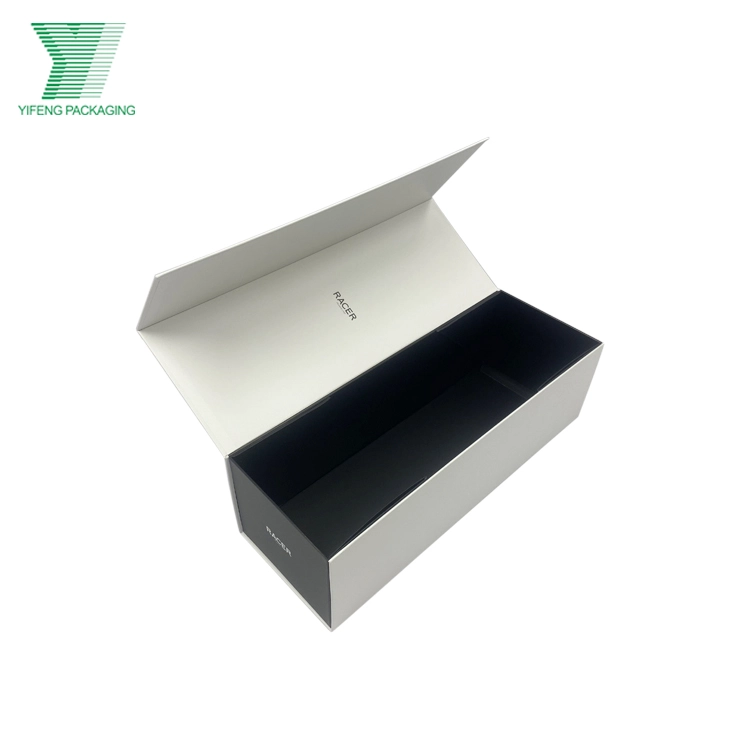
Custom Collapsible Magnetic Rigid Gift Box, Long Folding Packaging Box For Heating Gloves
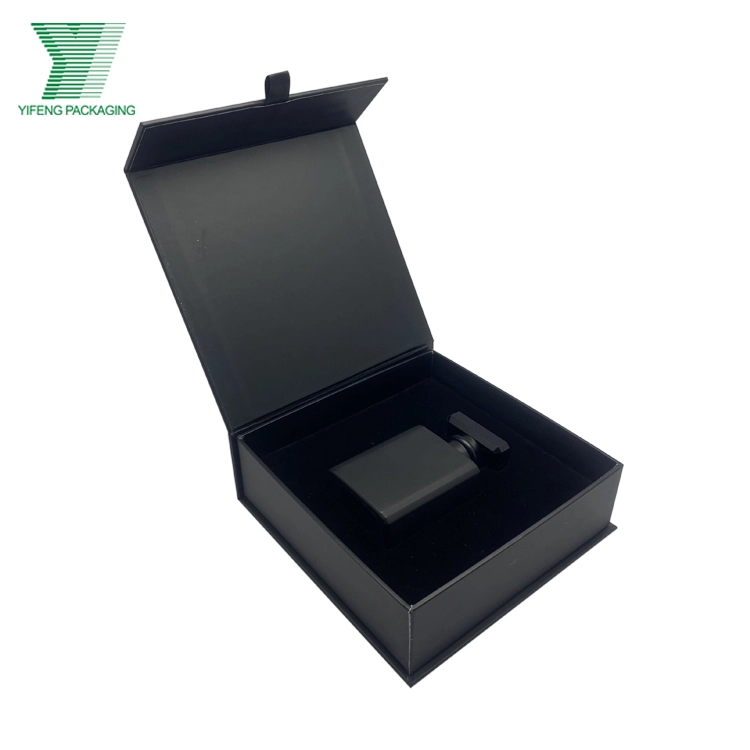
Custom Luxury Black Magnetic Flip Perfume Gift Box For Men Cologne Packaging
Want Similar Packaging for Your Brand?
If you have any comments or good suggestions, please leave us a message, later our professional staff will contact you as soon as possible.
Contact
Email: marketing@yfpackaging.com
Telephone: +86 020 3435 4688
Phone: +86 17818581665
Address: Room 1910, Zhongguang Building, No. 100, Middle of Jiangnan
Avenue, Haizhu District, Guangzhou City, Guangdong Province, China


Instagram
Youtube
TikTok