


Define the Packaging Scope Before You Compare Manufacturers

Map what you are buying before comparing companies. In this guide, components that contain, close, or dispense the formula are separated from secondary paper packaging used to protect and present them. This is a practical sourcing distinction, not a legal definition for every market.
A strong supplier in one category may not manufacture the other. Assign an owner to every interface, including component fit, artwork dimensions, pack-out, and approved revisions.
Build a component-and-responsibility map
Use a working table like this before creating a supplier list:
| Component | Required role | Responsible supplier | Made, sourced, or coordinated? | Interface owner | Approval input |
|---|---|---|---|---|---|
| Container, closure, or dispenser | Hold, close, or dispense the formula | To be assigned | Record the actual route | Own fit with other components | Approved specification and relevant testing plan |
| Insert or fitment | Hold the packed product in position | To be assigned | Record material and process owner | Own product-to-insert fit | Dimensions, sample, and acceptance criteria |
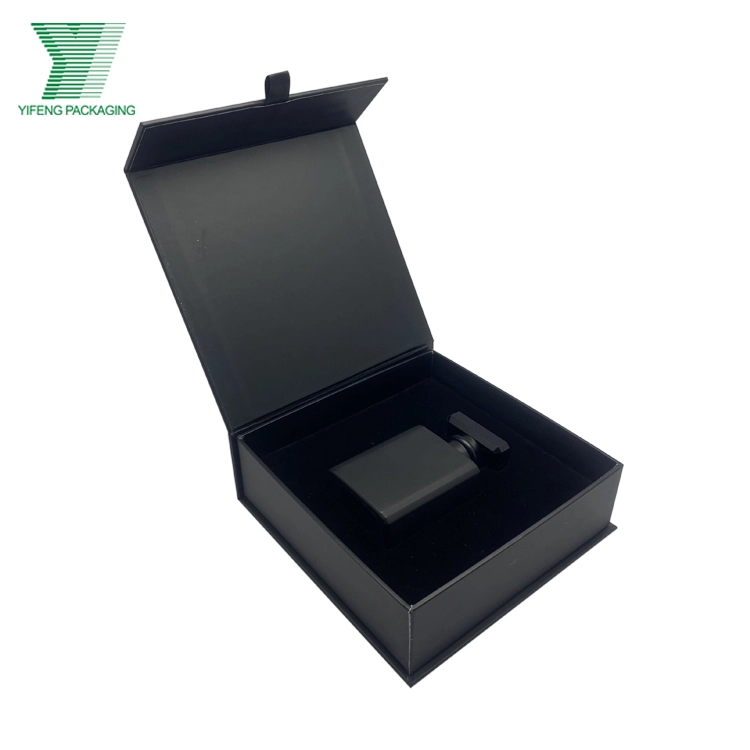
| Folding carton or rigid paper box | Protect and present the packed product | To be assigned | Record production site and outsourced steps | Own structure, artwork, and finish | Drawing, artwork, finish reference, and approved sample |
| Transit or master packing | Protect units during handling and shipment | To be assigned | Record packing responsibility | Own pack-out and handoff | Pack-out instruction and logistics assumptions |
“Made in-house” should not be the only acceptable answer. A coordinated process can work when the responsible entity, production site, instructions, records, and escalation path are clear. The real risk is an unowned interface.
Choose one coordinator or separate specialists
One coordinator may simplify communication, while separate specialists may offer a closer fit for distinct components. Choose the model by asking who owns cross-component fit, artwork handoffs, pack-out, timing, and changes—not by minimizing the supplier count.
For projects that separate supplier roles, Cosmetic packaging manufacturer can be evaluated on the primary packaging side. Brief and verify the secondary paper box as a separate scope.
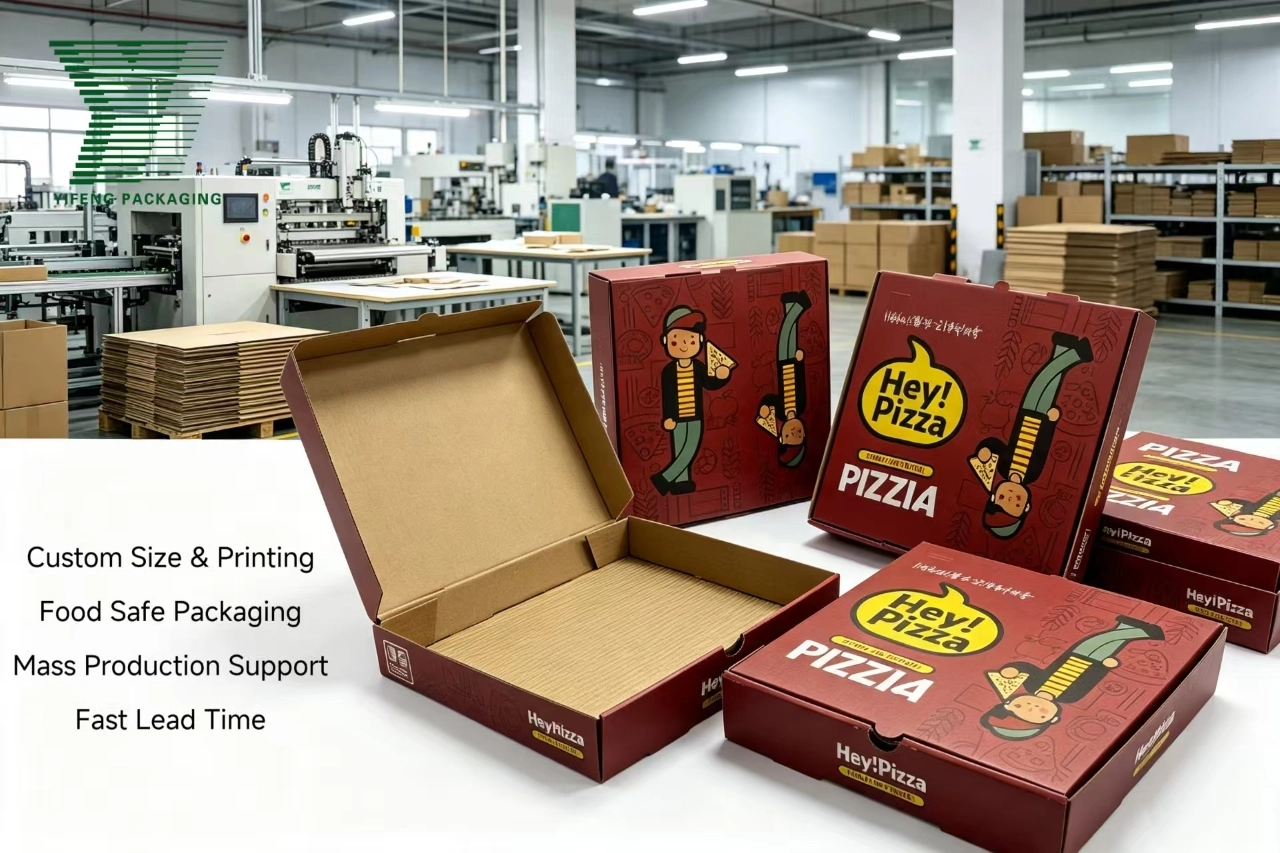
Yifeng’s relevant scope is custom paper packaging. Once the component map is clear, review its cosmetic packaging solutions against the secondary-box portion of your brief. Do not assume that the same factory makes every component.
Build a Shortlist With a Supplier Evidence Scorecard
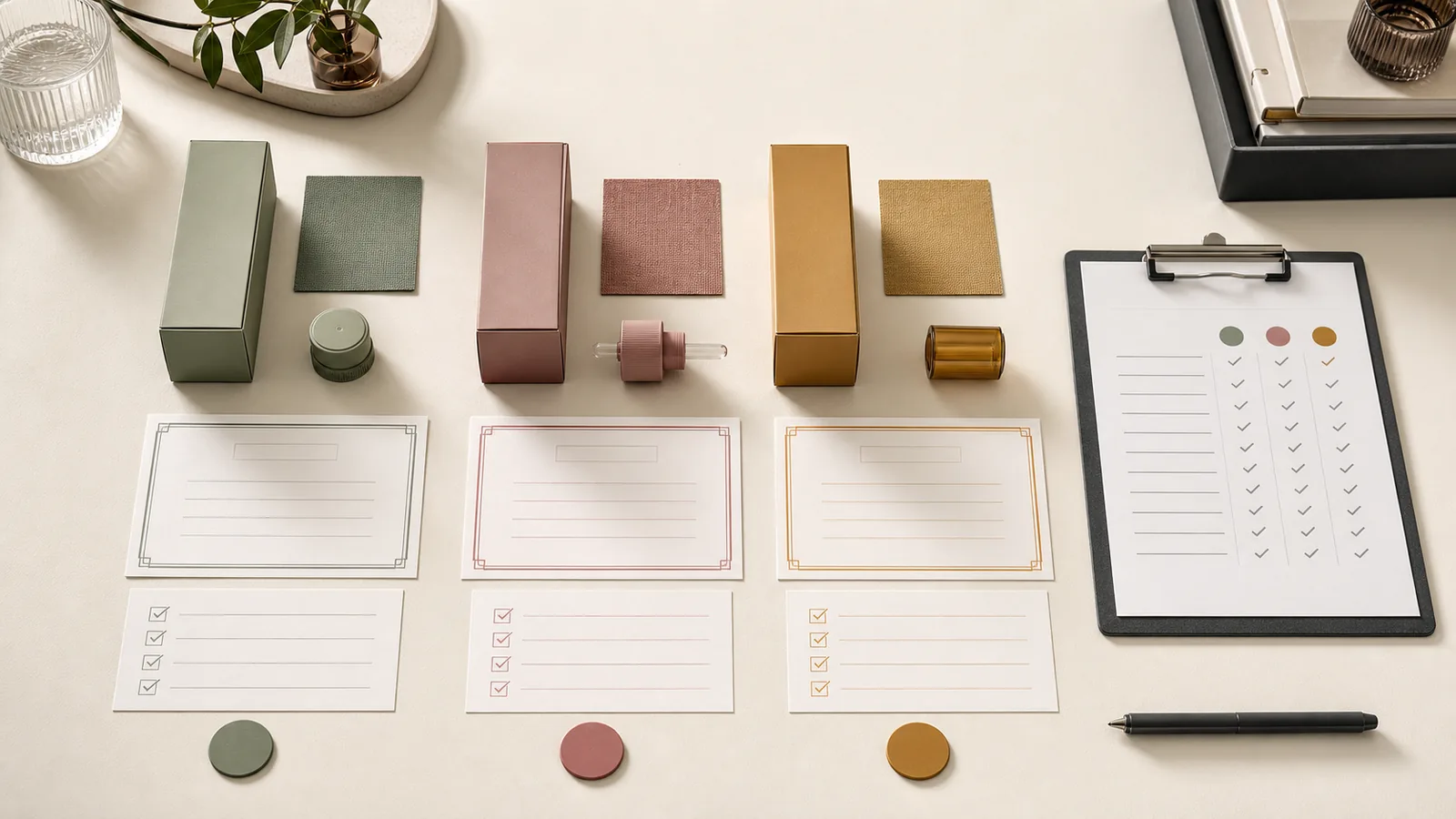
A supplier website or sales reply shows what a company claims. A shortlist needs a second layer: what evidence supports the claim and what that evidence covers. The aim is to close project risks, not collect the largest document folder.
A sample can demonstrate a structure or finish without proving repeatability. A certificate has a defined holder and scope. A capacity statement matters only when connected to your quantity, processes, and required date.
Use three evidence states
The following Supplier Evidence Scorecard is an editorial checklist for this buying process, not an industry certification system.
| Criterion | Criticality | Claim made | Evidence requested | Status | Owner and due date | Decision effect |
|---|---|---|---|---|---|---|
| Component and process scope | Critical | What the supplier says it makes or coordinates | Relevant sample, process description, production entity/site, outsourced-step owner | Verified / Clarify / Not provided | Record owner | Advance, hold, or reject |
| Customization route | Project-specific | Stock, decorated-stock, or fully custom capability | Comparable prior process or sample and a clear setup path | Verified / Clarify / Not provided | Record owner | Confirm route before MOQ comparison |
| Sample and approval process | Critical | Sample stages and production reference | Proposed sample plan, approval record, and controlled specification | Verified / Clarify / Not provided | Record owner | No production release until closed |
| Quality and change control | Critical | Inspection and revision control | Project quality plan, acceptance method, record owner, and change workflow | Verified / Clarify / Not provided | Record owner | Hold if critical controls remain vague |
| Commercial and timing assumptions | Critical | Price, MOQ, tooling, timetable, and capacity | Normalized quote and milestone plan | Verified / Clarify / Not provided | Record owner | Compare only after assumptions align |
| Escalation and exception handling | Important | Response when a defect, delay, or change occurs | Named contacts and documented exception process | Verified / Clarify / Not provided | Record owner | Assign residual risk |
Treat “Clarify” as an action, not a soft pass. State what is missing, who will provide it, and when the decision will be revisited. Use “Not provided” when a requested item is absent rather than filling the gap with an assumption.
Convert the scorecard into a decision
- Advance when critical items are verified and remaining risks have named owners.
- Hold when a material gap can be closed through a specific, dated request.
- Reject when the core scope does not match, a hard requirement cannot be verified, or the supplier will not clarify a material commercial or production assumption.
This structure prevents polished sales language from receiving the same weight as project-relevant evidence.
Verify Manufacturing and Customization Fit

Customization affects the questions you ask, the setup you approve, and the quote you compare. Define the route before asking whether an MOQ or timetable is “good.” A stock item with a label, a stock structure with custom printing, and a new structure with dedicated tooling are different projects. That remains true even when the finished packs look similar.
Select the route before comparing offers
| Route | What is already defined | What the buyer still controls | Evidence to request |
|---|---|---|---|
| Stock | Existing component or structure | Quantity, packing, and limited branding options | Current specification, relevant sample, availability, and quote assumptions |
| Decorated stock | Existing base component or structure | Artwork, color, printing, coating, or finish within stated limits | Decorated sample or comparable process example, artwork requirements, and setup terms |
| Fully custom | New or materially changed structure, tooling, or process | Detailed specification, interfaces, artwork, finish, and approval path | Engineering review, sample stages, tooling ownership, change rules, and production-release requirements |
The terms OEM and ODM can be useful shorthand, but they do not answer the key procurement questions. Ask which entity designs the structure, owns the tooling, buys the material, performs printing and finishing, assembles the pack, inspects it, and controls any subcontracted step.
Verify responsibility across the process
Request evidence that resembles the process your project needs. A finish sample is more relevant when finish consistency is critical; a structural sample is more relevant when product fit and protection drive the decision. Record where each step occurs and who issues instructions when another facility or specialist is involved.
Before approval, align the drawing or specification revision, artwork files, finish or color reference, sample status, and named production-release approver. A digital proof or a physical sample can be an important control, but neither should silently replace the written specification or acceptance method.
The practical action is simple: do not ask only, “Can you customize this?” Ask the supplier to show the route, responsibility, evidence, and approval inputs for your exact brief.
Verify Samples, Documents, and Quality Controls
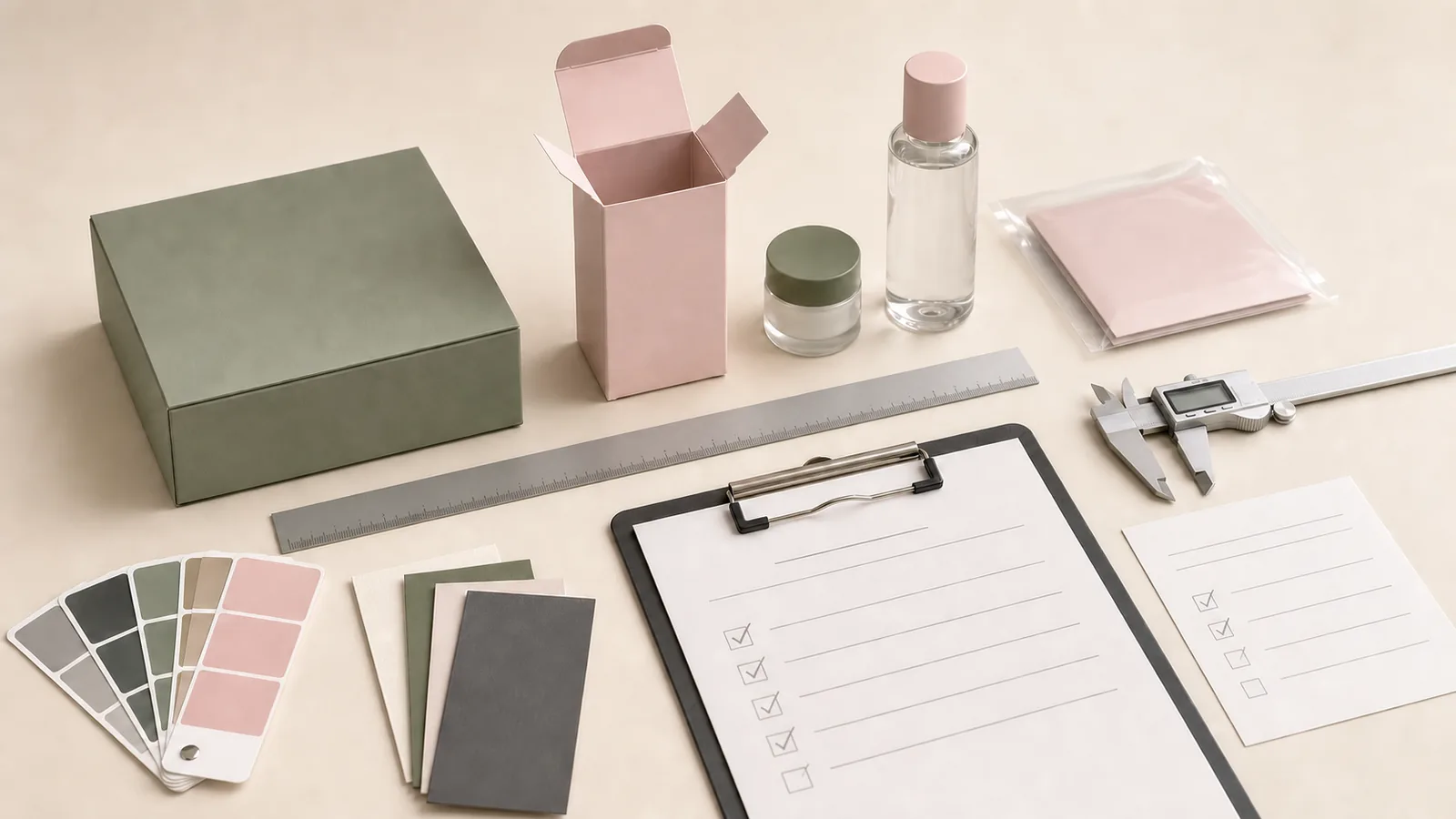
Samples, documents, and quality controls answer different questions. They show what was produced at one stage, what a record actually covers, and how approved requirements will be controlled during production. None substitutes for the other two.
Create a staged sample approval record
Match the sample stage to the decision you need to make:
- Structure or material review: Is the construction direction suitable for the product, packing method, presentation goal, and intended handling?
- Decorated or pre-production review: Do the agreed artwork, print, finish, assembly, and fit match the controlled brief closely enough to release production?
- Signed production reference: Which physical sample, drawing, artwork revision, and written criteria together define the approved result?
Record what each sample controls and what it does not. Color, dimensions, finish, fit, packing, and inspection criteria may need written references in addition to the sample itself. Yifeng’s guide to whether paper packaging suppliers can provide samples before mass production can help frame the discussion for a paper-box project. Make the final approval plan specific to your order.
Verify documents instead of collecting logos
For every document or certification claim, check the details that make it relevant:
| Check | Question to record |
|---|---|
| Holder | Which legal entity and production site does the document cover? |
| Issuer and verification route | Who issued it, and can its current status be checked independently? |
| Scope | Which management system, material, process, product, or claim is covered? |
| Edition and dates | Which edition applies, and is the document currently valid? |
| Project relevance | Does it address a requirement in this packaging brief? |
| Limitation | What does the document not establish about the order? |
ISO describes ISO 9001:2015 as a quality management system standard. That makes it a management-system signal, not a replacement for a relevant sample, controlled specification, or order-level acceptance criteria. ISO also indicates that a revised edition is expected, so confirm the current edition when you evaluate a certificate (see References & Sources).
Environmental language deserves the same precision. For products marketed in the United States, Federal Trade Commission guidance cautions against broad, unqualified claims such as “green” or “eco-friendly.” Ask which specific attribute is being claimed and what substantiates it. Then define which component it covers and what market or disposal assumptions apply. This is a sourcing control, not legal advice for every jurisdiction.
For a paper-packaging brief, Yifeng’s overview of certifications to check when choosing a paper packaging manufacturer can provide starting questions. It does not replace verification of the exact document supplied by a candidate.
Define quality and change control before production
Replace “strict QC” with a project-specific plan: inspection points, acceptance criteria, record ownership, nonconformance handling, corrective action, and shipment approval.
Define what requires a new approval. Changes to material, structure, artwork, finish, tooling, process, production source, or an approved timing assumption should enter a written workflow. Record the revision, approver, cost and timing effect, obsolete-file withdrawal, and production release.
Normalize MOQ, Tooling, Quotes, and Timelines
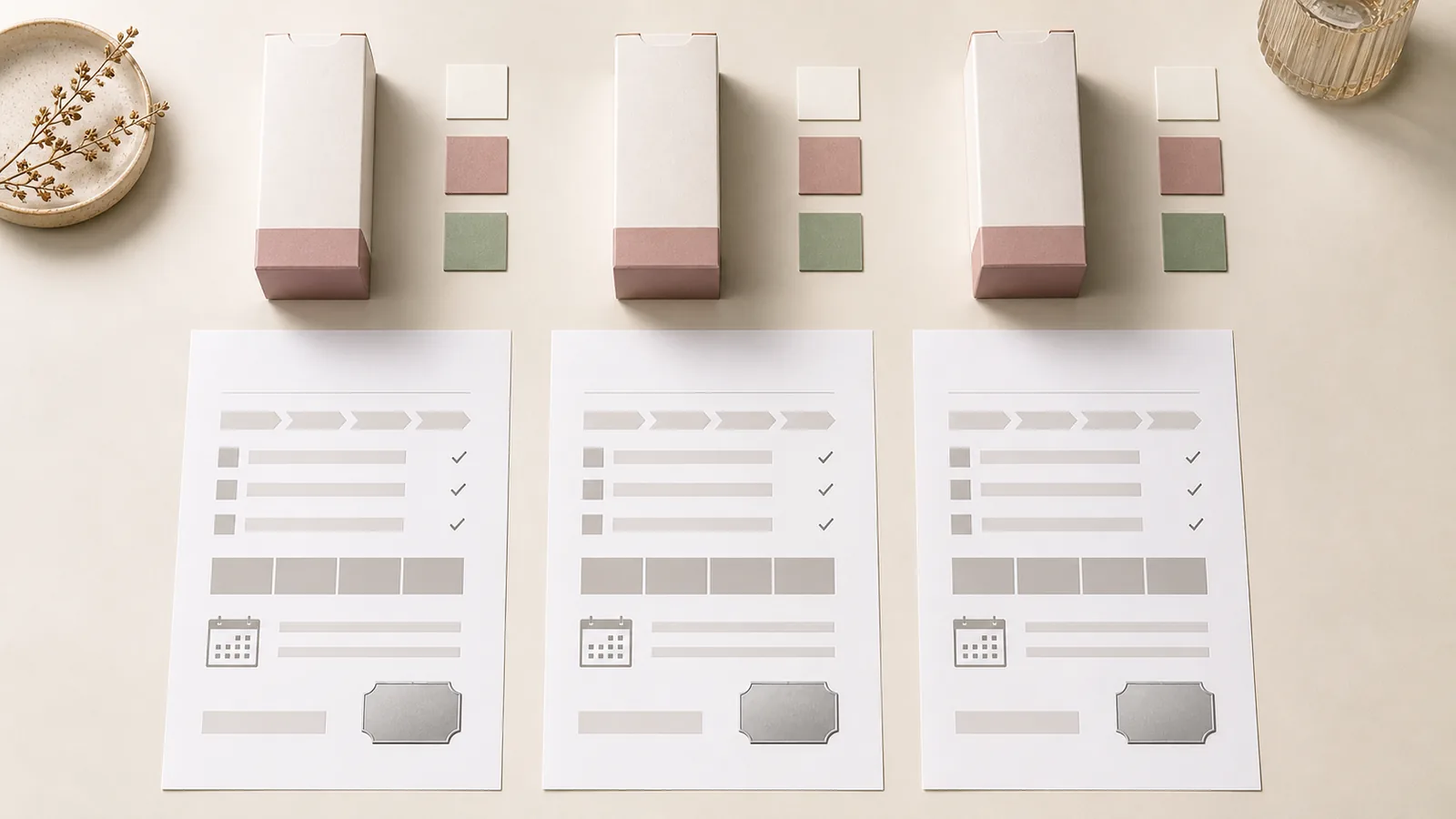
Two quotes are comparable only when they describe the same project. A low unit price may be based on a different material, decoration route, packing method, quantity, logistics term, sample stage, or list of exclusions. Normalize those assumptions before ranking suppliers.
Compare MOQ within the same customization route
MOQ should be read together with the stock, decorated-stock, or fully custom route. Ask each supplier to quote the same quantity scenarios and state:
- what setup or tooling is included;
- which decoration, assembly, and packing steps are included;
- whether repeat orders use the same assumptions;
- what changes would trigger a new threshold or setup charge; and
- how partial quantities, overrun/underrun rules, or material purchasing affect the order.
There is no universal MOQ that proves a supplier is a good fit. The useful number is the one tied to your approved specification and commercial assumptions.
Use a quote-normalization table
| Quote item | Candidate A | Candidate B | Candidate C | Buyer decision note |
|---|---|---|---|---|
| Quantity scenario and unit-price basis | Same quantity and unit definition? | |||
| Material, structure, and dimensions | Same controlled specification? | |||
| Printing, decoration, finish, and assembly | Same process and acceptance reference? | |||
| Tooling, setup, and ownership | One-time or recurring; who owns it? | |||
| Sample stages and revisions | What is included before production release? | |||
| Inspection, testing, and records | Which project requirements are covered? | |||
| Unit packing and master packing | Same pack-out assumption? | |||
| Freight or Incoterm assumption | Same handoff point and logistics responsibility? | |||
| Payment milestones and quote validity | Same timing and commercial exposure? | |||
| Exclusions and change triggers | What could change price or schedule? |
The table does not calculate a universal landed cost. It shows where the offers differ so your team can decide which differences matter and request a revised quote when necessary.
Turn lead time and production capacity into milestones
Instead of accepting one headline duration, request dated milestones and dependencies for specification and artwork approval, sampling, material readiness, production, finishing or assembly, inspection, packing, and logistics handoff.
Capacity should also be project-specific. Ask whether the required processes and quantity can be scheduled for the requested date, which step is most constrained, whether any process is subcontracted, and who escalates a delay. A large nominal capacity does not answer whether the right line, material, finish, and team are available for your order.
Run the Shortlist From RFQ to Purchase Order

A controlled RFQ makes supplier answers easier to compare and reduces the chance that a key assumption appears only after sampling or tooling begins. Send the same versioned brief to every candidate and require each supplier to mark assumptions and exclusions rather than silently filling gaps.
Complete the RFQ-readiness checklist
Your brief should identify:
- the product, target market, and packaging components in scope;
- the component-and-responsibility map, including cross-component interfaces;
- required dimensions, structure, material direction, and pack-out;
- artwork files, decoration, finish, and reference standards you will supply;
- quantity scenarios instead of one isolated order quantity;
- destination, logistics assumption, and required handoff date;
- documents, samples, inspections, or tests defined by the appropriate owner;
- the sample and production-approval method;
- the quote format, including setup, tooling, packing, exclusions, and validity; and
- buyer and supplier contacts for technical, commercial, quality, and change decisions.
For a custom paper box, this guide to the information needed for an accurate custom paper-box quote can help you assemble the starting inputs. The checklist above remains the working control for the multi-supplier decision.
Use five purchase gates
- Scope gate: every component, process, and interface has an accepted owner.
- Evidence gate: critical claims and documents have a satisfactory status in the scorecard.
- Sample gate: the approval reference and remaining written criteria are explicit.
- Commercial and timing gate: the normalized quote and milestone plan have been accepted by the right stakeholders.
- Release gate: the current specification, artwork, approvers, quality plan, change protocol, and purchase-order assumptions align.
At each gate, record one of four outcomes: advance, conditional advance, hold, or reject. A conditional advance needs an open-risk owner, due date, and release condition. It should not become permission to start mass production while a critical requirement is unresolved.
This is the low-friction step that improves every supplier conversation: complete the checklist first, then ask candidates to revise their offers against the same controlled brief.
Treat Red Flags as Stop Conditions
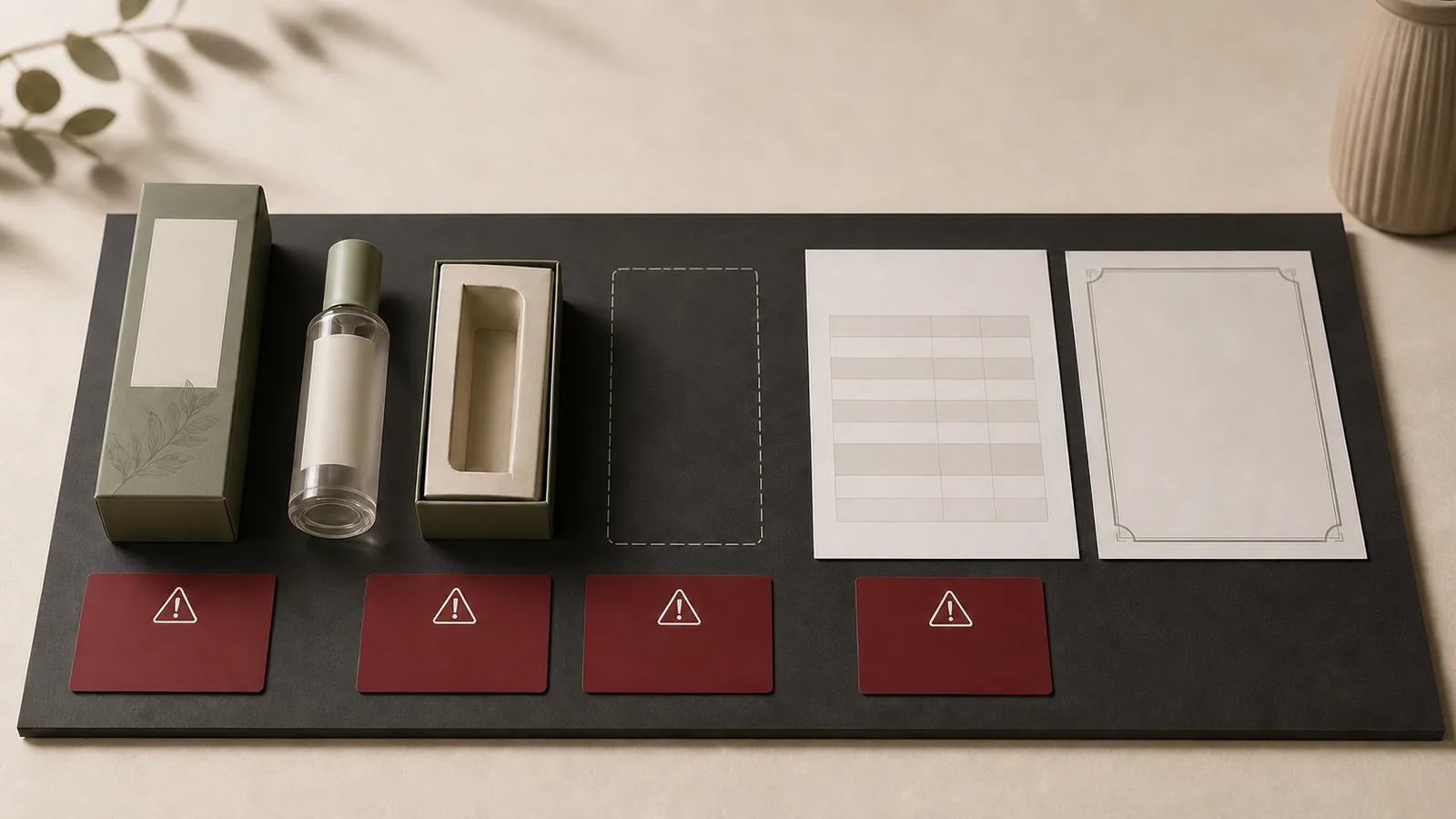
A red flag is not proof of misconduct. It is a signal that a decision should pause until the missing responsibility, evidence, or assumption is resolved. Use red flags as operational stop conditions rather than as reasons for a vague feeling about a supplier.
| Signal | Why it matters | Buyer response |
|---|---|---|
| Core component or process responsibility stays vague | Scope and accountability remain unresolved | Hold until the make, source, or coordinate owner is written down |
| A critical document or relevant sample cannot be provided or verified | A hard requirement remains unsupported | Set a clarification deadline or reject if the item is a gate |
| The quote omits setup, exclusions, logistics basis, validity, or change triggers | Offers are not commercially comparable | Require a normalized quote before selection |
| Approved inputs and revision control are informal | Production may use an obsolete or misunderstood instruction | Require written version and release controls |
| Timing or capacity answers ignore project dependencies | A headline promise is not an execution plan | Request milestones, constraints, and an escalation owner |
| Cross-component fit or artwork handoff has no owner | Multi-supplier integration risk is unmanaged | Assign one accountable interface owner before the purchase order |
| The buyer is pressed to place an order while critical gates remain open | Schedule pressure is replacing due diligence | Stop and document the unresolved risks and decision authority |
The strongest response is specific and proportionate: clarify a missing item, assign an owner, set a due date, and define the evidence needed to reopen the decision. Reject the candidate when a critical requirement cannot be met or verified.
Conclusion
The right cosmetic packaging manufacturer is the one whose verified scope matches the brief and whose samples, documents, quality controls, commercial assumptions, and production plan support a controlled decision. Map the components first, score evidence rather than promises, normalize every quote, and close the five purchase gates before release.
If your project includes custom cosmetic paper packaging, use the completed scope matrix and RFQ checklist to brief Yifeng on the secondary box instead of starting with an undefined request.
References & Sources
- Federal Trade Commission: Environmental Claims: Summary of the Green Guides — U.S. environmental-marketing guidance; accessed August 24, 2026.
- International Organization for Standardization: ISO 9001:2015 — Quality management systems — Requirements — official catalog page for the edition discussed; accessed August 24, 2026.
Plan Your Custom Cosmetic Paper Packaging Brief
Bring the completed component map, box dimensions or structure, quantity scenarios, decoration direction, destination, required date, and available artwork files. Yifeng can then review the custom paper-packaging portion of the project against a defined brief instead of guessing at missing requirements.
Send your packaging brief when those inputs are ready for discussion.





Instagram
Youtube
TikTok