
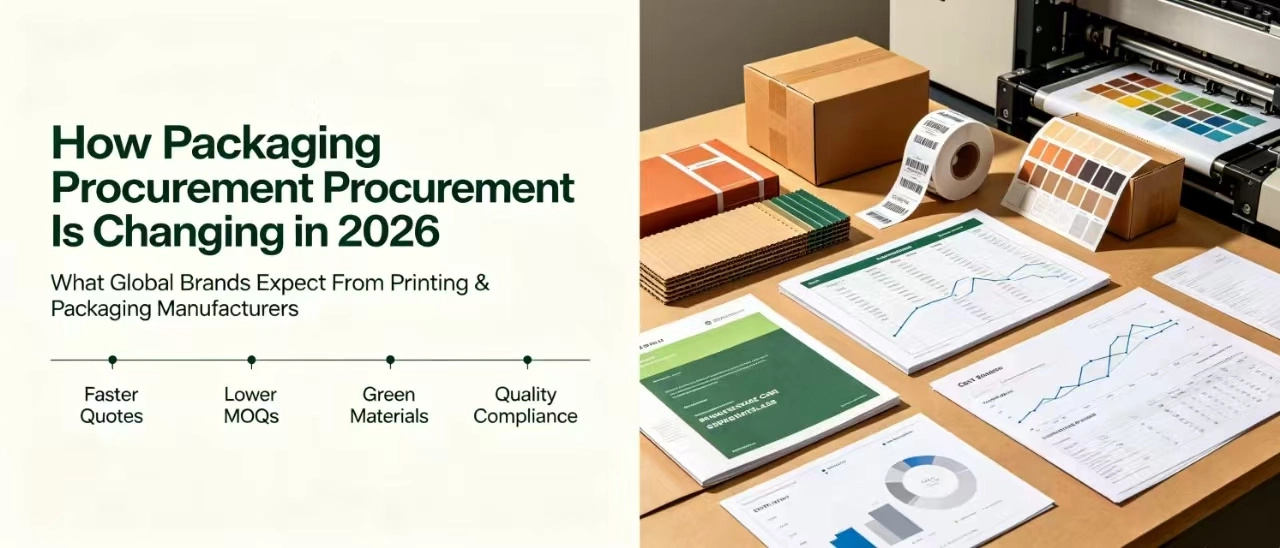
How Packaging Procurement Is Changing in 2026: What Global Brands Expect From Printing & Packaging Manufacturers
- How Packaging Procurement Is Changing in 2026: What Global Brands Expect From Printing & Packaging Manufacturers
- The New Packaging Procurement Model
- 1. Packaging Buyers Are Managing More SKUs Than Before
- 2. Packaging Speed Is Becoming a Brand Strategy
- Production agility
- 3. The Real Cost of Packaging Is Not the Unit Price
- 4. Packaging Inventory Is Becoming a Bigger Procurement Issue
- 5. Color Consistency Is Becoming a Global Supply-Chain Issue
- 6. Packaging Compliance Is Moving Closer to Procurement
- 7. “Sustainable Packaging” Is Becoming More Specific
- 8. Packaging Design Is Moving Toward “Design for Change”
- Design for Change
- 9. Smart Packaging Is Moving From “Technology” to “Function”
- 10. Packaging Manufacturers Are Under Pressure to Become More Flexible
- 11. Why China Packaging Factories Are Also Changing
- 12. Supply-Chain Resilience Is Becoming Part of Packaging Quality
- 13. The Rise of Packaging Programs Instead of Individual Orders
- 14. What Global Buyers Should Ask Packaging Manufacturers in 2026
- Production flexibility
- Version management
- Repeatability
- Sustainability
- Compliance
- Digital printing
- Supply continuity
- Scaling
- 15. The Packaging Factory of the Future
- 16. What This Means for International Packaging Buyers
- Do not evaluate a packaging factory only by what it can manufacture today.
- The Next Era of Packaging Printing Is About Agility
- Final Takeaway
- FAQ
How Packaging Procurement Is Changing in 2026: What Global Brands Expect From Printing & Packaging Manufacturers
For years, packaging procurement was often driven by three questions:
What is the price? What is the MOQ? How quickly can the factory deliver?
In 2026, those questions still matter—but they are no longer enough.
Global brands are facing shorter product cycles, more SKUs, tighter sustainability requirements, changing consumer expectations, and greater uncertainty across international supply chains.
At the same time, packaging printing is becoming more digital, connected, and flexible. Digital printing is moving beyond specialty applications into broader production workflows, while brands are increasingly influencing how converters invest in speed, versioning, and production flexibility.
This is changing what buyers expect from a packaging manufacturer.
The supplier that wins a packaging project is increasingly not simply the factory offering the lowest unit price.
It is the manufacturer that can help a brand manage cost, speed, consistency, compliance, customization, and supply-chain risk at the same time.
The New Packaging Procurement Model
The traditional packaging sourcing model looked like this:
Specification → RFQ → Price Comparison → Sample → Production → Shipment
The emerging model is more strategic:
Market Demand → Packaging Strategy → Design Adaptation → Supplier Capability → Production Flexibility → Compliance → Supply Continuity
This difference is important.
A packaging box may cost less per unit but create higher total costs if:
- The minimum order is too large
- Inventory becomes obsolete
- A seasonal design cannot be changed quickly
- Color consistency varies between batches
- Packaging dimensions increase shipping costs
- Regulatory changes require a redesign
- A supplier cannot scale when demand increases
- Multiple suppliers create coordination problems
For international buyers, packaging procurement is increasingly becoming a total-cost and risk-management decision, rather than a simple unit-price comparison.
1. Packaging Buyers Are Managing More SKUs Than Before
One of the biggest changes affecting packaging procurement is SKU complexity.
Brands are launching:
- More product variations
- Seasonal editions
- Regional packaging
- Limited editions
- Promotional packaging
- Different sizes
- Different languages
- Different market-specific compliance information
This creates a difficult manufacturing problem.
A packaging factory may be producing dozens or hundreds of artwork versions for the same product family.
The question is no longer simply:
“Can the factory print this design?”
The more important question is:
“Can the factory manage packaging variation without making the supply chain inefficient?”
This is where digital production becomes increasingly relevant.
Digital printing can support faster versioning and shorter production cycles without relying on the same traditional plate-based workflow. Industry analysts expect digital packaging printing to mature further in 2026 as it becomes more integrated with broader manufacturing systems.
For brands, this can create opportunities to test packaging designs before committing to very large volumes.
2. Packaging Speed Is Becoming a Brand Strategy
Packaging used to be planned months in advance.
That is becoming increasingly difficult for fast-moving brands.
Consider a modern product launch.
A brand may need to:
- Test a new product
- Launch in one market
- Measure consumer response
- Modify the packaging
- Introduce a new SKU
- Create a seasonal version
- Expand into another country
Packaging therefore needs to move at approximately the same speed as marketing.
This is one reason digital printing and more flexible production workflows are receiving increasing attention.
Packaging Insights reported in 2026 that digital printing is increasingly being used for faster production, personalization, and data-driven applications, including QR codes and traceability.
For procurement teams, this creates a new supplier evaluation criterion:
Production agility
A manufacturer should not only be evaluated on how much it can produce.
Buyers should also consider how quickly it can adapt production when requirements change.
3. The Real Cost of Packaging Is Not the Unit Price
A common sourcing mistake is comparing suppliers using only the quoted packaging price.
For international brands, the real cost can be much broader.
A useful way to think about packaging cost is:
Total Packaging Cost = Unit Cost + Tooling + Inventory + Shipping + Handling + Waste + Quality Risk + Change Cost
For example, a lower-priced packaging solution may require:
- Larger production quantities
- More warehouse space
- Higher shipping volume
- More complicated assembly
- More obsolete inventory
- More frequent quality inspections
A slightly higher unit price may sometimes be offset by lower inventory exposure or greater production flexibility.
This is why packaging buyers should increasingly evaluate total cost of ownership (TCO) rather than only FOB or EXW pricing.
4. Packaging Inventory Is Becoming a Bigger Procurement Issue
Packaging inventory is different from many other raw materials.
Once a brand changes:
- Logo
- Product name
- Ingredients
- Regulatory information
- Barcode
- Marketing message
- Product size
existing printed packaging can potentially become obsolete.
This creates a hidden cost.
Imagine a brand produces 500,000 boxes for a product that later receives a regulatory update.
The issue is no longer the original box price.
The issue becomes:
How much packaging inventory can no longer be used?
This is why packaging procurement is increasingly connected to inventory planning.
For products with frequent updates, brands may benefit from discussing:
- More flexible production batches
- Version management
- Modular packaging structures
- Digital printing
- Artwork change procedures
- Regional packaging strategies
- Inventory buffers
Packaging design is therefore becoming part of inventory-risk management.
5. Color Consistency Is Becoming a Global Supply-Chain Issue
For international brands, packaging may be produced across different production runs, facilities, or geographic regions.
That creates a fundamental challenge:
How do you make packaging look consistent over time?
Color consistency becomes particularly important for:
- Luxury brands
- Cosmetics
- Jewelry
- Premium food
- Beverage brands
- Retail packaging
- Multi-SKU product families
A brand color that looks correct on one production batch but noticeably different on another can weaken visual consistency.
The challenge becomes more complicated when packaging uses different substrates or printing processes.
Therefore, international procurement teams increasingly need to think about:
Color specification + production control + approved references + repeatability
rather than simply asking whether a factory can “match the color.”
6. Packaging Compliance Is Moving Closer to Procurement
Sustainability regulations are changing the packaging purchasing process.
In Europe, the EU Packaging and Packaging Waste Regulation (PPWR) began applying on August 12, 2026. The regulation establishes a harmonized framework covering packaging and packaging waste, with requirements related to areas including recyclability, reuse, material efficiency, and substances of concern.
This matters to procurement teams because compliance cannot always be solved after manufacturing.
Packaging decisions can affect:
- Material selection
- Structure
- Components
- Coatings
- Recyclability
- Labeling
- Packaging volume
- Product-to-package ratio
The result is a shift from:
“Buy packaging first, check compliance later.”
toward:
“Consider compliance during packaging development.”
For brands selling into multiple markets, this can become an important part of supplier qualification.
7. “Sustainable Packaging” Is Becoming More Specific
Another change is that buyers are asking more precise sustainability questions.
Instead of:
“Do you offer eco-friendly packaging?”
procurement teams may ask:
- What is the substrate?
- Is recycled content available?
- Is the material recyclable in the target market?
- Are coatings compatible with the intended recycling stream?
- Is the packaging designed to minimize material use?
- Can documentation be provided?
- Is the sustainability claim supported by appropriate evidence?
This is important because sustainable packaging is not one single technology.
The appropriate solution depends on:
Material + Structure + Product + Market + End-of-Life System
For example, packaging designed for a European market may need to be evaluated differently from packaging designed for another region.
8. Packaging Design Is Moving Toward “Design for Change”
Traditional packaging design often assumes that the package will remain unchanged for a long time.
Modern brands increasingly need packaging that can evolve.
Think about a packaging system that allows a brand to change:
- Artwork
- Promotional messages
- Language
- Product information
- Seasonal graphics
- QR codes
- SKU information
without redesigning the entire physical structure.
This creates an emerging concept:
Design for Change
Instead of designing packaging only for today's product, brands can design packaging systems that accommodate future changes.
For example:
Stable structure + replaceable graphics + flexible print production
can potentially reduce redesign costs and packaging waste when the product evolves.
This is particularly relevant for brands with frequent campaigns and multiple markets.
9. Smart Packaging Is Moving From “Technology” to “Function”
QR codes and connected packaging are not new.
What is changing is how brands use them.
A QR code can connect physical packaging with:
- Product authentication
- Instructions
- Product information
- Brand storytelling
- Promotions
- Loyalty programs
- Recycling information
- Traceability
Digital printing makes it easier to create variable or versioned packaging, while connected packaging technologies can add information after the package reaches the consumer. Industry sources identify QR codes, AI, augmented reality, and digital product information as emerging elements of packaging innovation.
For procurement teams, this means packaging can no longer be viewed entirely as a physical object.
It can also function as a digital touchpoint.
10. Packaging Manufacturers Are Under Pressure to Become More Flexible
From the manufacturer's perspective, the industry is becoming more complicated.
Factories are expected to manage:
More versions + shorter lead times + higher quality + sustainability requirements + competitive pricing
at the same time.
This is pushing packaging manufacturing toward greater automation, digital workflows, and production integration.
Industry research on printing in 2026 highlights AI, automation, sustainability, and connected production systems as major forces reshaping the sector.
The important point is that technology alone does not solve the problem.
A digital press, for example, only creates value when it is properly integrated into:
- Prepress
- Artwork management
- Production scheduling
- Quality control
- Finishing
- Data management
- Logistics
The future of packaging manufacturing is therefore less about one individual machine and more about the entire production workflow.
11. Why China Packaging Factories Are Also Changing
China's packaging industry is undergoing a broader transition from fragmented specialist production toward greater integration.
Recent industry commentary from China's packaging printing sector describes traditional boundaries between labels, cartons, and other packaging segments becoming less rigid as brand owners seek to simplify supplier relationships and source more packaging requirements from fewer partners.
For international buyers, this creates an interesting sourcing opportunity.
Instead of asking only:
“Which Chinese factory has the lowest price?”
buyers can increasingly ask:
“Which Chinese packaging manufacturer has the production system that best fits my global packaging program?”
That is a very different procurement question.
12. Supply-Chain Resilience Is Becoming Part of Packaging Quality
Quality does not only mean:
“Does the box look good?”
For global procurement teams, quality can also mean:
“Can the supplier deliver the same result repeatedly?”
Supply-chain resilience involves questions such as:
- Can production continue when demand changes?
- Can the factory handle repeat orders?
- Can materials be sourced consistently?
- Can artwork changes be managed?
- Can quality remain stable between batches?
- Can production scale with the brand?
- Can delivery schedules be maintained?
A packaging supplier that produces an excellent first order but struggles with the fifth, tenth, or twentieth order may not be suitable for a growing brand.
This is why repeatability is becoming as important as first-order quality.
13. The Rise of Packaging Programs Instead of Individual Orders
A mature packaging buyer is increasingly moving from:
“I need 50,000 boxes.”
to:
“I need a packaging program for the next 12–24 months.”
The difference is significant.
A packaging program may include:
- Multiple SKUs
- Seasonal versions
- Different markets
- Repeated production
- New product launches
- Packaging updates
- Forecast changes
- Inventory planning
This gives manufacturers a better understanding of the brand's long-term requirements.
It also allows procurement teams to evaluate suppliers based on long-term performance instead of one quotation.
14. What Global Buyers Should Ask Packaging Manufacturers in 2026
The questions procurement teams ask are changing.
Instead of asking only:
“What is your price?”
consider asking:
Production flexibility
How quickly can you adapt when artwork or quantities change?
Version management
How do you manage multiple SKUs and packaging versions?
Repeatability
How do you maintain consistency between production batches?
Sustainability
How do you support market-specific sustainability requirements?
Compliance
Can you provide relevant material and compliance documentation?
Digital printing
Which applications are suitable for digital printing versus conventional printing?
Supply continuity
How do you manage material availability and repeat production?
Scaling
Can your production model support a brand as its volume increases?
These questions provide much more information about a manufacturer's real capability than a basic price quotation.
15. The Packaging Factory of the Future
The packaging factory of the future will not compete only on printing speed.
It will compete on flexibility, information, consistency, integration, and response time.
A modern packaging manufacturer will increasingly need to connect:
Design
↓
Data
↓
Printing
↓
Finishing
↓
Quality Control
↓
Production Planning
↓
Supply Chain
The result is a more responsive packaging supply chain.
For brands, that can mean fewer disruptions when products, campaigns, regulations, or consumer demand change.
16. What This Means for International Packaging Buyers
The most important lesson for packaging procurement teams is simple:
Do not evaluate a packaging factory only by what it can manufacture today.
Evaluate what it can help your brand manage tomorrow.
A supplier should be considered in the context of:
- Product growth
- SKU expansion
- Market expansion
- Packaging updates
- Sustainability requirements
- Production changes
- Inventory risk
- Supply continuity
- Brand consistency
The best packaging strategy is rarely the one with the lowest initial quotation.
It is the one that remains commercially practical as the brand changes.
The Next Era of Packaging Printing Is About Agility
Packaging printing is entering a period where speed, flexibility, data, sustainability, and manufacturing integration are becoming increasingly connected.
Digital printing is expanding beyond niche applications.
AI is becoming part of design and production workflows.
Packaging regulations are becoming more important to procurement.
Brands are managing increasingly complex SKU portfolios.
And international buyers are paying more attention to supply-chain resilience.
These changes are redefining the relationship between brands and packaging manufacturers.
The future packaging supplier is not simply a company that prints boxes.
It is a manufacturing partner capable of helping brands respond to change.
For international brands, that may ultimately be the most valuable packaging capability of all:
the ability to change without losing control of cost, quality, consistency, or supply.
Final Takeaway
Packaging procurement is becoming less about buying boxes and more about managing change.
The brands that adapt fastest will need packaging partners capable of responding to new SKUs, new markets, new regulations, new campaigns, and new consumer expectations.
That is why the next generation of packaging manufacturing will be defined not only by printing quality, but by:
Agility. Consistency. Integration. Sustainability. And supply-chain intelligence.
FAQ
What are the biggest packaging printing trends in 2026?
Key developments include the wider adoption of digital printing, greater packaging personalization and versioning, AI-assisted workflows, connected packaging, sustainability-driven design, and more integrated production systems.
Why is digital printing becoming more important for packaging?
Digital printing can support shorter runs, faster version changes, personalization, and more flexible production. In 2026, industry analysts describe digital packaging printing as moving into a more mature phase and becoming more integrated with broader manufacturing workflows.
How is sustainability changing packaging procurement?
Sustainability is increasingly connected to material selection, packaging design, recyclability, waste reduction, and market compliance. In the EU, PPWR began applying on August 12, 2026, making packaging regulation an increasingly important consideration for companies selling products in European markets.
Why should brands consider total packaging cost instead of unit price?
Packaging cost can also include inventory, shipping volume, obsolete packaging, quality problems, changeovers, and other supply-chain expenses. A lower unit price does not necessarily produce the lowest overall packaging cost.
What is packaging SKU management?
Packaging SKU management refers to controlling multiple packaging versions associated with different products, markets, languages, campaigns, sizes, or regulatory requirements. It is becoming increasingly important as brands expand product portfolios.
What is supply-chain resilience in packaging?
Packaging supply-chain resilience is the ability to maintain consistent quality and supply when demand, materials, designs, regulations, or delivery requirements change.
How can a packaging manufacturer support growing brands?
A manufacturer can support growth by providing repeatable quality, flexible production, version management, scalable capacity, consistent materials, and the ability to accommodate packaging changes as the brand expands.
Is digital printing replacing offset printing?
Not necessarily. Different printing technologies remain suitable for different production requirements. The current trend is toward selecting printing technology based on volume, versioning, speed, personalization, quality, and overall workflow rather than treating one technology as universally superior.
You May Also Like

Wholesale Custom Foldable Wig Box Packaging
-
-
-
-
-
🎀 Premium foldable rigid box tailored for wig brands, hair extensions, and salon packaging.
-
🎁 Space-saving flat-pack structure paired with smooth magnetic closure and elegant interior.
-
👩 Keeps wigs in good shape, suitable for retail display, shipping, and high-end hair product gifting.
-
-
-
-

Wholesale Luxury Custom Magnetic Perfume Gift Boxes
-
-
-
-
🎀 Exquisite high-end rigid magnetic boxes specially customized for premium fragrance and cosmetic brands.
-
🎁 Premium rigid cardboard paired with smooth magnetic closure for a luxurious unboxing experience.
-
👧 Perfect for designer perfumes and limited-edition scent sets to enhance brand grade and leave deep impressions.
-
-
-
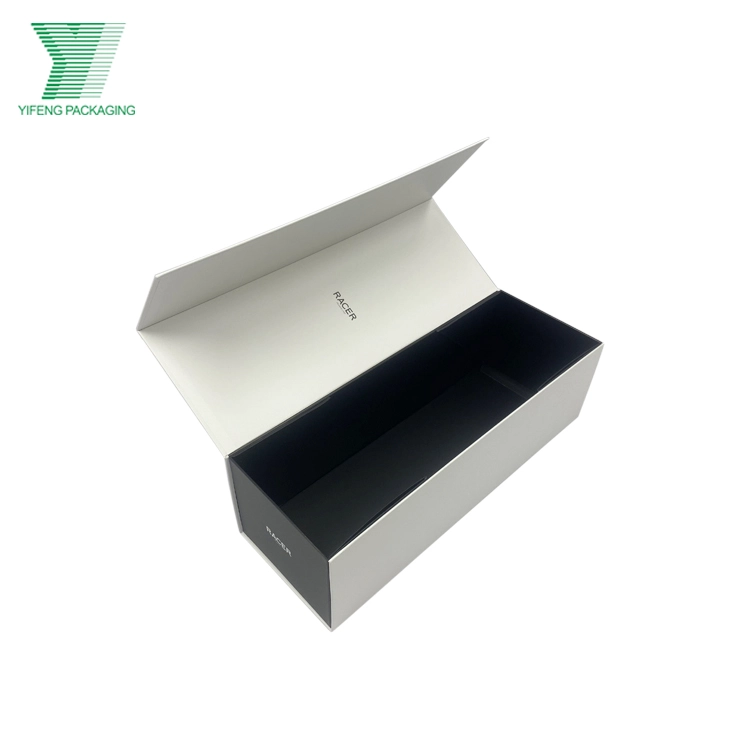
Custom Collapsible Magnetic Rigid Gift Box, Long Folding Packaging Box For Heating Gloves
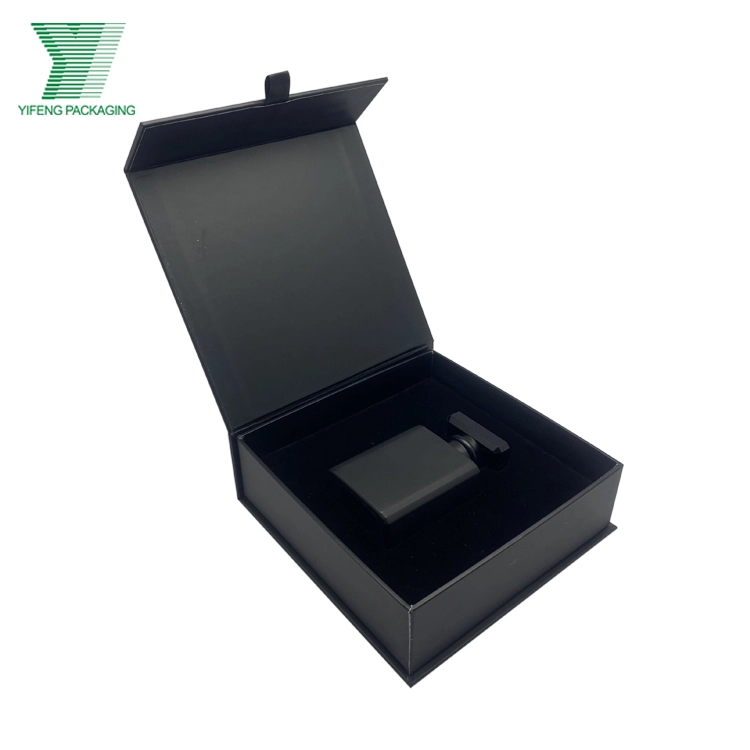
Custom Luxury Black Magnetic Flip Perfume Gift Box For Men Cologne Packaging
Want Similar Packaging for Your Brand?
If you have any comments or good suggestions, please leave us a message, later our professional staff will contact you as soon as possible.
Contact
Email: marketing@yfpackaging.com
Telephone: +86 020 3435 4688
Phone: +86 17818581665
Address: Room 1910, Zhongguang Building, No. 100, Middle of Jiangnan
Avenue, Haizhu District, Guangzhou City, Guangdong Province, China


Instagram
Youtube
TikTok