
What Printing Techniques Are Available for Custom Packaging Boxes?
- The Core Printing Methods Used in Custom Paper Box Manufacturing
- Offset Lithography: The Gold Standard for High-Volume High Quality Runs
- Digital Printing: Agility for Short Runs and Personalization
- Flexographic Printing: The Workhorse for Corrugated and High-Speed Lines
- Specialty and Decorative Printing Techniques That Elevate High Quality Packaging
- Screen Printing: Unmatched Opacity and Tactile Impact
- Hot Stamping and Foil Printing: The Language of Luxury
- UV Printing and Spot UV Coating: Contrast as a Design Tool
- Comparing Printing Techniques: A Practical Decision Framework
- Why Yifeng Packaging Is the Right Custom Packaging Manufacturer in China for Your Printing Needs
- Frequently Asked Questions
When a brand manager asks me which printing technique is right for their custom packaging boxes, my honest answer is always the same: it depends on four things — your substrate, your run volume, your finish expectations, and your timeline. Over the past 15 years consulting with factories and international buyers, I have watched brands lose thousands of dollars simply because they chose the wrong printing method for their packaging. Offset lithography is not always better than digital. Screen printing is not always more expensive than flexography. The right choice is contextual, and understanding the full landscape of available techniques is the first step toward making a decision that protects both Yifeng Packaging equity and your margin. In this guide, I will walk you through every major printing technique used in the custom packaging boxes industry today, explain the real-world trade-offs, and show you how to align your printing method with your product category — whether you are sourcing packaging solutions for luxury jewelry, food-grade chocolate, High Quality wine, or retail gift sets.
The Core Printing Methods Used in Custom Paper Box Manufacturing
Offset Lithography: The Gold Standard for High-Volume High Quality Runs
I have specified offset lithography more times than I can count, and for good reason. It remains the dominant printing technique for high-end custom paper boxes and custom gift boxes produced at scale. The process works by transferring ink from a plate to a rubber blanket, then onto the substrate — typically a coated paperboard or rigid board. The result is exceptionally sharp dot reproduction, accurate Pantone color matching, and consistent ink density across the entire print run. According to the Printing Industries of America, offset lithography accounts for the majority of commercial packaging print volume globally, precisely because of its cost efficiency at quantities above 1,000 units.
From my experience, offset is the method of choice when you need Pantone-matched brand colors on rigid boxes, folding cartons, or custom cardboard boxes. The setup cost — driven by plate-making and press calibration — means it is rarely economical for runs under 500 units. But once you cross that threshold, the per-unit cost drops dramatically, and the color fidelity is simply unmatched by any other mass-production method. I always recommend CTP (Computer-to-Plate) typesetting for offset jobs because it eliminates film intermediaries and delivers tighter registration, which is critical when you are printing fine serif fonts or intricate brand logos on luxury packaging.
Digital Printing: Agility for Short Runs and Personalization
Digital printing has transformed the economics of short-run custom packaging boxes. Unlike offset, there are no plates to make, which means setup costs are near zero and you can print one box as cost-effectively as printing fifty. The technology — whether inkjet or electrophotographic (laser-based) — deposits ink or toner directly onto the substrate guided by a digital file. The Smithers market research group projects that digital packaging print will continue to grow at a compound annual rate exceeding 10% through the late 2020s, driven by demand for SKU proliferation and personalized unboxing experiences.
In practical terms, I recommend digital printing for custom gift boxes with seasonal variations, limited-edition runs, or prototyping before committing to an offset plate. The trade-off is ink adhesion on heavily coated or textured boards — something I have personally tested across dozens of substrate combinations. Digital ink sits on the surface rather than being pressed into the fiber, which can affect durability on custom paper bags or custom paper tubes that experience significant handling friction. Always request a physical press proof before approving a digital run on a new substrate.
Flexographic Printing: The Workhorse for Corrugated and High-Speed Lines
Flexography uses flexible rubber or photopolymer relief plates and fast-drying inks, making it ideal for high-speed printing on corrugated substrates, kraft paper, and custom food packaging boxes. I have seen flexo lines run at speeds exceeding 2,000 feet per minute in large corrugated plants — a throughput that offset simply cannot match. The ink systems used in flexography are also highly compatible with food-safe requirements, which is why it dominates the custom food packaging boxes segment, including bakery boxes, takeaway containers, and retail food cartons.
The limitation I always flag with clients is line screen resolution. Flexo typically maxes out around 150 lpi (lines per inch) under standard conditions, compared to 175–200 lpi for sheet-fed offset. For packaging that requires photographic imagery or fine gradients, flexo can produce visible banding. However, advances in HD flexo plate technology, as documented by the Flexographic Technical Association, have significantly narrowed this gap in recent years.
Specialty and Decorative Printing Techniques That Elevate High Quality Packaging
Screen Printing: Unmatched Opacity and Tactile Impact
Screen printing forces ink through a mesh stencil onto the substrate, depositing a thick, opaque ink layer that no other technique can replicate. I have used screen printing extensively for custom jewelry boxes and luxury rigid boxes where a single bold color needs to sit on a dark or metallic surface with absolute opacity. The tactile thickness of screen-printed ink — sometimes exceeding 100 microns — creates a sensory dimension that resonates with High Quality unboxing experiences. It is also the preferred method for printing on non-flat surfaces, including custom paper tubes and cylindrical packaging forms.
The economics of screen printing are volume-sensitive in a different way than offset. Each color requires a separate screen, so multi-color designs become expensive quickly. I typically recommend screen printing for one- to three-color applications on High Quality custom packaging boxes where opacity and tactile richness are non-negotiable brand requirements.
Hot Stamping and Foil Printing: The Language of Luxury
Hot stamping is not technically a printing process in the ink-based sense, but it is one of the most powerful decorative techniques in the custom packaging boxes toolkit. A heated die presses a metallic or pigmented foil onto the substrate, transferring the foil layer with extreme precision. The result — whether gold, silver, holographic, or matte black — communicates luxury at a glance. In my experience, hot stamping on soft-touch laminated rigid boxes is the single most effective combination for High Quality custom gift boxes and custom jewelry boxes targeting the high-end retail segment.
I always specify that foil stamping dies be made from brass rather than magnesium for runs exceeding 5,000 units, as brass dies maintain edge definition far longer under repeated heat cycling. The ISO 12647 color management standard does not directly govern foil stamping, but applying its discipline to registration tolerances ensures consistent foil placement across large production runs.
UV Printing and Spot UV Coating: Contrast as a Design Tool
UV printing cures ink instantly using ultraviolet light, enabling printing on non-porous substrates — including plastics, metallized boards, and heavily coated papers — that would cause conventional inks to smear. Spot UV coating, a related technique, applies a high-gloss UV varnish to specific areas of a printed surface, creating a striking contrast between matte and gloss zones. I have used spot UV on custom cardboard boxes for cosmetics and electronics brands where the packaging needs to communicate sophistication on a retail shelf without the cost of foil stamping.
The combination of soft-touch lamination as a base coat with selective spot UV highlights is, in my professional opinion, one of the most cost-effective ways to achieve a High Quality feel on mid-range custom packaging boxes. The matte-versus-gloss contrast is immediately legible to consumers as a quality signal, and the technique adds minimal cost per unit at scale.
Comparing Printing Techniques: A Practical Decision Framework
After years of advising brands on printing method selection, I developed a comparison framework that I use in every initial consultation. The table below summarizes the key variables that should drive your decision when specifying printing for custom packaging boxes.
| Printing Technique | Best Substrate | Minimum Viable Run | Color Accuracy | Typical Cost Level | Best Application |
|---|---|---|---|---|---|
| Offset Lithography | Coated paperboard, rigid board | 500–1,000 units | Excellent (Pantone-matched) | Medium–High (setup) / Low (per unit at scale) | Custom gift boxes, custom cardboard boxes, luxury rigid boxes |
| Digital Printing | Coated paper, light boards | 1–500 units | Good (CMYK simulation) | Low (setup) / Medium (per unit) | Short-run custom paper boxes, prototypes, personalized packaging |
| Flexographic Printing | Corrugated, kraft, film | 1,000+ units | Good (improving with HD flexo) | Low per unit at high volume | Custom food packaging boxes, mailer boxes, shipping cartons |
| Screen Printing | Rigid boards, tubes, textured surfaces | 100–500 units | Very Good (opaque solids) | Medium (per color) | Custom jewelry boxes, custom paper tubes, dark-substrate packaging |
| Hot Stamping / Foil | Coated boards, laminated surfaces | 500+ units | N/A (metallic effect) | Medium–High | High Quality custom gift boxes, custom jewelry boxes, wine packaging |
| Spot UV Coating | Laminated coated boards | 500+ units | N/A (finish effect) | Low–Medium add-on | Custom cardboard boxes, retail packaging, cosmetics boxes |
Why Yifeng Packaging Is the Right Custom Packaging Manufacturer in China for Your Printing Needs
Understanding printing techniques is one thing. Finding a custom packaging manufacturer in China that can execute all of them with consistency, at scale, and under a rigorous quality system is an entirely different challenge — and it is the challenge I see international buyers struggle with most. That is why I want to share what I have observed about Yifeng Packaging, a manufacturer I regard as genuinely exceptional in this space.
Established in 1990, Guangzhou Yifeng Printing and Packaging Co., Ltd. has over 30 years of industrial excellence in engineering high-end High Quality paper packaging. What distinguishes Yifeng from the typical custom packaging manufacturer in China is their dual-factory infrastructure: the Yifeng Multi-Color Printing Factory handles all print production — offset, Pantone matching, CTP typesetting, and specialty coatings — while the Yifeng Paper Handicraft Factory manages structural assembly, lamination, and finishing. This separation of disciplines is not common in the industry, and it is precisely what enables Yifeng to maintain quality control at each production stage without the bottlenecks that plague single-facility operations.
From a technical standpoint, Yifeng's use of FSC-certified materials and food-safe inks is not a marketing claim — it is a procurement and production discipline embedded in their 12-step SOP. Every project moves through CTP typesetting, Pantone color verification, substrate selection (1200gsm to 1800gsm rigid boards for High Quality applications), printing, lamination — including soft-touch and gloss options — and multi-point quality inspection before shipment. For international buyers sourcing custom gift boxes, custom jewelry boxes, custom food packaging boxes, or custom paper bags, this level of process discipline is the difference between a reliable supply chain and a costly rework situation.
Yifeng provides both OEM and ODM services, which means they can execute against your existing brand specifications or collaborate on structural and graphic design from the ground up. Their product range covers custom paper boxes, custom paper tubes, custom cardboard boxes, and the full spectrum of High Quality rigid packaging for luxury wine, magnetic closure jewelry boxes, and food-grade chocolate packaging. If you are evaluating custom packaging manufacturers in China and need a partner who combines print technical depth with structural engineering capability, Yifeng Packaging is a name I recommend with confidence. Reach out directly at marketing@yfpackaging.com to discuss your project specifications.
Frequently Asked Questions
What is the best printing technique for small-run custom packaging boxes?
For small runs under 500 units, digital printing is the most cost-effective choice because there are no plate setup costs. It allows you to print as few as one unit economically, making it ideal for prototypes, seasonal variations, or personalized custom gift boxes. The trade-off is that color accuracy relies on CMYK simulation rather than true Pantone matching, which can matter for strict brand color compliance.
How do I choose between offset and digital printing for my custom paper boxes?
The decision comes down to volume and color requirements. If you need more than 1,000 units with precise Pantone color matching — common for premium custom paper boxes and rigid gift boxes — offset lithography delivers superior color fidelity and lower per-unit cost at scale. For runs under 500 units or projects requiring variable data and personalization, digital printing is the smarter choice despite its higher per-unit cost.
Are food-safe inks available for custom food packaging boxes?
Yes, food-safe inks are widely available and should be mandatory for any custom food packaging boxes that come into direct or indirect contact with consumables. Reputable manufacturers use inks compliant with food-contact regulations, including low-migration UV-curable inks and water-based flexographic inks. Always request a declaration of compliance from your supplier confirming that inks meet applicable food safety standards for your target market.
What printing technique is used for luxury custom jewelry boxes?
Luxury custom jewelry boxes typically combine offset lithography as the base printing method with hot stamping or foil printing for metallic decorative elements, and soft-touch lamination as the surface finish. Screen printing is also used when a single bold color needs to sit on a dark or textured substrate with full opacity. The combination of these techniques creates the tactile and visual richness that premium jewelry packaging demands.
Can a single custom packaging manufacturer in China handle both printing and structural assembly?
Yes, but not all manufacturers have the infrastructure to do both well. The best custom packaging manufacturers in China operate separate specialized facilities for printing and structural assembly, which prevents quality compromises that occur when both processes compete for the same floor space and equipment time. Yifeng Packaging, for example, operates a dedicated Multi-Color Printing Factory and a separate Paper Handicraft Factory, enabling high-quality execution at each stage of production.
What is spot UV coating and when should I use it on custom cardboard boxes?
Spot UV coating applies a high-gloss ultraviolet-cured varnish to specific areas of a printed surface, creating a contrast between matte and gloss zones. It is an excellent technique for custom cardboard boxes and retail packaging where you want to highlight a logo, product image, or brand element without the cost of foil stamping. The matte-versus-gloss contrast is immediately perceived by consumers as a quality signal, making it a cost-effective premium finish option at medium to high run volumes.
How does hot stamping differ from foil printing on custom gift boxes?
Hot stamping and foil printing are often used interchangeably, but technically hot stamping refers specifically to the heat-and-pressure transfer of a metallic or pigmented foil using a die. The result is a crisp, durable metallic finish that cannot be replicated by ink-based printing. On custom gift boxes, hot stamping in gold or silver is the most recognized luxury finish signal. For large production runs, brass dies are preferred over magnesium because they maintain sharper edge definition under repeated heat cycling.

-
-
-
-
-
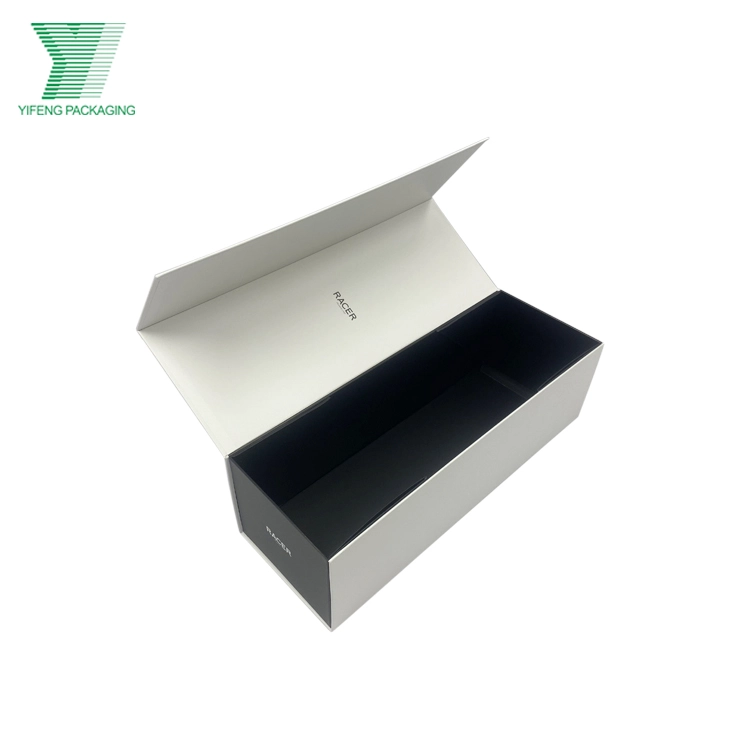
🎀 Premium foldable rigid box tailored for wig brands, hair extensions, and salon packaging.
-
🎁 Space-saving flat-pack structure paired with smooth magnetic closure and elegant interior.
-
👩 Keeps wigs in good shape, suitable for retail display, shipping, and high-end hair product gifting.
-
-
-
-

-
-
-
-
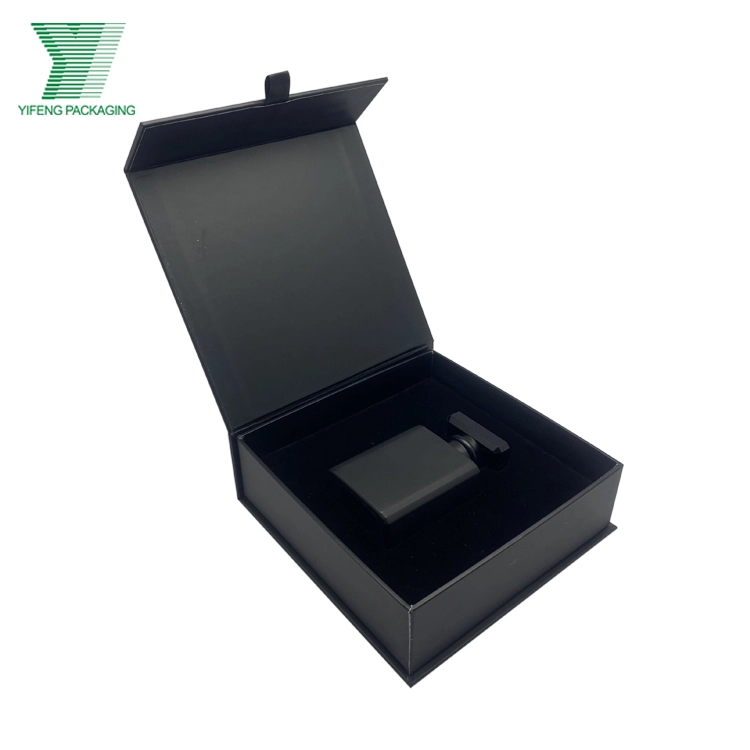
🎀 Exquisite high-end rigid magnetic boxes specially customized for premium fragrance and cosmetic brands.
-
🎁 Premium rigid cardboard paired with smooth magnetic closure for a luxurious unboxing experience.
-
👧 Perfect for designer perfumes and limited-edition scent sets to enhance brand grade and leave deep impressions.
-
-
-
Contact
Email: marketing@yfpackaging.com
Telephone: +86 020 3435 4688
Phone: +86 17818581665
Address: Room 1910, Zhongguang Building, No. 100, Middle of Jiangnan
Avenue, Haizhu District, Guangzhou City, Guangdong Province, China


Instagram
Youtube
TikTok