
Perfume Discovery Set Packaging: Protecting Mini Bottles in a Compact Rigid Box
- Engineering Structural Resilience for Miniature Fragrance Samplers
- Precision Interior Cavities: Foam Inserts, Molded Pulp, and Fluted Trays
- Predictive AI Modeling and Modern Production Workflows
- Holistic Packaging Solutions: Elevating Discovery Sets with Custom Manufacturing
- Frequently Asked Questions
Perfume discovery sets require an exacting balance of structural defense, precise dimensional tolerance, and multisensory luxury presentation. Miniature glass vials—typically ranging from 1.5 ml to 10 ml—exhibit fragile neck geometries, delicate crimp pumps, and a heightened vulnerability to transit vibrations and rotational torque during courier distribution. Engineering custom rigid boxes with high-density greyboard cores (ranging from 1200 to 1800 GSM) and closed-cell EVA foam or molded pulp cavity inserts guarantees zero-migration containment and comprehensive shock absorption. By incorporating AI-driven finite element analysis (FEA) to simulate drops and pressure differentials alongside ISO-certified transit testing protocols, fragrance manufacturers can virtually eliminate in-transit leakage, preserve delicate decorative finishes, and create an elevated, collectible unboxing experience that converts sample discovery into full-sized bottle loyalty.
Engineering Structural Resilience for Miniature Fragrance Samplers
In my 15 years consulting for indie perfumeries and global luxury cosmetic houses, miniature fragrance discovery collections present some of the trickiest mechanical packaging hurdles in the industry. Unlike standard 50 ml or 100 ml flacons that have broad, stable bases and thick glass heels, mini sampler vials (ranging between 2 ml and 10 ml) have slender walls, elevated centers of gravity, and minute crimp or screw neck finishes. When dozens of these micro-bottles are packed into a multi-scent coffret, standard folding cartons fail under courier handling loads. Over the years, I have seen brands lose significant customer goodwill simply because a single cracked 5 ml vial seeped ethanol-rich perfume oil, dissolved decorative foil stampings, and ruined an entire seven-piece sampler set.
The structural foundation of successful discovery packaging lies in deploying High Quality perfume box architecture made with durable, high-density paperboard. Relying on paper weights below 1000 GSM often leads to edge buckling, crushed corners, and lid pop-offs during automated sorting hub distribution. To prevent this, I consistently specify rigid setups engineered around 1200 to 1800 GSM greyboard wrapped in coated or uncoated specialty papers like Solid Bleached Board (SBB). This caliber of structural integrity maintains planar flatness, provides lateral impact resistance, and protects delicate mini spray atomizers against top-load compression.
Vibration Damping and Capillary Leakage Prevention
Fragrance formulas contain volatile ethanol solvents and aromatic compounds that expand and contract under fluctuating cabin pressures during air transit. When loose vials shift within low-grade thermoformed trays, continuous micro-vibrations can loosen screw collars, misalign crimped pumps, or induce capillary leakage around the spray actuator. In my testing protocols, discovery sets are evaluated against ASTM D4169 standard practice for performance testing of shipping containers and systems. The physical housing must tightly secure each individual bottle around both its primary body and its neck collar, eliminating rotational and vertical travel altogether.
Rigid Board Caliper Specifications and Corner Integrity
A compact rigid box requires 90-degree grooved corners, precise paper turn-ins, and consistent scoring lines to prevent unsightly splitting along outer creases. When we evaluate corner crush resistance, an outer box built from double-laminated rigid stock provides four times the crush resistance of heavy cardstock cartons. By reinforcing the structural corners with high-tack, solvent-free adhesives, the outer chassis absorbs horizontal impacts during conveyor transit, ensuring that internal mechanical energy never transfers directly to the glass vials inside.
Vial Tolerances and Mechanical Clearance Calculations
Miniature glass containers naturally possess subtle manufacturing variances. In standard manufacturing, nominal 2 ml vials can fluctuate by up to ±0.3 mm in diameter and ±0.5 mm in height. In my packaging designs, I enforce strict cavity tolerances: internal insert wells must provide a friction-fit clearance between 0.15 mm and 0.25 mm. If the clearance is narrower, consumers struggle to extract the micro-bottle without tugging violently on fragile plastic atomizers; if it exceeds 0.3 mm, the bottle rattles and risks glass-to-glass contact during drop impacts.
Precision Interior Cavities: Foam Inserts, Molded Pulp, and Fluted Trays
While the exterior shell delivers visual elegance and structural protection, the interior tray does the heavy lifting when it comes to shock dampening and aesthetic arrangement. Selecting the right interior insert substrate is a critical technical crossroad. Over my career, I have rigorously analyzed three primary tray configurations: high-density EVA foam, precision molded paper pulp, and coated paperboard fluting. In high-end discovery coffrets, ethylene-vinyl acetate (EVA) foam remains the industry standard because of its uniform cell density, velvety touch, and velvet or flock-coated finishing options.
However, modern luxury brands are increasingly balancing tactile prestige with circular economy mandates. Sustainable fragrance brands frequently pivot toward thermoformed molded sugarcane bagasse or FSC-certified paper pulp trays. When engineered with precision draft angles and structural ribbing, molded pulp trays achieve exceptional shock-absorption metrics without petroleum-derived plastics. The challenge lies in surface dusting; micro-fibers from untreated pulp can stick to the glossy finish of glass vials. To prevent this, I specify an aqueous dispersion coating or a smooth post-press pressing step that locks loose cellulose fibers in place while retaining 100% recyclability.
High-Density Closed-Cell EVA vs. Open-Cell Polyurethane
When engineering high-protection inserts for fragile vials, the difference between closed-cell EVA and open-cell polyurethane (PU) foam is profound. Polyurethane foam breaks down quickly, yields excessively under point-load pressure, and tends to produce fine chemical off-gassing that can tarnish metallic accents or soften paper labels. In contrast, 35 to 45 kg/m³ density closed-cell EVA provides consistent kinetic rebound, holds crisp laser-cut or CNC-milled cavity edges, and resists alcohol degradation in the event of an accidental droplet spill. Lamination with a suedette or textured paper top layer adds luxury while concealing the cellular texture underneath.
Ergonomic Finger Notches and Bottle Extraction Geometry
Nothing breaks luxury immersion faster than a customer breaking their fingernails trying to pry a small sample bottle out of a rigid foam block. I always integrate engineered finger relief notches—either micro-crescent cutouts or precision angled ramp recesses under the vial base. Alternatively, incorporating a discreet, color-matched grosgrain pull ribbon beneath the vials allows consumers to lift each sample bottle out effortlessly with gentle vertical traction, preserving the pristine finish of both the packaging and the sample flacon.
Sustainable Tray Alternatives: Molded Pulp and Corrugated Folding Engineering
For fragrance houses committed to strict zero-plastic packaging guidelines, we replace polymer foams with multi-layer folded paper inserts or molded dry-fiber matrices. Using precision CAD dies, a single sheet of 350 GSM virgin kraft or folding boxboard can be creased into an accordion-style fluted nest that suspends mini vials in mid-air away from the outer rigid shell. This create-an-air-pocket principle provides a dual buffer zone against lateral drops, aligning packaging sustainability with rigorous drop-test benchmarks.
Predictive AI Modeling and Modern Production Workflows
The packaging industry has moved far beyond manual trial-and-error prototyping. In modern design workflows, I utilize AI-driven generative design and finite element analysis (FEA) software to predict packaging stress points before cutting a single sheet of board. By feeding parameters such as vial wall thickness, glass density, packaging drop orientations, and board moisture absorption into machine-learning simulation engines, we can calculate peak deceleration values (G-force) experienced by mini bottles during dynamic shock impacts.
Simulating stress distributions in a virtual environment drastically cuts down physical prototyping cycles. We can determine the exact foam thickness required between adjacent mini bottles—down to fractions of a millimeter—maximizing container compactness while guaranteeing that the set passes drop tests under ISO 2248 packaging specifications. Integrating these computational algorithms ensures that every production run of custom rigid boxes meets strict aesthetic, economic, and logistical standards.
| Comparison Factor | Traditional Approach | AI-Driven Approach |
|---|---|---|
| Prototyping Cycle Time | 14 to 28 Business Days (Manual sampling iterations) | 2 to 4 Days (Parametric digital simulation & 3D prototyping) |
| Drop-Test G-Force Prediction | Empirical testing after mass tool cutting | Finite Element Analysis (FEA) dynamic simulation pre-production |
| Material Waste & Nesting Optimization | 5% to 8% trim scrap via standard layout grids | Under 2% trim scrap through algorithmic nesting layouts |
| Dimensional Tolerance Precision | ±0.5 mm variance across die-cut foam | ±0.1 mm precision using automated digital CNC knife cutting |
| Sustainability Impact Scoring | Manual carbon lifecycle estimation post-design | Real-time LCA predictive modeling integrated into CAD workflows |
Generative Nesting and Material Optimization
In high-volume manufacturing, minimizing material waste is vital for keeping unit economics competitive. Generative algorithms optimize the nesting patterns of both the rigid greyboard sheets and the interior insert cavities. By computing optimal sheet layouts that account for grain direction, paper curl resistance, and die-press feeding speeds, our AI systems eliminate redundant trim waste. This automated efficiency translates directly into lower per-unit costs and reduced environmental impact without compromising protective strength.
Automated Color Control and Finishing Quality Inspection
Discovery set packaging often acts as a consumer's initial tactile introduction to a fragrance brand. Surface imperfections like color shifts, misaligned foil stamping, or glue smudges can diminish perceived value. We integrate high-speed digital machine vision systems powered by convolutional neural networks into our production lines. These cameras scan print sheets at up to 15,000 sheets per hour, flagging ΔE (Delta-E) color variances exceeding 1.5 and detecting micro-defects in spot UV varnish, foil stamping, or embossing before board mounting begins.
Holistic Packaging Solutions: Elevating Discovery Sets with Custom Manufacturing
Designing discovery sets requires a manufacturing partner that understands how materials, finishes, and structural engineering work together. With over 15 years of industry-leading manufacturing expertise, our state-of-the-art production facilities translate complex design concepts into finished packaging. We specialize in producing luxury custom rigid boxes alongside a versatile suite of packaging options, including custom paper boxes, custom gift boxes, custom cardboard boxes, and custom packaging boxes. Our technical capabilities allow fragrance, beauty, and lifestyle brands to execute cohesive retail packaging suites across every touchpoint.
Beyond standard rectangular discovery coffrets, we manufacture High Quality custom paper tube packaging that is ideal for single-vial travel sets, as well as high-end custom jewelry boxes and custom food packaging boxes engineered to meet strict food and cosmetic contact safety standards. Whether Yifeng Packaging requires a book-style magnetic closure rigid box, a shoulder-and-neck box with contrasting reveal bands, or custom paper bags to complete an in-store boutique customer journey, our integrated manufacturing lines deliver consistent dimensional accuracy, impeccable edge wrapping, and reliable global fulfillment.
Our packaging teams work hand-in-hand with brand managers and structural engineers to calibrate every element of your discovery coffret. We test the closing resistance of our magnetic closures to achieve that signature muted, luxurious click. We formulate specialized adhesives that prevent bubbling, warping, or delamination in both arid retail settings and high-humidity international shipping lanes. For brands expanding across multiple lifestyle categories—from our precision-crafted candle box formats to High Quality watch box cases and bespoke hair extension box lines—we ensure that every package embodies the exact luxury identity of your product portfolio.
Selecting the Right Closure Architecture: Magnetic Flap vs. Shoulder-and-Neck
The architectural format of your discovery set box establishes the opening ritual. A book-style box with concealed neodymium magnets provides a smooth, contemporary book-opening motion that instantly reveals the entire perfume lineup. In contrast, a classic three-piece shoulder-and-neck box, featuring a raised interior neck collar, creates subtle vacuum resistance as the lid lifts upward, building sensory anticipation. In both formats, we calibrate the friction coefficient of the neck reveals and wrap margins to guarantee smooth, seamless operation every time.
Luxury Finishes: Tactile Soft-Touch, Hot Stamping, and Micro-Embossing
A compact discovery box is meant to be handled, held, and savored. Applying an anti-scuff soft-touch laminate delivers a velvety matte texture that resists fingerprints from oily perfume testing. Pairing this with high-precision hot foil stamping and multi-level sculptured embossing catches ambient boutique lighting, drawing attention to subtle typographic branding and scent notes. These tactile contrasts turn a simple mini bottle sampler set into a sought-after vanity centerpiece that keeps Yifeng Packaging top of mind long after the final drop is applied.
Connect with our expert packaging engineering team today to design, prototype, and manufacture custom discovery set boxes that protect your delicate bottles and elevate Yifeng Packaging's unboxing experience.
Frequently Asked Questions
What is the best board caliper for a perfume discovery set rigid box?
For optimal protection and luxury tactile weight, an exterior greyboard core between 1200 GSM and 1800 GSM (approximately 1.8 mm to 2.8 mm caliper thickness) wrapped in 157 GSM art paper or specialty dyed paper is recommended. This provides the rigidity needed to prevent edge crushing during shipping while maintaining crisp 90-degree corner profiles.
How do you prevent miniature perfume bottles from leaking during transit?
Preventing leaks requires controlling both bottle movement and neck pressure. Discovery set packaging should use high-density EVA foam or precision-molded pulp cavities engineered with a 0.15 mm to 0.25 mm friction fit. This firmly holds the crimp neck and spray actuator in place, eliminating micro-vibrations and capillary seepage caused by transit motion and cabin pressure changes.
Which insert material is better for fragrance discovery sets: EVA foam or molded pulp?
EVA foam provides the cleanest, crispest cavity cutouts, superior shock absorption, and luxurious finishes like velvet flocking, making it the industry standard for high-end luxury coffrets. Molded pulp offers a 100% plastic-free, curbside-recyclable alternative with lower carbon impact; however, it requires specialized fiber-lock coatings to prevent cellulose dust from clinging to glass vials.
Can custom rigid boxes accommodate different bottle shapes in a single discovery coffret?
Yes. Using multi-axis CNC routing, automated digital die-cutting, or multi-cavity custom pulp molds, discovery box inserts can be tailored to hold a mix of round vials, square rollerballs, travel sprays, and ceramic scent blotters side-by-side with uniform retention and balanced presentation.
What closure mechanisms work best for perfume discovery set rigid boxes?
Book-style magnetic closures featuring hidden neodymium magnets are the most popular choice for modern discovery sets because they offer an intuitive, book-like opening and close with a satisfying click. Classic two-piece or three-piece shoulder-and-neck boxes provide a traditional, ultra-luxury unboxing experience with calculated air-release friction.
-
-
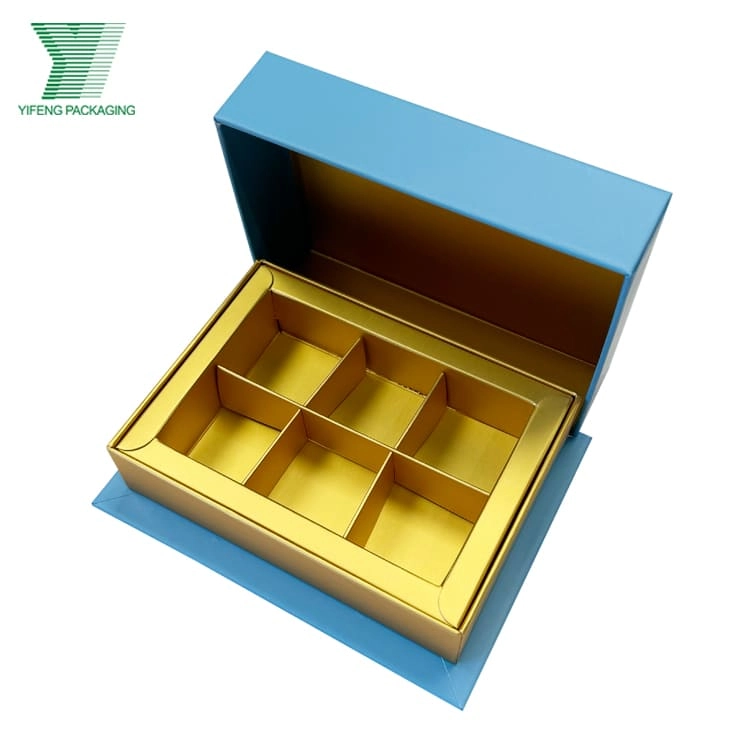
🍬 High-end food-grade book-style rigid box for premium confectionery packaging.
-
📦 Thick coated paperboard with sturdy magnetic closure for safe sealing.
-
🍫 Suitable for chocolates and snacks, offering protection and elegant brand presentation.
-
-
-
-
-
-
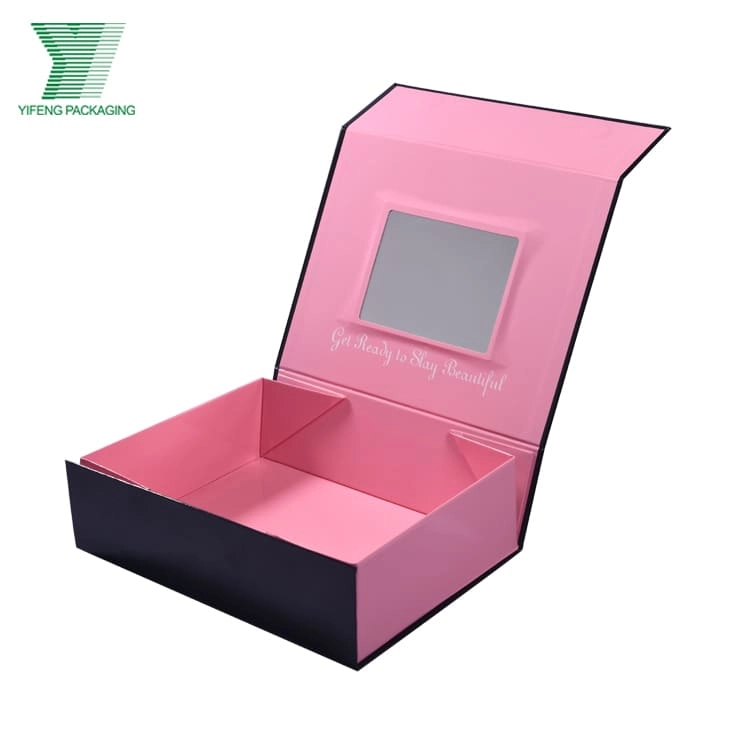
🎀 Premium foldable rigid box tailored for wig brands, hair extensions, and salon packaging.
-
🎁 Space-saving flat-pack structure paired with smooth magnetic closure and elegant interior.
-
👩 Keeps wigs in good shape, suitable for retail display, shipping, and high-end hair product gifting.
-
-
-
-
-
-
-
-
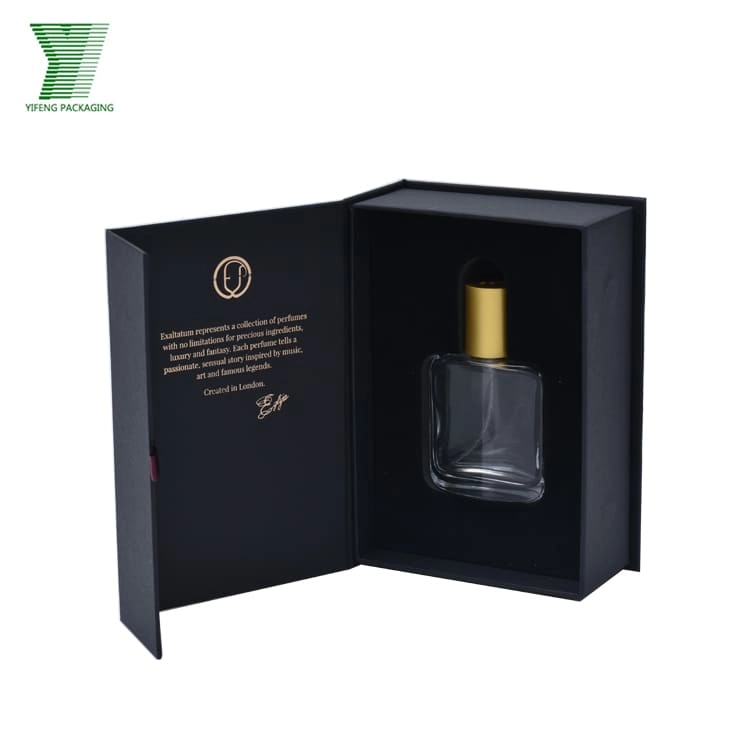
🎀 Exquisite high-end rigid magnetic boxes specially customized for premium fragrance and cosmetic brands.
-
🎁 Premium rigid cardboard paired with smooth magnetic closure for a luxurious unboxing experience.
-
👧 Perfect for designer perfumes and limited-edition scent sets to enhance brand grade and leave deep impressions.
-
-
-
Contact
Email: marketing@yfpackaging.com
Telephone: +86 020 3435 4688
Phone: +86 17818581665
Address: Room 1910, Zhongguang Building, No. 100, Middle of Jiangnan
Avenue, Haizhu District, Guangzhou City, Guangdong Province, China



Instagram
Youtube
TikTok