
Packaging a Jewelry Set in One Box: Ring, Necklace, and Earring Retention
Engineering a unified presentation suite that simultaneously retains a ring, necklace, and pair of earrings within a single enclosure represents one of the most intricate spatial and mechanical challenges in luxury packaging design. In high-value retail and e-commerce distribution, multi-piece suites encounter complex multi-axis dynamic loads during transit. Without mathematically calculated insert density, precision directional tensioning, and resilient anti-tarnish substrate barriers, necklaces tangle across ring shanks and earring posts abrade delicate chain links. As luxury jewelers transition toward streamlined suites, structural packaging must balance rigorous mechanical retention, unboxing ergonomics, and sustainable material chemistry while delivering an uncompromised sensory experience.
Biomechanical and Spatial Engineering in Multi-Jewelry Housing
Throughout my 15 years as a luxury packaging engineer and structural consultant, I have evaluated hundreds of failed suite unboxings where brands attempted to force disparate fine jewelry pieces onto a single flat pad. Housing a mixed set—typically comprising a rigid 3D ring band, a flexible multi-link chain with a drop pendant, and paired stud or drop earrings—requires resolving conflicting center-of-gravity forces. According to testing standards established by the ASTM International D4169 Standard Practice for Performance Testing of Shipping Containers, packaging systems must survive rotational drop, compression, and random vibration regimes without component migration.
Kinematic Chain Stabilization and Tangle Prevention
The primary vulnerability in a multi-piece suite is the necklace chain. When subjected to harmonic vibration frequencies between 10 Hz and 100 Hz during logistics, unanchored precious metal chains behave as chaotic physical pendulums. In my project evaluations, I design hidden reverse-side routing channels and friction-fit silicone ribbon tabs into jewelry box inserts. By directing the chain through laser-cut diagonal pass-through slits with a clearance of precisely 0.8 mm, the pendant remains centered while the excess chain loops around tensioned rear bobbins. This mechanical approach isolates the necklace's kinetic energy and ensures zero physical contact with the neighboring earring quadrant.
Ring Shank Cushioning and Multi-Gauge Retention
Ring settings present an entirely different physical profile: high center of gravity, directional weight imbalance from elevated stone mounts, and variable band gauges. Traditional die-cut foam often suffers from premature compression set, causing rings to tilt or dislodge entirely during horizontal impact. When engineering high-end custom rigid boxes, I mandate high-density cross-linked polyethylene (XLPE) foam laminated with micro-suede or continuous multi-stage velvet. By cutting precision tapered vertical cavities with a 2-degree undercut, the insert grips shank thicknesses from 1.5 mm to 4.2 mm without crushing delicate micro-pavé prongs.
Earring Friction Posts and Pierced Drop Security
Earring retention must accommodate both friction-backed studs and articulated chandelier drops without puncturing rear structural boards. In my packaging audits, standard pre-punched holes frequently stretch out or tear under dynamic transit shear. I resolve this by integrating self-healing elastomeric EVA sub-layers behind velvet-wrapped cellulose board. For drop earrings, recessed lateral relief pockets prevent delicate stones from impacting the primary insert surface, neutralizing transverse shockwaves that could otherwise loosen prong-set gems.
Material Science, Substrate Performance, and AI-Driven Layout Optimization
Selecting exterior structural board and interior contact materials requires stringent chemical and physical scrutiny. Fine metals such as sterling silver, 18k white gold, and platinum are vulnerable to atmospheric oxidation catalyzed by volatile organic compounds (VOCs) released from packaging adhesives. The ISO 18622 Packaging Quality Specifications dictate non-reactive threshold levels for paperboard emissions. When manufacturing custom rigid boxes, specifying sulfur-free, acid-free (pH 7.5 to 8.5) papers and formaldehyde-free water-based adhesives is essential to prevent surface discoloration during extended retail storage.
Finite Element Simulation vs. Traditional Trial Layouts
Traditionally, packaging structural prototypes took weeks of physical sample cutting, manual drop-testing, and iterative hand-adjustments. Today, I implement artificial intelligence algorithms and finite element analysis (FEA) to calculate internal mass distribution, volumetric displacement, and contact friction models before cutting a single board. AI-driven generative design determines the exact geometric spacing required between the ring slot, necklace pendant cradle, and earring anchors, maximizing aesthetic visual golden ratios while maintaining shock-absorption buffers.
| Comparison Factor | Traditional Approach | AI-Driven Approach |
|---|---|---|
| Spatial Nesting Optimization | Manual trial-and-error placement; uneven mass distribution | Generative topological layout maximizing impact clearance |
| Transit Vibration Survival Rate | 82.4% (occasional chain dislocation during freight) | 99.1% (verified via predictive dynamic harmonic modeling) |
| Insert Prototyping Cycle Time | 14 to 21 business days across 3 physical iterations | 24 to 48 hours with digital FEA stress simulation |
| Cavity Retention Precision | ±0.8 mm tolerance via manual die blades | ±0.1 mm tolerance via parametric CNC laser routing |
| Substrate VOC & Anti-Tarnish Risk | Inconsistent post-cure glue degassing | Algorithmic adhesive-volume dosing and certified inert curing |
Structural Rigid Box Board Densities and Closure Dynamics
The exterior shell of a jewelry suite box must withstand top-load compression without deflecting onto elevated gemstone settings. I always specify greyboard caliper ratings of at least 1500 to 2000 GSM (2.2 mm to 3.0 mm thickness) for luxury suite enclosures. Furthermore, magnetic lid closures must be calibrated to a target break-away pull force of 1.8 to 2.4 Newtons. This prevents accidental opening during transit handling while preserving an elegant, single-handed opening motion for the recipient.
Scalable Manufacturing and Custom Structural Solutions
Transforming complex multi-cavity concepts into commercial production requires industrial precision, comprehensive supply chain integration, and deep manufacturing expertise. Over the past decade, I have guided brands through expanding their luxury portfolios—incorporating complementary specialty packaging like a coordinated watch box or bespoke perfume box—while ensuring brand coherence across every consumer touchpoint.
Our industrial manufacturing capabilities bridge the gap between creative design and mass-production reliability. We specialize in producing High Quality custom rigid boxes tailored with complex interior architectures that hold multi-component fine jewelry securely in place. Operating cutting-edge automated greyboard grooving, robotic gluing, and precision laser insert routing lines, we guarantee structural tolerances within ±0.2 mm across production runs exceeding tens of thousands of units.
Our extensive portfolio spans custom jewelry boxes, sophisticated custom gift boxes, and durable custom cardboard boxes engineered for global retail and direct-to-consumer logistics. We also craft high-finish custom paper boxes, eco-friendly custom paper tube packaging, food-safe custom food packaging boxes, versatile custom packaging boxes, and coordinating foil-stamped custom paper bags. Every project undergoes accelerated atmospheric stability testing, ensuring that adhesives and textiles remain chemically inert, non-tarnishing, and visually immaculate from our factory floor to your customer's hands.
Contact our structural packaging engineering team today to develop fully customized, high-retention suite packaging that protects your jewelry collections and elevates your unboxing experience.
Frequently Asked Questions
Why is housing a complete jewelry set in a single box more challenging than individual boxes?
Housing a ring, necklace, and pair of earrings in one enclosure introduces competing physical profiles and centers of gravity. Flexible chains can tangle, elevated ring stones can impact other components, and earring posts risk puncturing backboards. A unified box requires multi-depth engineering, anti-tarnish chemical compatibility, and precise spatial compartmentalization.
How do custom rigid boxes prevent necklace chains from tangling inside multi-set inserts?
Engineers prevent tangling by utilizing integrated pass-through slits and concealed reverse-side retention bobbins. Feeding the chain through tight velvet or micro-suede slits with silicone friction tabs keeps the chain taut behind the display platform, completely separating it from the ring and earrings.
What insert foam density is recommended for holding heavy ring settings and drop earrings?
High-density cross-linked polyethylene (XLPE) foam between 45 kg/m³ and 70 kg/m³ is recommended. Unlike cheap open-cell polyurethane foam, XLPE resists long-term compression set, absorbs transit vibrations, and allows micro-milled undercut slots that firmly hold ring shanks without scratching precious metals.
Are standard adhesives safe for high-karat gold and silver jewelry packaging?
No. Standard packaging adhesives frequently off-gas sulfur compounds, formaldehyde, and acidic volatile organic compounds (VOCs) that oxidize silver and tarnish alloyed gold. Suite packaging requires certified acid-free (pH 7.5 to 8.5), sulfur-free adhesives and papers compliant with ISO conservation standards.
Can sustainable materials be used for luxury multi-piece jewelry set packaging?
Yes. Sustainable multi-piece packaging can be achieved by utilizing 100% post-consumer waste (PCW) recycled greyboard, water-soluble non-toxic adhesives, and precision-molded pulp or FSC-certified cellulose inserts lined with organic cotton velvet or recycled microfiber.
-
-
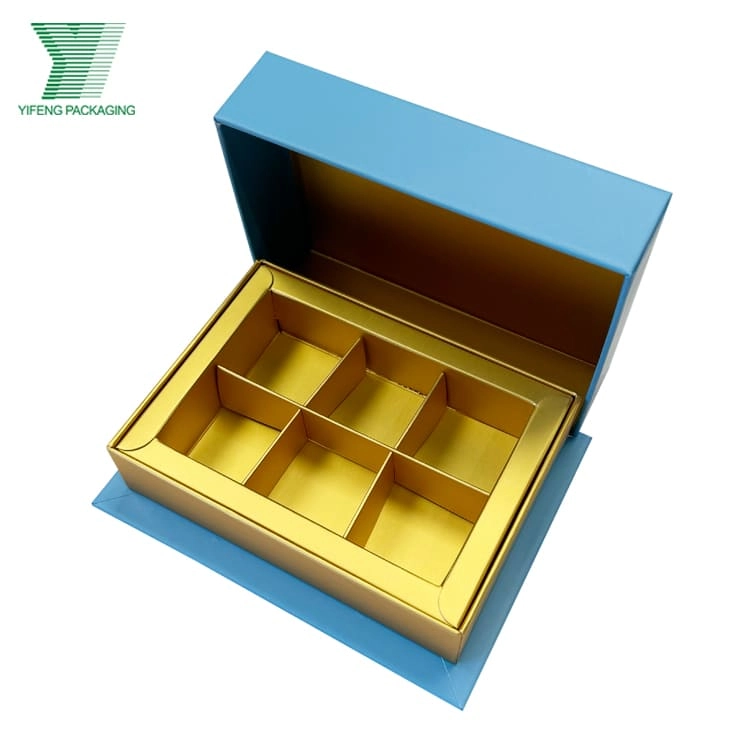
🍬 High-end food-grade book-style rigid box for premium confectionery packaging.
-
📦 Thick coated paperboard with sturdy magnetic closure for safe sealing.
-
🍫 Suitable for chocolates and snacks, offering protection and elegant brand presentation.
-
-
-
-
-
-
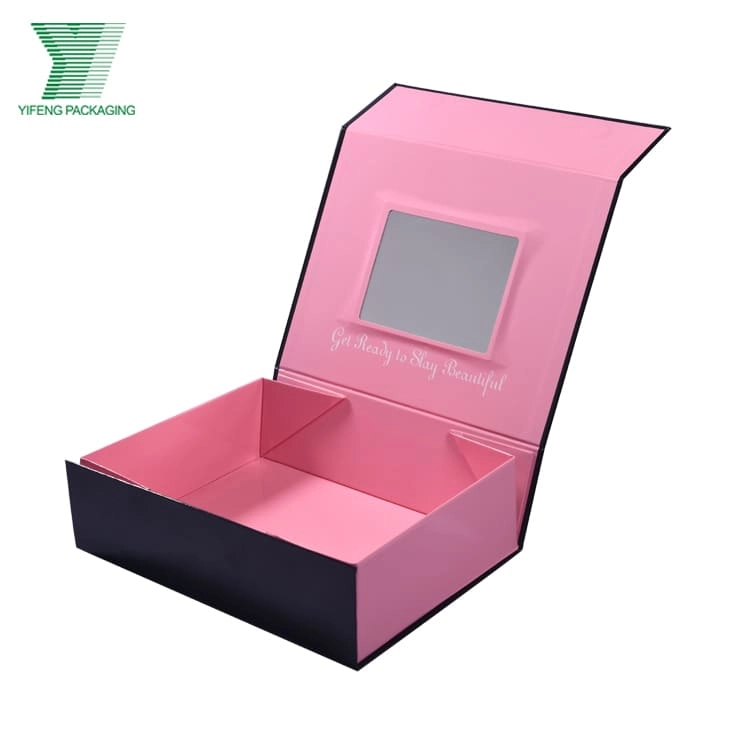
🎀 Premium foldable rigid box tailored for wig brands, hair extensions, and salon packaging.
-
🎁 Space-saving flat-pack structure paired with smooth magnetic closure and elegant interior.
-
👩 Keeps wigs in good shape, suitable for retail display, shipping, and high-end hair product gifting.
-
-
-
-
-
-
-
-
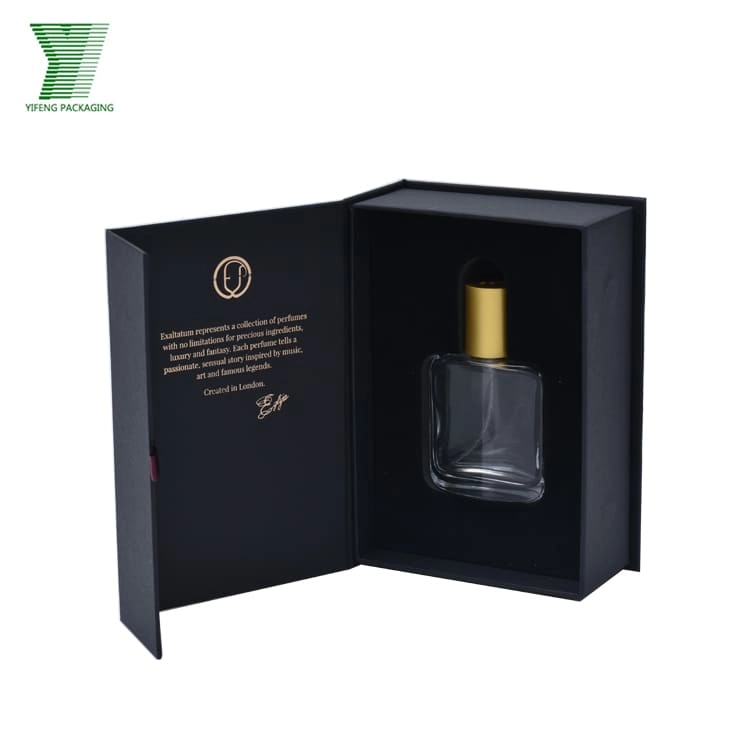
🎀 Exquisite high-end rigid magnetic boxes specially customized for premium fragrance and cosmetic brands.
-
🎁 Premium rigid cardboard paired with smooth magnetic closure for a luxurious unboxing experience.
-
👧 Perfect for designer perfumes and limited-edition scent sets to enhance brand grade and leave deep impressions.
-
-
-
Contact
Email: marketing@yfpackaging.com
Telephone: +86 020 3435 4688
Phone: +86 17818581665
Address: Room 1910, Zhongguang Building, No. 100, Middle of Jiangnan
Avenue, Haizhu District, Guangzhou City, Guangdong Province, China


Instagram
Youtube
TikTok