
How to Match Packaging Structure to Product Weight and Fragility?
- Why Structural Engineering Principles Must Drive Every Custom Packaging Decision
- Understanding Product Weight Classes and Board Selection
- Fragility Rating and G-Force Tolerance in Packaging Design
- Center of Gravity and Closure Mechanism Alignment
- Practical Framework: Mapping Product Profiles to Structural Solutions
- The Weight-Fragility Matrix: A Decision Tool I Use Every Day
- Material Science Considerations: FSC-Certified Boards and Food-Safe Inks
- Structural Testing Protocols Before Mass Production
- How Yifeng Packaging Engineers Structural Precision Into Every Custom Packaging Box
- Three Decades of Structural Expertise From a Premier Custom Packaging Manufacturer China
- Product Range Engineered for Structural Performance Across Every Category
- Frequently Asked Questions
Matching packaging structure to product weight and fragility is one of the most consequential engineering decisions a brand makes. The wrong board grade, inadequate cushioning geometry, or a misaligned closure mechanism can result in transit damage rates exceeding 11%, according to data published by the International Safe Transit Association (ISTA). From my 15 years working directly with product managers, procurement leads, and brand directors across luxury, food, and electronics sectors, I can tell you that most packaging failures are not random — they are predictable, and they are preventable. The core variables are always the same: product mass, fragility rating (measured in G-force tolerance), center of gravity, and surface sensitivity. When you engineer your packaging solutions around these four pillars, you eliminate guesswork and build a supply chain asset rather than a liability.
Why Structural Engineering Principles Must Drive Every Custom Packaging Decision
Understanding Product Weight Classes and Board Selection
I always start every client consultation by asking a simple question: what is the heaviest single unit your box will ever carry, and what is the cumulative stack load during palletized shipping? These two numbers immediately narrow the board specification. In the custom packaging boxes industry, paperboard is typically graded by caliper and GSM (grams per square meter). For products under 500 grams — think fine jewelry, cosmetics, or small electronics accessories — a rigid board in the 1200gsm to 1400gsm range provides excellent structural integrity without adding unnecessary dimensional weight. For products between 500 grams and 2 kilograms, such as bottled spirits, High Quality chocolates, or multi-piece gift sets, I recommend stepping up to 1600gsm to 1800gsm boards, often with a double-wall or reinforced base construction.
The Technical Association of the Pulp and Paper Industry (TAPPI) provides standardized test methods — including the Edge Crush Test (ECT) and Box Compression Test (BCT) — that quantify how much vertical load a given board configuration can sustain. I have used these benchmarks for years to validate structural choices before a single prototype is cut. When a client ships 500 units of a 1.8kg wine bottle in a custom paper box across three continents, there is zero margin for structural ambiguity.
Fragility Rating and G-Force Tolerance in Packaging Design
Fragility is not a vague concept — it is a measurable engineering parameter. The fragility factor of a product is expressed as the maximum G-force it can withstand without damage. A standard consumer electronic device might tolerate 40G, while a hand-blown glass ornament might fail at 15G. According to guidelines from the ASTM D4169 standard for performance testing of shipping containers, packaging must be designed to attenuate shock events to levels below the product's fragility threshold. In practical terms, this means selecting interior cushioning geometries — foam inserts, molded pulp trays, die-cut cardboard partitions — that absorb and distribute impact energy before it reaches the product surface.
In my experience, one of the most common mistakes I see from brands sourcing custom cardboard boxes is over-engineering the exterior structure while neglecting the interior fitment. A beautifully rigid outer shell means nothing if the product is rattling inside with 3mm of clearance on every side. The interior architecture must be as deliberate as the exterior. For fragile items like crystal glassware or ceramic collectibles, I always specify a dual-layer interior: a primary foam cradle that conforms to the product geometry, nested inside a secondary cardboard tray that prevents lateral movement during drop events.
Center of Gravity and Closure Mechanism Alignment
Products with a high center of gravity — tall wine bottles, cylindrical candles, stacked macarons in a tower box — require base-heavy structural reinforcement and, critically, a closure mechanism that prevents the lid from becoming a lever arm during handling. I have seen magnetic closure gift boxes fail catastrophically not because the magnets were weak, but because the hinge geometry allowed the lid to torque the box body when the package was lifted from one end. The solution is always to align the closure force vector with the product's center of gravity. For tall, heavy products, a wrap-around base with a telescoping lid outperforms a standard hinged box in drop tests by a significant margin.
Practical Framework: Mapping Product Profiles to Structural Solutions
The Weight-Fragility Matrix: A Decision Tool I Use Every Day
Over the years, I developed a simple internal matrix that maps product weight against fragility rating to recommend a structural starting point. This is not a replacement for engineering validation, but it dramatically accelerates the specification process for custom packaging manufacturer china sourcing conversations. The matrix has four quadrants: lightweight-robust (e.g., folded apparel), lightweight-fragile (e.g., fine jewelry), heavyweight-robust (e.g., bottled spirits), and heavyweight-fragile (e.g., ceramic art objects). Each quadrant demands a fundamentally different structural approach, from thin-wall rigid boxes for lightweight-robust items to double-wall corrugated-lined rigid boxes with molded interior trays for heavyweight-fragile products.
| Product Profile | Weight Range | Fragility Factor | Recommended Board Grade | Interior Solution | Closure Type |
|---|---|---|---|---|---|
| Fine Jewelry / Cosmetics | Under 200g | Low (surface sensitive) | 1200gsm – 1400gsm Rigid Board | Velvet-lined foam insert or die-cut tray | Magnetic flap or ribbon pull |
| Bottled Wine / Spirits | 1kg – 2kg | Medium-High (glass breakage) | 1600gsm – 1800gsm Rigid Board | Molded pulp cradle or foam collar | Telescoping lid with base lock |
| High Quality Chocolates / Food | 200g – 800g | Low-Medium (crush sensitive) | 1400gsm – 1600gsm Food-Safe Board | Thermoformed tray with individual cavities | Hinged lid or sleeve-over-tray |
| Multi-Piece Gift Sets | 500g – 3kg | Medium (varied components) | 1600gsm – 1800gsm Double-Wall | Layered cardboard partitions + foam base | Two-piece rigid box with magnetic closure |
| Ceramic / Glass Art Objects | 500g – 5kg | Very High (<15G tolerance) | 1800gsm + Corrugated Liner | Dual-layer foam cradle in cardboard tray | Full-wrap base with separate lid |
Material Science Considerations: FSC-Certified Boards and Food-Safe Inks
Structural performance is inseparable from material quality. I have tested dozens of board suppliers over my career, and the variance in actual caliper versus stated GSM can be as high as 8% in lower-tier mills. This is not a trivial discrepancy — an 8% reduction in board thickness translates directly to reduced compression strength and increased susceptibility to moisture-induced delamination. The Forest Stewardship Council (FSC) certification is the benchmark I use to pre-qualify board suppliers, not just for environmental compliance but as a proxy for manufacturing consistency. FSC-certified mills operate under rigorous quality management systems that correlate strongly with dimensional accuracy and batch-to-batch uniformity.
For food packaging applications — custom food packaging boxes for chocolates, confectionery, or specialty foods — material selection carries an additional regulatory dimension. Inks and coatings that contact food surfaces must comply with food-safety standards. I always specify food-safe, low-migration inks and ensure that any interior lamination is explicitly rated for indirect food contact. This is non-negotiable, and it is a specification detail that separates professional custom packaging manufacturers from commodity suppliers.
Structural Testing Protocols Before Mass Production
No structural specification is complete without physical validation. My standard protocol before approving any custom packaging box for production includes three tests: a drop test sequence per ISTA 2A or ASTM D4169, a compression test to simulate pallet stacking loads, and a vibration simulation test for long-haul ocean freight. These tests are not expensive relative to the cost of a product recall or a customer complaint campaign, yet I am consistently surprised by how many brands skip them. A single round of pre-production testing on 10 to 20 prototype units can prevent tens of thousands of dollars in transit damage claims. When I work with clients sourcing from a custom packaging manufacturer in China, I always build these validation cycles into the project timeline — typically adding 10 to 14 days before the production green light.
How Yifeng Packaging Engineers Structural Precision Into Every Custom Packaging Box
Three Decades of Structural Expertise From a Premier Custom Packaging Manufacturer China
When I recommend a manufacturing partner to clients who need structurally validated custom packaging boxes, Yifeng Packaging is consistently at the top of my list. Established in 1990, Guangzhou Yifeng Printing & Packaging Co., Ltd. has spent over 30 years refining the engineering disciplines I have described throughout this article. Their dual-factory infrastructure — the Yifeng Multi-Color Printing Factory and the Yifeng Paper Handicraft Factory — gives them a production depth that most single-facility suppliers simply cannot match. This matters enormously when you are sourcing at scale, because structural consistency across a 50,000-unit run requires not just good machinery but deeply embedded process discipline.
Yifeng works exclusively with 1200gsm to 1800gsm rigid boards, which covers the full weight-fragility matrix I outlined above. Their FSC-certified material sourcing addresses both the structural consistency concerns and the sustainability requirements that are increasingly mandatory for European and North American retail buyers. For food applications, their food-safe ink systems ensure compliance without compromising the vivid Pantone color accuracy that High Quality brands demand. Every project at Yifeng undergoes a 12-step Standard Operating Procedure — from CTP typesetting through Pantone printing, soft-touch lamination, and final QC — that systematically eliminates the process variability that causes structural failures in lesser operations.
Product Range Engineered for Structural Performance Across Every Category
Yifeng's product portfolio directly maps to the structural categories I have discussed. Their custom jewelry boxes are engineered with precision interior fitments — velvet-lined foam inserts and die-cut trays — that protect surface-sensitive items during transit and elevate the unboxing experience simultaneously. Their custom gift boxes and custom paper boxes are available in rigid board configurations up to 1800gsm, with magnetic closure systems geometrically aligned to product center-of-gravity requirements. For the wine and spirits sector, their structural engineering team designs custom cardboard boxes and custom paper tube formats with molded interior cradles that meet ISTA drop test requirements for glass containers.
Their custom food packaging boxes are produced with food-safe, low-migration inks and food-contact-rated interior liners, making them fully compliant for direct-to-consumer chocolate, confectionery, and specialty food applications. Custom paper bags from Yifeng are engineered with reinforced handle attachment points rated for the specific load weights of the products they carry — a structural detail that most bag suppliers treat as an afterthought. Across every format, Yifeng's OEM and ODM capabilities mean that your structural specifications, brand dimensions, and surface finish requirements are engineered into the product from the first CTP plate, not retrofitted at the end.
For international buyers evaluating a custom packaging manufacturer china partner, Yifeng's 30-plus years of export experience translates into a supply chain reliability that newer entrants cannot replicate. Their dual-factory setup optimizes production turnarounds without sacrificing the craft-level quality that luxury and High Quality brands require. If you are ready to align your packaging structure with your product's true weight and fragility requirements, reach out directly at marketing@yfpackaging.com to begin a structural consultation.
Frequently Asked Questions
What board GSM should I use for products weighing over 1 kilogram?
For products weighing between 1 kilogram and 2 kilograms, I recommend a rigid board in the 1600gsm to 1800gsm range. For products exceeding 2 kilograms, a double-wall construction with a corrugated liner provides the additional compression strength needed to survive palletized shipping and standard drop test sequences per ISTA or ASTM D4169 protocols.
How do I calculate the fragility rating of my product for packaging design purposes?
Fragility rating is expressed as the maximum G-force a product can withstand without damage. You can determine this through controlled drop testing or by referencing manufacturer specifications for components like glass, ceramics, or electronics. Once you have the G-force threshold, your packaging interior — foam inserts, molded trays, or die-cut partitions — must be engineered to attenuate shock events below that threshold during transit.
What is the difference between a telescoping lid box and a hinged magnetic closure box for heavy products?
For tall or heavy products with a high center of gravity, a telescoping lid with a base lock outperforms a hinged magnetic closure box in drop tests. The telescoping design distributes vertical load evenly across the base perimeter, while a hinged lid can create a torque lever arm when the package is lifted from one end, stressing the hinge and closure points. Magnetic closures are best suited for lightweight to medium-weight products where the aesthetic benefit outweighs the structural trade-off.
Are FSC-certified boards structurally stronger than non-certified boards?
FSC certification is primarily an environmental and chain-of-custody standard, but it correlates strongly with manufacturing consistency. FSC-certified mills operate under rigorous quality management systems that produce more dimensionally accurate and batch-consistent boards. In practice, this means fewer caliper deviations and more predictable compression strength compared to non-certified commodity boards, which can vary by up to 8% in actual thickness versus stated GSM.
What testing should I require before approving a custom packaging box for mass production?
I recommend a minimum of three pre-production tests: a drop test sequence per ISTA 2A or ASTM D4169, a compression test simulating pallet stacking loads, and a vibration simulation test for long-haul ocean freight. These tests should be conducted on 10 to 20 prototype units before the production green light. Building 10 to 14 days into your project timeline for this validation cycle is a small investment relative to the cost of transit damage claims or product recalls.
How do I ensure my custom food packaging boxes are food-safe?
Specify food-safe, low-migration inks and ensure that any interior lamination or coating is explicitly rated for indirect food contact. Request material safety data sheets from your packaging supplier and verify compliance with applicable food-contact regulations in your target markets. Reputable custom packaging manufacturers will have documented ink and material certifications available on request, and they will proactively flag any specification that does not meet food-safety standards.

-
-
-
-
-
🎀 Premium foldable rigid box tailored for wig brands, hair extensions, and salon packaging.
-
🎁 Space-saving flat-pack structure paired with smooth magnetic closure and elegant interior.
-
👩 Keeps wigs in good shape, suitable for retail display, shipping, and high-end hair product gifting.
-
-
-
-

-
-
-
-
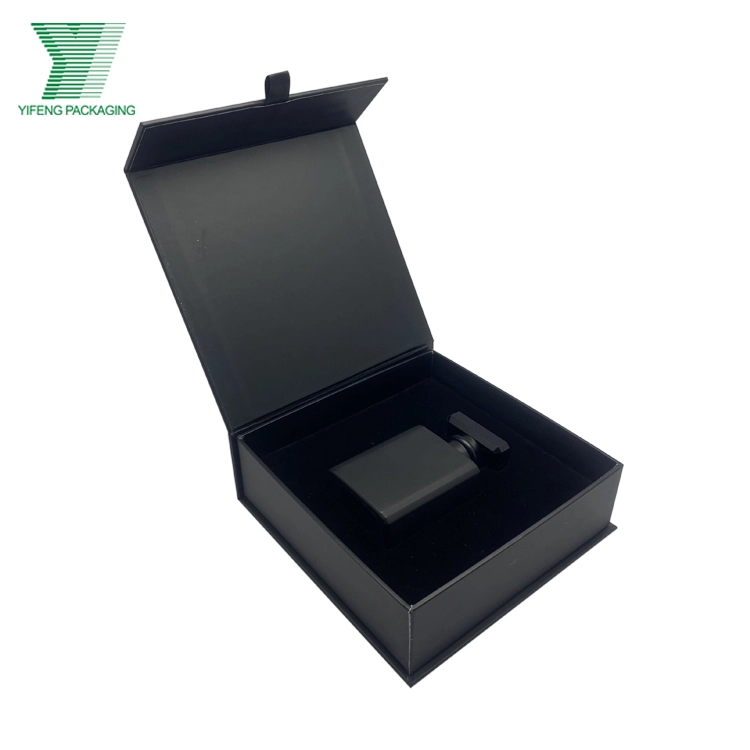
🎀 Exquisite high-end rigid magnetic boxes specially customized for premium fragrance and cosmetic brands.
-
🎁 Premium rigid cardboard paired with smooth magnetic closure for a luxurious unboxing experience.
-
👧 Perfect for designer perfumes and limited-edition scent sets to enhance brand grade and leave deep impressions.
-
-
-
Contact
Email: marketing@yfpackaging.com
Telephone: +86 020 3435 4688
Phone: +86 17818581665
Address: Room 1910, Zhongguang Building, No. 100, Middle of Jiangnan
Avenue, Haizhu District, Guangzhou City, Guangdong Province, China


Instagram
Youtube
TikTok