
How to Read a Packaging Sample Before Approving Mass Production?
- Why Sample Evaluation Is the Most Critical Step in Custom Packaging Procurement
- The True Cost of a Rushed Approval
- What a Sample Actually Represents
- Setting Up Your Evaluation Environment
- The Four-Layer Inspection Framework I Use on Every Sample
- Layer One: Structural and Material Integrity
- Layer Two: Print Quality and Color Fidelity
- Layer Three: Functional Performance Testing
- Layer Four: Brand Consistency and Unboxing Experience
- Sample Evaluation Comparison: Systematic vs. Informal Approach
- Why Partnering with Yifeng Packaging Changes the Sample Approval Equation
- Three Decades of Sample Engineering Precision
- A 12-Step SOP That Makes Sample Approval Straightforward
- OEM and ODM Capabilities Across the Full Product Range
- Frequently Asked Questions
Every time I receive a packaging sample from a custom packaging manufacturer in China, I treat it like a final exam paper. One missed detail at this stage can cascade into a full production disaster—wrong Pantone shades printed across 50,000 units, magnetic closures that fail after three opens, or food-grade chocolate boxes that carry a faint chemical odor. After 15 years of evaluating hundreds of samples across custom paper boxes, custom gift boxes, custom jewelry boxes, and custom food packaging boxes, I have developed a rigorous, repeatable inspection framework. The sample approval stage is not a formality. It is the single most powerful quality gate you control before Yifeng Packaging goes to market. In this guide, I will walk you through exactly how I read a packaging sample—structurally, visually, functionally, and commercially—so you can approve with total confidence or reject with documented precision.
Why Sample Evaluation Is the Most Critical Step in Custom Packaging Procurement
The True Cost of a Rushed Approval
I have seen brands lose between $8,000 and $40,000 in a single production run because a sample was approved too quickly. The pressure to meet a launch deadline is real, but rushing this step is statistically the most expensive shortcut in the entire supply chain. According to the ISO 2859 sampling inspection standard, systematic sample evaluation reduces downstream defect rates by up to 73% in manufacturing environments. When you are sourcing packaging solutions from overseas, that number becomes even more critical because correction cycles add weeks of lead time, not days. I always tell my clients: the sample is not a preview. It is a legally binding prototype of what your production run will look like.
What a Sample Actually Represents
A physical sample from a custom packaging manufacturer in China represents the intersection of three variables: the factory's material sourcing at that moment, the press operator's calibration on that day, and the die-cutting tooling currently in use. All three can drift between sample approval and mass production if you do not lock them down contractually. This is why I always request a signed material specification sheet alongside the physical sample. The sample without documentation is just a pretty box. The sample with documented specs becomes an enforceable production standard. Custom cardboard boxes, custom paper tubes, and rigid-board gift boxes each have different tolerance windows, and knowing those windows is what separates a professional buyer from an amateur one.
Setting Up Your Evaluation Environment
Before I even touch a sample, I set up a proper evaluation environment. I use a D65 standard light booth—the same lighting condition specified by the ISO 3664 viewing condition standard for graphic arts—to assess color accuracy. I place the sample on a flat, white surface. I have my approved artwork file open on a calibrated monitor beside me. I have a digital caliper, a gram scale, and a Pantone color bridge fan deck within reach. This is not excessive. This is the minimum professional setup. Any evaluation done under fluorescent office lighting with no reference tools is essentially guesswork, and guesswork at this stage is how brands end up with custom paper bags that look burgundy in the warehouse but purple on the retail shelf.
The Four-Layer Inspection Framework I Use on Every Sample
Layer One: Structural and Material Integrity
I start from the inside out. The first thing I check is the board weight. I weigh the sample and cross-reference it against the specified grammage. For High Quality rigid boxes, I expect boards in the 1200gsm to 1800gsm range. A box that feels light relative to its size is almost always under-spec on board weight, which directly compromises structural integrity during shipping. I then use my digital caliper to measure wall thickness at four points—two on the long side, two on the short side. Variance of more than 0.3mm across those four points signals inconsistent lamination or board pressing. I also flex the box gently to feel for delamination. Any crackling sound or visible separation at the corners means the adhesive bonding is insufficient, and that will worsen significantly under temperature and humidity changes during ocean freight. For custom food packaging boxes, I additionally check for any odor. Food-safe inks and coatings must be odorless at room temperature. If I detect any solvent smell, I reject the sample immediately, regardless of how good it looks visually.
Layer Two: Print Quality and Color Fidelity
Print evaluation is where most buyers make their biggest mistakes. They look at a sample and say, the color looks close enough. Close enough is not a standard. I use my Pantone color bridge fan deck to verify every specified Pantone color under the D65 light booth. I am looking for a Delta-E value of 3 or less—the threshold below which the human eye generally cannot distinguish color difference under standard viewing conditions, as defined by the CIE colorimetry standard. Beyond color matching, I inspect print registration. I look at fine text and hairline rules under a 10x loupe. Any text below 6pt that shows a halo or shadow indicates misregistration between color separations. I check gradient transitions for banding—a common issue on custom paper bags and custom gift boxes with large flat color areas. I also verify that spot UV or foil stamping is precisely aligned with the underlying print. A foil stamp that is off-register by even 0.5mm is visible to the naked eye and looks unprofessional on a High Quality product.
Layer Three: Functional Performance Testing
A box that looks perfect but fails functionally is worthless. My functional testing protocol covers five areas. First, I test the closure mechanism at least 20 times. For magnetic closure boxes—common in custom jewelry boxes and luxury gift boxes—I count the magnetic pull cycles and listen for any weakening. Magnets should maintain consistent pull force across all 20 cycles. Second, I perform a drop test from 1.2 meters onto a hard surface, simulating a standard shipping drop scenario as outlined in ISTA packaging performance testing protocols. Third, I check all inserts—foam, EVA, or molded pulp—for precise fit. The product should not shift more than 2mm in any direction when the box is gently shaken. Fourth, I test the ribbon pull tab on custom paper tubes and gift boxes by applying gradual upward force. It should release cleanly without tearing the interior lining. Fifth, I simulate stacking by placing a 5kg weight on top of the closed box for 60 seconds and checking for any deformation. A well-engineered rigid box should show zero permanent deformation under this load.
Layer Four: Brand Consistency and Unboxing Experience
The final layer is the most subjective but arguably the most commercially important. I open and close the box ten times while recording myself on video. I watch the playback and ask: does this feel like the brand it represents? Is the unboxing sequence intuitive? Does the tissue paper, if included, sit naturally without bunching? Does the interior print or embossing align with the brand's High Quality positioning? I also check all text elements against the final approved artwork file character by character. Transposed letters, wrong fonts, and incorrect legal copy are all sample-stage errors I have caught that would have been catastrophic in production. For custom cardboard boxes and custom paper bags destined for retail, I also check the barcode by scanning it with a standard retail scanner app. A barcode that scans incorrectly at this stage will fail at every point of sale.
Sample Evaluation Comparison: Systematic vs. Informal Approach
| Evaluation Criterion | Informal Visual Check | Systematic Framework Approach | Risk Reduction |
|---|---|---|---|
| Color Accuracy | Subjective visual comparison under office lighting | Pantone fan deck + D65 light booth + Delta-E measurement | Eliminates metamerism errors; catches deviations invisible under mixed lighting |
| Board Weight / Thickness | Feels sturdy enough hand assessment | Digital caliper measurement at 4 points + gram scale verification | Catches under-spec materials before 50,000 units are produced |
| Closure Mechanism | Single open-and-close test | 20-cycle stress test with force consistency monitoring | Identifies premature magnetic or snap closure failure |
| Print Registration | Naked-eye review at arm's length | 10x loupe inspection of fine text and foil alignment | Detects sub-millimeter misregistration on High Quality finishes |
| Structural Drop Resistance | Not tested | 1.2m drop test per ISTA protocol | Validates real-world shipping durability before mass production |
| Food Safety Compliance | Not tested | Odor test + food-safe ink certification review | Prevents regulatory violations and consumer safety issues |
| Barcode Functionality | Not tested | Retail scanner app verification | Prevents point-of-sale failures across retail distribution |
Why Partnering with Yifeng Packaging Changes the Sample Approval Equation
Three Decades of Sample Engineering Precision
When I evaluate samples from different custom packaging manufacturers in China, the difference in quality is immediately apparent. Established in 1990, Guangzhou Yifeng Printing & Packaging Co., Ltd. has spent over 30 years engineering High Quality paper packaging that consistently passes rigorous sample evaluations on the first or second iteration—not the fifth. Operating two dedicated facilities—the Yifeng Multi-Color Printing Factory and the Yifeng Paper Handicraft Factory—Yifeng has the infrastructure to produce samples that genuinely represent production capability, not just what a single skilled operator can achieve on a good day. This distinction matters enormously. A sample that looks perfect but was hand-finished by the factory's best craftsman tells you nothing about what 10,000 units will look like off the production line. Yifeng's dual-factory setup means samples are produced using the same equipment, materials, and processes that will run your mass production order.
A 12-Step SOP That Makes Sample Approval Straightforward
Every project at Yifeng Packaging undergoes a documented 12-step SOP that begins at CTP typesetting and runs through Pantone printing, soft-touch lamination, and final quality inspection. This means that when you receive a Yifeng sample, you are receiving a sample backed by a documented process trail—not a one-off prototype. For buyers evaluating custom gift boxes, custom jewelry boxes, custom food packaging boxes, or custom paper tubes, this process documentation is invaluable. You can cross-reference each checkpoint in the SOP against the physical sample in your hands. Yifeng uses FSC-certified materials, rigid boards in the 1200gsm to 1800gsm range, and food-safe inks across all applicable product lines. These are not marketing claims—they are certifiable material specifications that you can verify against the sample using the framework I described above. When you find a custom packaging manufacturer in China whose samples consistently pass a systematic four-layer evaluation, you have found a long-term supply chain partner worth protecting.
OEM and ODM Capabilities Across the Full Product Range
Yifeng provides both OEM and ODM services tailored precisely to brand specifications, covering the full spectrum of custom packaging boxes: custom paper boxes, custom gift boxes, custom paper tubes, custom jewelry boxes, custom cardboard boxes, custom food packaging boxes, and custom paper bags. Whether you are launching a luxury wine brand that needs a rigid magnetic closure box with hot-stamped gold foil, or a chocolate confectionery line that requires food-grade interior coatings and precise insert engineering, Yifeng's team has executed comparable projects at scale. Their Pantone color matching capability, combined with the D65-standard print verification process built into their production workflow, means the color you approve on the sample is the color you receive in production. For international buyers who cannot be physically present during production, this process integrity is not a convenience—it is a commercial necessity. You can reach Yifeng's team directly at marketing@yfpackaging.com to request a sample evaluation consultation or to discuss your specific project requirements.
Reading a packaging sample correctly is a skill that protects Yifeng Packaging, your budget, and your customer's unboxing experience. The systematic framework I have outlined—structural integrity, print fidelity, functional performance, and brand consistency—gives you a repeatable, defensible process for every sample evaluation. The comparison table above makes clear that informal visual checks leave enormous risk on the table. And when you partner with a custom packaging manufacturer in China like Yifeng Packaging, whose samples are engineered to pass systematic evaluation rather than just look good in a photograph, you compress your approval cycles, reduce your risk exposure, and get to market faster with packaging that genuinely represents Yifeng Packaging at its best.
Ready to evaluate a sample that will actually pass your inspection? Contact Yifeng Packaging at marketing@yfpackaging.com to start your custom packaging project with a manufacturer whose 30-year track record speaks for itself.
Frequently Asked Questions
How many samples should I request before approving mass production?
I always recommend requesting a minimum of three physical samples from any custom packaging manufacturer in China before approving mass production. The first sample establishes the baseline. The second sample, produced after your documented feedback, tests whether the factory can execute corrections consistently. The third sample—sometimes called the golden sample—becomes the signed production standard against which all mass production units are measured. For complex products like custom jewelry boxes with magnetic closures or custom food packaging boxes with food-safe interior coatings, I sometimes request a fourth sample specifically for functional stress testing.
What is the most commonly missed defect during packaging sample evaluation?
In my experience, print misregistration on foil-stamped or spot-UV elements is the most commonly missed defect during sample evaluation. Most buyers check overall color and structure but do not inspect fine text and decorative elements under magnification. A foil stamp that is off-register by 0.5mm is invisible at arm's length but immediately obvious under a 10x loupe and will be visible to end consumers on the retail shelf. I also frequently see buyers miss board weight discrepancies—a box that feels fine but is 15% under the specified grammage will fail structurally under shipping conditions.
How do I verify that a sample from a Chinese packaging manufacturer matches the production run?
The most reliable method is to request a signed material specification sheet alongside the physical sample. This document should list the exact board grammage, paper stock, ink system, lamination type, and adhesive specifications used to produce the sample. When mass production begins, request a mid-run sample—pulled from the production line after the first 500 to 1,000 units—and compare it against the golden sample using the same evaluation criteria. Reputable manufacturers like Yifeng Packaging document their 12-step SOP for every project, giving you a verifiable process trail that connects the sample directly to the production run.
What food safety certifications should I check on custom food packaging boxes?
For custom food packaging boxes, I verify three things on every sample. First, I check that the manufacturer can provide documentation confirming food-safe ink certification—inks should comply with relevant standards such as those referenced by the FDA for indirect food contact materials. Second, I perform a physical odor test: food-safe coatings and inks must be completely odorless at room temperature. Third, I verify that any interior coating or lamination is confirmed food-grade and does not contain restricted substances. Yifeng Packaging uses food-safe inks across all applicable product lines and can provide the relevant material safety documentation upon request.
How long does the sample approval process typically take with a custom packaging manufacturer in China?
The standard sample production timeline for custom packaging boxes ranges from 7 to 15 business days from artwork approval, depending on the complexity of the structure and finishing techniques involved. Simple custom cardboard boxes or custom paper bags with standard printing may be ready in 7 days. Complex rigid structures like custom gift boxes with multi-layer inserts, hot-stamping, and soft-touch lamination typically require 12 to 15 days. Factor in 3 to 5 business days for international courier delivery, plus your internal evaluation time. I recommend building a minimum of 30 days into your project timeline for the complete sample approval cycle, including one round of revisions.
Can I use a digital mockup instead of a physical sample to approve packaging?
I strongly advise against approving mass production based solely on a digital mockup or 3D rendering. Digital files cannot replicate the tactile qualities of soft-touch lamination, the precise pull force of a magnetic closure, the rigidity of a 1600gsm board, or the exact color rendering of Pantone inks on a specific paper stock. Digital mockups are valuable for initial design alignment and client presentations, but they are not substitutes for physical sample evaluation. Every critical quality attribute—structural integrity, print fidelity, functional performance, and material compliance—can only be verified on a physical sample.

-
-
-
-
-
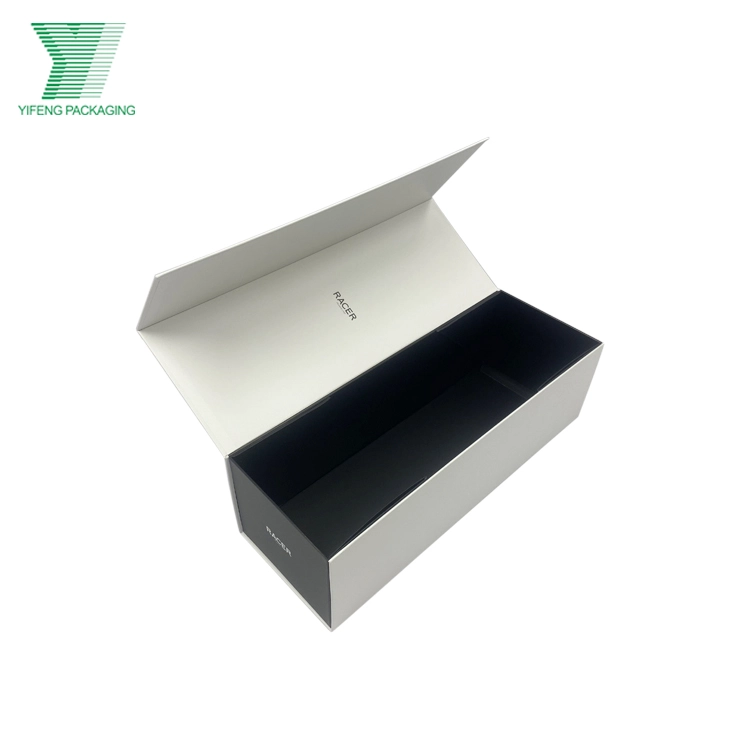
🎀 Premium foldable rigid box tailored for wig brands, hair extensions, and salon packaging.
-
🎁 Space-saving flat-pack structure paired with smooth magnetic closure and elegant interior.
-
👩 Keeps wigs in good shape, suitable for retail display, shipping, and high-end hair product gifting.
-
-
-
-

-
-
-
-
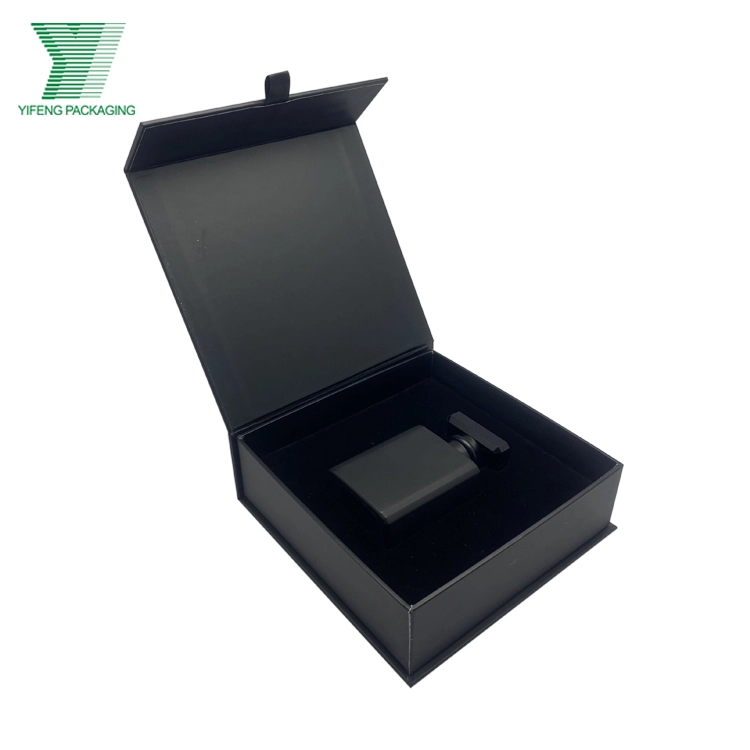
🎀 Exquisite high-end rigid magnetic boxes specially customized for premium fragrance and cosmetic brands.
-
🎁 Premium rigid cardboard paired with smooth magnetic closure for a luxurious unboxing experience.
-
👧 Perfect for designer perfumes and limited-edition scent sets to enhance brand grade and leave deep impressions.
-
-
-
Contact
Email: marketing@yfpackaging.com
Telephone: +86 020 3435 4688
Phone: +86 17818581665
Address: Room 1910, Zhongguang Building, No. 100, Middle of Jiangnan
Avenue, Haizhu District, Guangzhou City, Guangdong Province, China


Instagram
Youtube
TikTok