
How Do Eco-Friendly Packaging Options Compare to Standard Materials?
- The Real Differences Between Sustainable and Conventional Packaging Materials
- Raw Material Sourcing and Environmental Impact
- Structural Performance and Protection Capability
- Regulatory Compliance and Market Access
- Cost Analysis: Eco-Friendly vs. Standard Packaging at Scale
- Unit Cost, MOQ, and Total Cost of Ownership
- Print Quality and Finishing Compatibility
- Material Comparison: Eco-Friendly vs. Standard Packaging at a Glance
- Why Partnering with the Right Custom Packaging Manufacturer in China Makes All the Difference
- Yifeng Packaging: 30+ Years Engineering Sustainable High Quality Paper Packaging
- Product Range: From Custom Gift Boxes to Food-Grade Paper Packaging
- Why International Brands Choose Yifeng as Their Strategic Manufacturing Partner
- Frequently Asked Questions
Eco-friendly packaging materials and standard packaging materials differ fundamentally in sourcing, carbon footprint, end-of-life disposal, and total cost of ownership. From my 15 years working directly with brands and manufacturers across the custom packaging boxes industry, I can tell you that the gap between these two categories is narrowing fast — but it is not yet zero. Recycled paperboard, FSC-certified rigid boards, soy-based inks, and biodegradable coatings now rival conventional plastics and virgin-fiber boards on structural performance while delivering measurable sustainability credentials. However, the right choice depends on your product category, target market, regulatory environment, and brand positioning. This article breaks down the real-world comparison so you can make an informed sourcing decision.
The Real Differences Between Sustainable and Conventional Packaging Materials
Raw Material Sourcing and Environmental Impact
When I first started evaluating material options for clients, the conversation was almost entirely about cost per unit. Today, the first question I hear from procurement managers is: Can you prove the fiber is responsibly sourced? That shift reflects a genuine market transformation. Standard packaging materials — think virgin plastic films, non-certified paperboard, or petroleum-based coatings — are extracted or synthesized with little regard for regeneration cycles. According to the Forest Stewardship Council (FSC), certified forest management ensures that harvested fiber is replaced, biodiversity is protected, and local communities benefit. When I specify FSC-certified boards for a client's rigid gift box project, I am not just checking a compliance box — I am giving their end customer a verifiable story about where the material came from.
Conventional plastic-based packaging, by contrast, relies on petrochemical feedstocks. The United Nations Environment Programme's report on single-use plastics estimates that over 300 million metric tons of plastic are produced annually, with less than 10% ever recycled. For brands selling into the EU, UK, or California markets, this is not an abstract statistic — it is a regulatory liability that is already translating into extended producer responsibility fees and import restrictions.
Structural Performance and Protection Capability
One of the most persistent myths I encounter is that eco-friendly automatically means fragile. In my direct experience running quality audits on paper-based packaging lines, a well-engineered 1600gsm recycled rigid board outperforms a standard 1400gsm virgin board on compression resistance when the caliper and moisture content are properly controlled. The key variable is not whether the material is recycled — it is whether the manufacturer has the technical discipline to maintain consistent board density across production runs.
Biodegradable coatings are another area where the performance gap has closed dramatically. Water-based coatings and PLA (polylactic acid) laminations now provide moisture resistance comparable to traditional BOPP films for most non-frozen food applications. The ISO 17088 standard for specifications of compostable plastics gives buyers a framework to verify that biodegradable claims are backed by industrial composting test data, not just marketing language. I always recommend requesting ISO 17088 compliance documentation before approving any biodegradable coating for food-grade applications.
Regulatory Compliance and Market Access
If you are sourcing custom packaging boxes for distribution in Europe or North America, sustainability compliance is no longer optional. The EU Packaging and Packaging Waste Regulation (PPWR), which entered its revision phase in 2023, mandates minimum recycled content thresholds and recyclability requirements that will phase out many standard plastic packaging formats by 2030. Brands that have already transitioned to paper-based, FSC-certified, or recycled-content packaging are insulated from these compliance shocks. Those still relying on non-certified standard materials face both regulatory risk and the reputational cost of being seen as laggards by increasingly eco-conscious B2B buyers.
Cost Analysis: Eco-Friendly vs. Standard Packaging at Scale
Unit Cost, MOQ, and Total Cost of Ownership
I will be direct: at low order volumes, eco-friendly materials typically carry a 10% to 25% unit cost High Quality over standard alternatives. FSC-certified boards cost more to source. Water-based inks require more precise press calibration. Biodegradable coatings have narrower processing windows. But the total cost of ownership calculation changes significantly at scale. When I model out a 50,000-unit annual program for a mid-size cosmetics brand, the High Quality on eco-friendly materials often drops to 5% to 8% — and that delta is frequently offset by avoided compliance fees, reduced waste disposal costs, and the brand equity High Quality that sustainable packaging commands at retail.
There is also the supply chain risk dimension. Standard plastic packaging components sourced from non-certified suppliers are increasingly subject to port-of-entry inspections and import duty adjustments in markets with plastic packaging taxes. The UK Plastic Packaging Tax, which took effect in April 2022, charges £210.82 per metric ton on plastic packaging containing less than 30% recycled content. For a brand importing 200,000 units annually, that is a material line item that eco-friendly paper packaging completely avoids.
Print Quality and Finishing Compatibility
A question I get constantly from brand managers is whether eco-friendly boards can handle the same High Quality finishes — soft-touch lamination, spot UV, foil stamping, embossing — that they are used to specifying on standard materials. The answer, from my hands-on experience, is yes, with the right manufacturing partner. The critical factor is board surface smoothness and moisture content stability. FSC-certified rigid boards from reputable mills maintain surface smoothness ratings (Sheffield units) comparable to virgin boards, which means Pantone color accuracy and foil adhesion are not compromised. I have personally approved production samples on recycled rigid boards with soft-touch lamination and hot-stamp foiling that were indistinguishable from samples produced on standard virgin boards.
Material Comparison: Eco-Friendly vs. Standard Packaging at a Glance
| Criteria | Eco-Friendly Packaging (FSC/Recycled Paper-Based) | Standard Packaging (Virgin Fiber / Plastic-Based) |
|---|---|---|
| Raw Material Source | FSC-certified forests, post-consumer recycled fiber | Virgin timber, petrochemical feedstocks |
| Carbon Footprint | 30%–50% lower lifecycle CO₂ vs. virgin plastic | Higher due to extraction and processing energy |
| Recyclability | High (paper-based: 80%+ recyclable in most markets) | Variable (plastic: under 10% globally recycled) |
| Structural Strength | Comparable at 1200gsm–1800gsm rigid board grades | Consistent but dependent on plastic type |
| High Quality Finish Compatibility | Full compatibility with foil, emboss, soft-touch lamination | Full compatibility with most finishes |
| Unit Cost High Quality | 5%–25% higher at low MOQ; narrows at scale | Lower upfront cost at small volumes |
| Regulatory Risk (EU/UK/US) | Low — aligned with PPWR, UK Plastic Tax exemptions | High — subject to plastic packaging taxes and bans |
| Brand Perception | Strong positive signal to eco-conscious consumers | Increasingly negative in High Quality and luxury segments |
| Food Safety Certification | Available with food-safe inks and coatings | Available but migration risk higher with certain plastics |
| End-of-Life Disposal | Compostable or curbside recyclable options available | Landfill or incineration for most plastic formats |
Why Partnering with the Right Custom Packaging Manufacturer in China Makes All the Difference
Yifeng Packaging: 30+ Years Engineering Sustainable High Quality Paper Packaging
Understanding the material science is one thing. Executing it at production scale, across international quality standards, with consistent lead times — that is where most sourcing decisions actually succeed or fail. This is the context in which I want to introduce Yifeng Packaging. Established in 1990, Guangzhou Yifeng Printing & Packaging Co., Ltd. has spent over three decades building the technical infrastructure and supplier relationships that make eco-friendly High Quality packaging commercially viable for international brands. As a leading custom packaging manufacturer china operation, Yifeng runs two dedicated facilities — the Yifeng Multi-Color Printing Factory and the Yifeng Paper Handicraft Factory — giving clients the scale redundancy that protects supply chains during peak demand periods.
What distinguishes Yifeng from generic contract manufacturers is the material specification depth. The team works exclusively with FSC-certified boards ranging from 1200gsm to 1800gsm, ensuring that structural integrity is never sacrificed in the pursuit of sustainability credentials. Food-safe inks are standard across all food-grade lines, and every project undergoes a rigorous 12-step SOP that runs from CTP typesetting through Pantone color matching, soft-touch lamination, and final QC inspection. If you have ever received a production run where the foil registration drifted by 0.5mm from the approved sample, you understand why a documented, auditable SOP is not a marketing claim — it is a supply chain guarantee. You can explore the full range of Packaging Solutions that Yifeng offers to understand the breadth of categories covered.
Product Range: From Custom Gift Boxes to Food-Grade Paper Packaging
Yifeng's manufacturing capabilities span the full spectrum of High Quality paper packaging categories that brands actually need. For luxury retail and gifting applications, the team produces custom gift boxes and custom jewelry boxes with magnetic closures, ribbon pulls, and multi-layer interior fitments — all engineered on FSC-certified rigid boards with the kind of surface finish consistency that luxury brands demand. For beverage and spirits clients, custom paper boxes for wine and spirits are a core competency, with structural engineering that accounts for bottle weight, shipping vibration, and retail shelf presentation simultaneously.
On the food side, Yifeng's custom food packaging boxes for chocolate and confectionery are produced with food-safe inks and coatings that meet international migration testing standards — a non-negotiable requirement for brands selling into EU and US retail channels. The factory also produces custom cardboard boxes for e-commerce fulfillment, custom paper bags for retail carry-out applications, and custom paper tubes for cosmetics, tea, and specialty food products. Each format is available with OEM and ODM service structures, meaning Yifeng can execute against your existing structural and graphic specifications or develop new packaging architectures from concept through production.
According to the Two Sides sustainability initiative, paper and board packaging has a recycling rate exceeding 70% in Europe — the highest of any packaging material category. When Yifeng engineers your custom packaging boxes on FSC-certified boards, that end-of-life recyclability is built into the product from day one, not retrofitted as an afterthought.
Why International Brands Choose Yifeng as Their Strategic Manufacturing Partner
The combination of dual-factory capacity, FSC-certified material sourcing, food-safe ink systems, and a 12-step production SOP positions Yifeng as a genuinely differentiated option in a market crowded with commodity manufacturers. For brands that have experienced the frustration of color inconsistency, late shipments, or sustainability claims that cannot be verified with documentation, Yifeng's operational model addresses each of those failure points systematically. The team's OEM and ODM flexibility means that whether you are launching a new product line that needs structural design from scratch or scaling an existing packaging program that needs a more reliable supply chain, Yifeng has the technical and operational infrastructure to deliver. Reach out directly at marketing@yfpackaging.com to discuss your specific project requirements and request material samples.
Frequently Asked Questions
Are eco-friendly packaging materials as durable as standard plastic packaging?
Yes, in most application categories. A properly engineered FSC-certified rigid board at 1600gsm delivers compression resistance comparable to standard virgin boards, and water-based coatings now provide moisture resistance suitable for most non-frozen food applications. The key is working with a manufacturer that maintains consistent board density and moisture content control across production runs, rather than assuming all eco-friendly materials perform equally.
How much more expensive is eco-friendly packaging compared to standard options?
At low order volumes, eco-friendly paper-based packaging typically carries a 10% to 25% unit cost premium over standard plastic or non-certified alternatives. However, at scale — typically 50,000 units or more annually — that premium narrows to 5% to 8%. When you factor in avoided compliance costs such as the UK Plastic Packaging Tax (£210.82 per metric ton) and EU PPWR fees, the total cost of ownership for eco-friendly packaging is frequently lower than standard materials for brands selling into regulated markets.
What certifications should I look for when sourcing eco-friendly custom packaging boxes?
The most important certification for paper-based packaging is FSC (Forest Stewardship Council) chain-of-custody certification, which verifies that fiber is sourced from responsibly managed forests. For food-grade applications, look for food-safe ink and coating certifications that comply with FDA or EU food contact material regulations. For biodegradable claims, request ISO 17088 compliance documentation, which verifies industrial compostability through standardized testing rather than unverified marketing claims.
Can eco-friendly packaging support premium finishes like foil stamping, embossing, and soft-touch lamination?
Yes. FSC-certified rigid boards from reputable mills maintain surface smoothness ratings comparable to virgin boards, which means premium finishing techniques including hot-stamp foiling, embossing, spot UV, and soft-touch lamination are fully compatible. The critical requirement is working with a manufacturer that has calibrated its press and finishing equipment specifically for the surface characteristics of eco-friendly boards, as processing parameters differ slightly from standard virgin-fiber materials.
How do I verify that a custom packaging manufacturer in China is genuinely using eco-friendly materials?
Request FSC chain-of-custody certification documentation directly from the manufacturer — not just a certificate number, but the actual certificate issued to their specific factory by an accredited FSC certification body. For food-safe inks, ask for migration testing reports. For biodegradable coatings, request ISO 17088 test data. A credible manufacturer will provide these documents as standard practice. If a supplier is reluctant to share certification documentation, that is a strong signal that the eco-friendly claims are not substantiated.
What types of eco-friendly custom packaging does Yifeng Packaging produce?
Yifeng Packaging produces a comprehensive range of eco-friendly premium paper packaging on FSC-certified boards, including custom gift boxes, custom jewelry boxes, custom paper boxes for wine and spirits, custom food packaging boxes for chocolate and confectionery, custom cardboard boxes for e-commerce, custom paper bags for retail, and custom paper tubes for cosmetics and specialty food products. All products are available with food-safe inks and coatings, and OEM and ODM services are offered for both new structural designs and existing packaging programs.

-
-
-
-
-
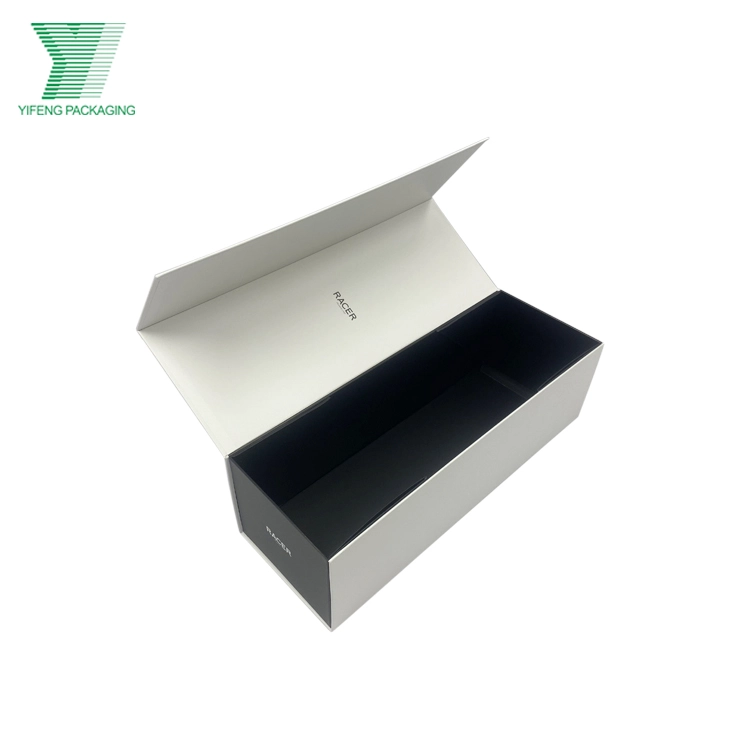
🎀 Premium foldable rigid box tailored for wig brands, hair extensions, and salon packaging.
-
🎁 Space-saving flat-pack structure paired with smooth magnetic closure and elegant interior.
-
👩 Keeps wigs in good shape, suitable for retail display, shipping, and high-end hair product gifting.
-
-
-
-

-
-
-
-
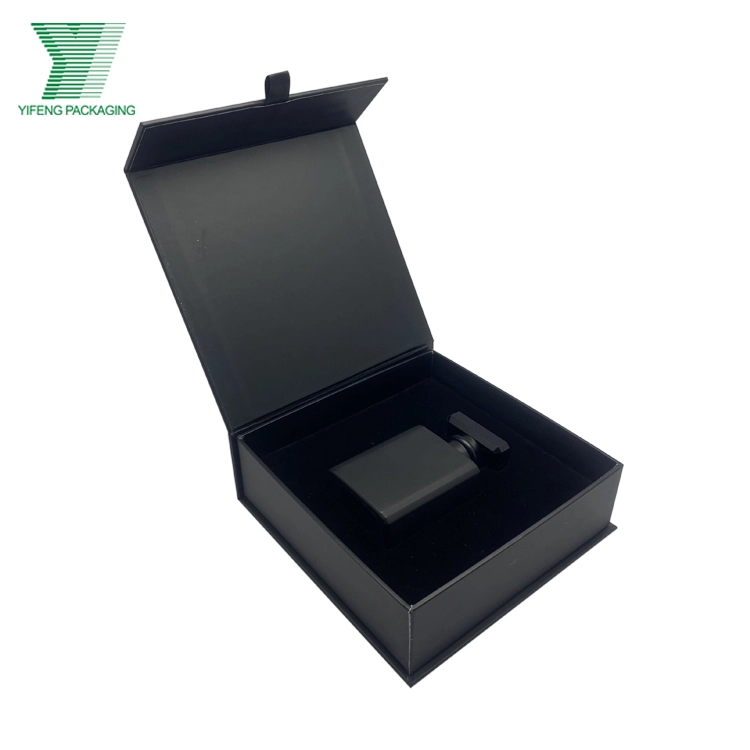
🎀 Exquisite high-end rigid magnetic boxes specially customized for premium fragrance and cosmetic brands.
-
🎁 Premium rigid cardboard paired with smooth magnetic closure for a luxurious unboxing experience.
-
👧 Perfect for designer perfumes and limited-edition scent sets to enhance brand grade and leave deep impressions.
-
-
-
Contact
Email: marketing@yfpackaging.com
Telephone: +86 020 3435 4688
Phone: +86 17818581665
Address: Room 1910, Zhongguang Building, No. 100, Middle of Jiangnan
Avenue, Haizhu District, Guangzhou City, Guangdong Province, China


Instagram
Youtube
TikTok