
How to Maintain Consistent Print Quality Across Repeat Packaging Orders?
- Why Print Consistency Fails Across Repeat Packaging Runs
- The Hidden Variables That Cause Color Drift
- The Role of Substrate Specification in Long-Term Consistency
- Operator Dependency and the Absence of Documented SOPs
- The Technical Framework for Reproducible Print Quality
- Color Management: From Pantone Specification to Press Verification
- Press Calibration and Density Control Protocols
- Finishing Consistency: Lamination, Varnish, and Embossing Standards
- Building a Quality Assurance System With Your Packaging Supplier
- What a Robust Pre-Production Approval Process Looks Like
- In-Process Inspection Checkpoints and Final QC Protocols
- Supplier Scorecards and Long-Term Quality Trending
- Why Yifeng Packaging Is the Right Partner for Consistent Quality at Scale
- Frequently Asked Questions
Maintaining consistent print quality across repeat custom packaging orders is one of the most persistent challenges I encounter when advising brand managers and procurement teams. Color drift between production runs, substrate inconsistencies, and varnish variation can silently erode brand equity — especially when your packaging solutions are the first physical touchpoint a customer has with your product. After 15 years working deep inside the custom packaging boxes industry, I can tell you that quality consistency is not an accident. It is an engineered outcome, built on documented processes, calibrated equipment, and a manufacturing partner who treats Yifeng Packaging standards as non-negotiable. Whether you are sourcing custom paper boxes for a luxury fragrance line or custom food packaging boxes for a High Quality chocolate brand, the principles I am about to share will fundamentally change how you evaluate and manage your supply chain.
Why Print Consistency Fails Across Repeat Packaging Runs
The Hidden Variables That Cause Color Drift
Most brand managers assume that once a proof is approved, every subsequent order will look identical. In practice, that assumption is dangerously optimistic. From my direct experience auditing factories across Guangdong province, I have identified three primary culprits behind color drift in repeat orders. First, ink viscosity fluctuates with ambient temperature and humidity — a factor that is rarely controlled in lower-tier facilities. Second, paper stock from different batches carries measurable differences in surface brightness and coating absorption, even when ordered from the same mill. Third, press operators who lack a standardized ink density target will make subjective adjustments that compound over time. The ISO 12647 standard for process control in offset printing exists precisely to address these variables, yet a surprising number of suppliers operate without ever referencing it.
The Role of Substrate Specification in Long-Term Consistency
I always tell clients: your color is only as stable as your substrate. When a supplier switches from one paperboard grade to another between orders — even within the same nominal grammage — the dot gain characteristics change, and your approved Pantone values shift visually. For High Quality rigid boxes, I insist on locking in a specific board grade, coating type, and brightness rating in the purchase contract. This is especially critical for custom jewelry boxes and custom gift boxes, where tactile and visual High Quality cues must remain absolutely consistent to protect brand positioning. Specifying FSC-certified boards from a named mill, rather than accepting whatever the factory has in stock, is a non-negotiable step I recommend to every serious buyer.
Operator Dependency and the Absence of Documented SOPs
One of the most underestimated risks in repeat packaging production is operator dependency. When a skilled press operator leaves a facility, and there is no documented standard operating procedure to replace their institutional knowledge, quality immediately becomes unpredictable. I have seen brands lose six months of brand-building work because a key technician changed jobs and the factory had no written ink formulation records. The solution is straightforward but requires discipline: demand that your supplier maintains a job ticket system that records ink formulations, press settings, substrate lot numbers, and approved density readings for every order. This documentation becomes the reproducibility backbone for every future reorder.
The Technical Framework for Reproducible Print Quality
Color Management: From Pantone Specification to Press Verification
Effective color management is a closed-loop system, not a one-time approval event. The workflow I recommend begins with a calibrated digital proof — ideally produced on a Pantone-certified proofing system — that establishes the legal color standard for the job. Before press approval, the operator must pull a draw-down and measure it against the target using a spectrophotometer, recording Delta E values. For brand-critical colors, I set a Delta E tolerance of no more than 2.0, which is the threshold below which most human observers cannot detect a difference. CTP (Computer-to-Plate) typesetting eliminates film-based variables and ensures that the dot structure on the plate is mathematically identical to the approved file every single time. This is a baseline capability I look for in any custom packaging manufacturer China I recommend to clients.
Press Calibration and Density Control Protocols
A press that is not regularly calibrated is a liability. I advise buyers to ask potential suppliers for their press calibration schedule and to request the last three calibration reports before signing a contract. Density control bars printed on the waste margins of each sheet allow the press operator to monitor ink density in real time and make micro-adjustments without guessing. When combined with a closed-loop densitometry system, this approach can hold color variation within ±0.05 density units across an entire production run of 50,000 sheets. For custom cardboard boxes and custom paper bags destined for retail environments, where multiple SKUs sit side by side on a shelf, this level of precision is not a luxury — it is a commercial necessity.
Finishing Consistency: Lamination, Varnish, and Embossing Standards
Print consistency does not end when the sheet leaves the press. Soft-touch lamination, UV spot varnish, and hot foil stamping all introduce additional variables that can make two otherwise identical print runs look and feel completely different. Lamination film thickness, adhesive cure temperature, and foil stamping pressure must all be logged and repeated precisely. I have personally rejected entire shipments of custom paper tube products because the soft-touch laminate had a noticeably different sheen level compared to the approved sample — a problem caused by a supplier switching laminate film suppliers without notification. Contractually requiring advance notice of any material substitution, combined with a pre-production sample approval step, is the practical safeguard that prevents this scenario.
Building a Quality Assurance System With Your Packaging Supplier
What a Robust Pre-Production Approval Process Looks Like
The most effective quality assurance systems I have helped brands implement share a common architecture: they front-load the approval effort rather than inspecting problems after they occur. A robust pre-production process includes a digital proof sign-off, a physical press proof on the actual production substrate, a material specification lock-in document, and a signed job ticket that travels with the order through every production stage. According to research published by the FINAT Label and Flexible Packaging Association, brands that implement structured pre-production approval workflows reduce reprint rates by up to 40% compared to those relying on informal communication. That statistic aligns precisely with what I observe in the field.
In-Process Inspection Checkpoints and Final QC Protocols
Waiting until a job is complete to inspect it is a recipe for expensive surprises. I recommend requiring your supplier to implement at minimum three in-process inspection checkpoints: after the first 500 sheets off press, at the midpoint of the run, and at the final 500 sheets. Each checkpoint should include a density reading, a visual comparison against the approved press proof under standardized D50 lighting, and a dimensional check. For custom food packaging boxes that must meet food-safety compliance requirements, an additional check for ink migration and food-safe ink certification is mandatory. The FDA guidelines on food contact packaging materials provide a clear framework for what documentation buyers should require from their suppliers.
Supplier Scorecards and Long-Term Quality Trending
One practice that separates sophisticated procurement teams from reactive ones is the use of supplier scorecards. I advise clients to track color accuracy, on-time delivery, defect rate, and responsiveness to quality issues across every order, and to share this data with their supplier quarterly. This creates a shared accountability culture and gives the supplier concrete performance data to act on. Over time, the scorecard data also reveals systemic trends — for example, a supplier whose defect rate creeps up every summer likely has an air conditioning problem in their pressroom. Catching this pattern early allows you to address it before it becomes a brand crisis.
| Quality Control Factor | Informal / Unstructured Approach | Structured SOP-Based Approach |
|---|---|---|
| Color Consistency (Delta E) | Delta E 4.0–8.0 (visible variation) | Delta E ≤ 2.0 (imperceptible to human eye) |
| Substrate Specification | Supplier selects available stock | Locked-in board grade, mill, and brightness rating |
| Ink Formulation Records | Operator memory / informal notes | Documented job ticket with spectrophotometer readings |
| Pre-Production Approval | Digital proof only | Digital proof + physical press proof on production substrate |
| In-Process Inspection | Final inspection only | 3 checkpoints: start, midpoint, end of run |
| Finishing Consistency | Visual judgment by operator | Logged lamination temperature, pressure, and film lot number |
| Reprint Rate | Industry average: 8–12% | Best-in-class: below 2% |
| Supplier Accountability | Reactive, complaint-driven | Quarterly scorecard with shared performance data |
Why Yifeng Packaging Is the Right Partner for Consistent Quality at Scale
Everything I have described above — the documented SOPs, the calibrated press environments, the locked-in substrate specifications, the multi-checkpoint QC process — is precisely the operational architecture that Yifeng Packaging has built over more than three decades of manufacturing excellence. Established in 1990, Guangzhou Yifeng Printing & Packaging Co., Ltd. is a premier custom packaging manufacturer in China that has spent over 30 years engineering the systems that make print consistency a repeatable, guaranteed outcome rather than a hopeful aspiration.
What sets Yifeng apart in the competitive landscape of custom packaging manufacturers in China is the dual-factory structure. The Yifeng Multi-Color Printing Factory handles all press operations with CTP typesetting and Pantone-calibrated printing lines, while the Yifeng Paper Handicraft Factory manages precision assembly, lamination, and finishing. This separation of disciplines means that each team is a specialist in their domain, and the handoff between printing and finishing is governed by documented transfer protocols — not informal verbal communication. Every project moves through a 12-step SOP that covers everything from pre-press file verification to final carton packing, ensuring that the 10,000th box in an order looks identical to the first.
For brands sourcing custom gift boxes, custom jewelry boxes, or custom food packaging boxes, the material foundation matters as much as the process. Yifeng uses FSC-certified paperboards ranging from 1200gsm to 1800gsm rigid boards, sourced from certified mills, which means the substrate specification is locked and traceable across every reorder. Food-safe inks that comply with international migration standards are standard specification for all custom food packaging boxes and custom paper bags destined for consumable products. This is not an optional upgrade — it is the baseline at Yifeng.
I have personally observed how Yifeng's OEM and ODM capabilities serve international clients who need their brand standards honored without compromise. Whether the requirement is a specific Pantone color for a luxury wine box, a precise soft-touch laminate sheen for a High Quality custom cardboard box, or a registered hot-foil stamp on a custom paper tube, the team at Yifeng has the equipment, the documentation, and the institutional knowledge to reproduce it identically across multiple production runs separated by months or even years. For procurement managers who have been burned by color drift and substrate inconsistencies from lower-tier suppliers, this level of process maturity is genuinely transformative.
If you are evaluating a custom packaging manufacturer China partner for your next product launch or reorder cycle, I encourage you to request Yifeng's job ticket documentation and press calibration records as part of your supplier qualification process. A manufacturer who is proud of their processes will share this data without hesitation. Reach out directly at marketing@yfpackaging.com to begin the conversation.
Ready to eliminate print inconsistency from your packaging supply chain for good? Contact Yifeng Packaging today to request samples, review our 12-step SOP documentation, and discover how our custom packaging boxes can protect and elevate Yifeng Packaging across every order.
Frequently Asked Questions
How do I ensure color consistency between repeat custom packaging orders?
Color consistency requires a closed-loop color management system. This means locking in a Pantone-certified color standard, using CTP plate-making to eliminate film variables, requiring spectrophotometer Delta E readings at press approval, and insisting that your supplier maintains documented ink formulation records for every job. Setting a maximum Delta E tolerance of 2.0 in your purchase contract is a practical and enforceable standard.
What should I look for when qualifying a custom packaging manufacturer in China for repeat orders?
When qualifying a custom packaging manufacturer in China, request their press calibration schedule and the last three calibration reports, ask to see a sample job ticket that shows how ink formulations and substrate lot numbers are recorded, verify that they use CTP typesetting rather than film-based plate-making, and confirm that they have a documented multi-checkpoint in-process inspection protocol. A supplier who cannot provide this documentation is a consistency risk.
Why does my packaging look different between orders even when I use the same approved artwork file?
Color variation between orders using the same artwork file is almost always caused by one or more of these factors: substrate batch variation (different paper brightness or coating absorption), ink viscosity changes due to temperature or humidity fluctuations, press operator adjustments made without reference to a documented density target, or changes in lamination film or varnish supplier. Locking in substrate specifications and requiring documented ink density records for every run are the most effective corrective actions.
What is the importance of FSC-certified materials in repeat packaging production?
FSC-certified materials ensure that the paperboard you specify comes from a traceable, sustainably managed source. Beyond the environmental and compliance benefits, FSC certification from a named mill means that the board's physical properties — brightness, surface coating, and absorption characteristics — are consistent and auditable. This traceability directly supports color and print consistency across repeat orders, because you are not absorbing the variability of uncertified mixed-source stock.
How many quality inspection checkpoints should a reliable packaging supplier have?
A reliable packaging supplier should implement at minimum three in-process inspection checkpoints during a production run: after the first 500 sheets off press to catch setup errors early, at the midpoint of the run to identify any drift, and at the final 500 sheets to confirm the run finished within specification. Each checkpoint should include a density reading, a visual comparison against the approved press proof under D50 standardized lighting, and a dimensional check. Final QC before shipment should also include a carton-level sampling inspection.
What finishing processes most commonly cause inconsistency in repeat packaging orders?
The finishing processes most prone to causing inconsistency between repeat orders are soft-touch lamination (where film thickness and adhesive cure temperature must be logged), UV spot varnish (where viscosity and UV lamp intensity affect gloss level), and hot foil stamping (where stamping pressure and temperature directly affect foil adhesion and sharpness). Requiring your supplier to log the specific film lot number, lamination temperature, and press settings for every finishing run — and to notify you before making any material substitutions — is the most effective safeguard.

-
-
-
-
-
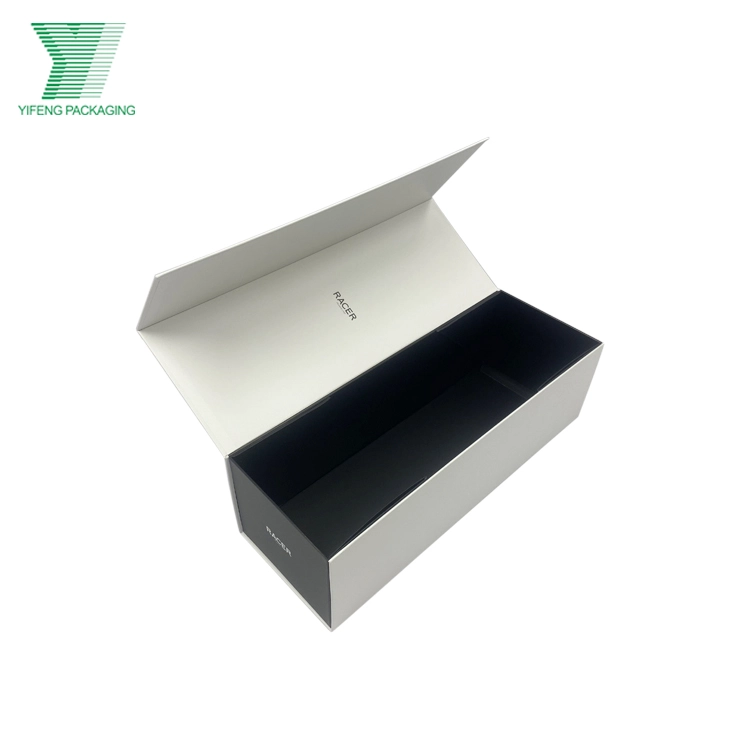
🎀 Premium foldable rigid box tailored for wig brands, hair extensions, and salon packaging.
-
🎁 Space-saving flat-pack structure paired with smooth magnetic closure and elegant interior.
-
👩 Keeps wigs in good shape, suitable for retail display, shipping, and high-end hair product gifting.
-
-
-
-

-
-
-
-
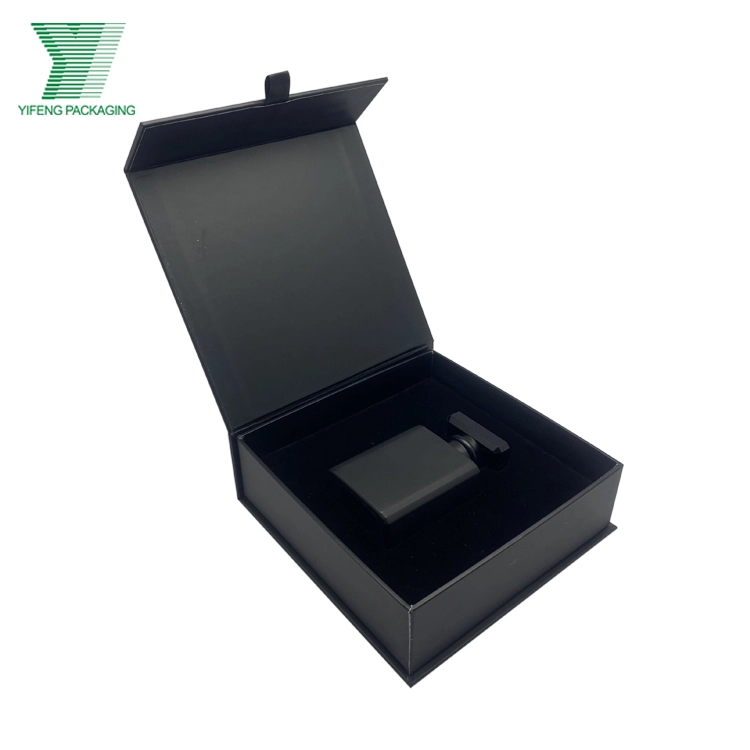
🎀 Exquisite high-end rigid magnetic boxes specially customized for premium fragrance and cosmetic brands.
-
🎁 Premium rigid cardboard paired with smooth magnetic closure for a luxurious unboxing experience.
-
👧 Perfect for designer perfumes and limited-edition scent sets to enhance brand grade and leave deep impressions.
-
-
-
Contact
Email: marketing@yfpackaging.com
Telephone: +86 020 3435 4688
Phone: +86 17818581665
Address: Room 1910, Zhongguang Building, No. 100, Middle of Jiangnan
Avenue, Haizhu District, Guangzhou City, Guangdong Province, China


Instagram
Youtube
TikTok