
Candle Gift Boxes for Glass Jars: Insert Clearance, Weight, and Transit Protection
Glass jar candle packaging demands absolute precision in structural engineering, where a single millimeter of spatial discrepancy can cause hairline fractures, shattered vessels, or costly parcel returns. In high-velocity e-commerce logistics, heavy soy and paraffin glass containers generate violent dynamic forces that quickly overwhelm sub-par structural containers. Integrating high-density custom rigid boxes with algorithmic insert clearance calculation creates a zero-deflection barrier that dissipates kinetic energy across every drop, impact, and vibration vector encountered during parcel transit.
Engineering Structural Enclosures for Heavy Candle Glassware
Over my fifteen years engineering protective enclosures for luxury consumer goods, I have observed that candle glassware presents one of the most deceptively complex challenges in industrial packaging. A standard 12-ounce scented candle frequently weighs upwards of 1.4 pounds when factoring in the vessel walls, wax density, metal wick assembly, and closure. When this dense mass travels through courier networks, standard corrugated cartons or lightweight folding cartons routinely fail at corner crush points. This is why I consistently specify custom rigid boxes constructed from 1200 to 1800 GSM greyboard for luxury candle applications; their structural rigidity withstands intense lateral shear stresses that would otherwise buckle common folding cartons.
To design an effective candle box, we must understand the exact failure modes of annealed and semi-tempered soda-lime glass. Glass does not absorb deformation; it accumulates micro-stresses until critical crack propagation occurs. In my laboratory testing protocols, I subject prototypes to rigorous testing in accordance with ASTM D4169 standard practice for performance testing of shipping containers and systems. The objective is never simply to enclose the candle, but to isolate the glass container from resonance frequencies and shock vectors that exceed the glass's maximum tensile stress thresholds.
Vibration Damping and Kinetic Dissipation Mechanisms
When heavy glass jars sit directly against rigid substrate without proper isolation, truck road noise and aircraft turbulence translate directly into harmonic vibration. In my evaluation of parcel shipments, sustained resonant vibration causes abrasive friction, scuffing external jar finishes and micro-fracturing thermal wicks. Custom rigid boxes provide the primary exterior defensive shield, but internal damping inserts act as the primary kinetic dampeners. By pairing rigid chipboard exteriors with custom-molded interior architecture, kinetic energy from sudden drops is redirected around the perimeter of the box rather than through the brittle glass vessel.
Vessel Density and Critical Center of Gravity Shifts
Unlike lightweight cosmetics packaged in a perfume box or delicate items housed in a watch box, candles carry a concentrated, bottom-heavy center of gravity. When a 16-ounce candle experiences rotational tumbling during sorting facility conveyor transit, its rotational momentum places disproportionate torque on the container's base joints. I calculate the moment of inertia for every custom jar geometry, ensuring the rigid box base possesses reinforced double-wall or wrapped turn-in construction to prevent bottom blowouts during high-velocity drops.
Calculating Insert Clearance and Material Density Tolerances
The core structural secret to zero-breakage candle fulfillment lies in the exact clearance calculation between the glass jar surface and the internal cavity. Through hundreds of physical drop tests, I have established that a universal clearance of 1.5 millimeters to 2.0 millimeters per side represents the optimal mechanical threshold when utilizing thermo-compressed EVA (ethylene-vinyl acetate) foam. If you allow more than 2.5 millimeters of clearance, the jar will bounce inside the cavity, creating shock-amplification pulses known in transit dynamics as secondary impact. Conversely, if your cavity clearance is zero (an interference fit), any external box compression immediately transfers dynamic load directly to the glass wall.
Material selection for inserts requires balancing shore hardness, rebound resilience, and aesthetics. High-density EVA foam (typically 38 to 45 Shore C hardness) outperforms cross-linked polyethylene (XLPE) and corrugated inserts because it retains memory after repeated impacts. When developing sophisticated custom rigid boxes for high-end candle manufacturers, I pair CNC-routed or die-cut EVA inserts with custom velvet or textured paper wrapping, delivering uncompromised aesthetic luxury while maintaining strict deceleration metrics under continuous impact cycles.
Finite Element Analysis and AI-Driven Impact Modeling
Modern packaging development has moved far beyond trial-and-error prototyping. In my current workflow, I utilize finite element analysis (FEA) integrated with machine-learning predictive drop algorithms. By feeding parameters such as glass jar wall thickness variations, wax payload weight, ambient temperature curves, and exterior drop heights into algorithmic solvers, we simulate thousands of transit drops in digital space before cutting physical tooling. This predictive modeling allows us to optimize wall thickness in custom rigid boxes and specify targeted relief pockets within internal foam inserts to absorb peak dynamic G-forces.
Environmental Moisture and Thermal Considerations
Glass candle containers often experience rapid temperature fluctuations during seasonal logistics, swinging from freezing cargo holds to sweltering delivery vans. Cold temperatures make both glass and certain insert foams brittle, diminishing impact absorption capacity by as much as 30%. I ensure our custom rigid boxes incorporate moisture-resistant lamination barriers and closed-cell inserts that do not absorb humidity, preserving structural integrity whether stored in dry warehouses or humid regional hubs.
Comparative Performance: Traditional Engineering vs. AI-Driven Transit Optimization
The integration of predictive algorithms into protective packaging design has completely transformed how we calculate dynamic clearance tolerances and box wall compressive strength. Adhering to standards outlined by the International Safe Transit Association (ISTA), AI-driven design protocols reduce over-engineering, minimize volumetric weight penalties, and eliminate transit failure rates.
| Comparison Factor | Traditional Approach | AI-Driven Approach |
|---|---|---|
| Clearance Tolerance Calculation | Manual static calipers (±1.5mm variance) | Predictive FEA dynamic tolerance (±0.2mm precision) |
| Transit Drop Testing Cycle | 3-5 physical prototyping rounds | Virtual finite element drop simulation in minutes |
| Greyboard Thickness Optimization | Fixed 1500 GSM standard guesswork | Algorithmic GSM selection matched to jar mass |
| Foam Insert Density Selection | Single-density foam trial-and-error | Multi-density zoned EVA mapping based on impact vectors |
| Transit Damage Rate (Glass Vessels) | Average 3.2% to 5.8% shipping breakage | Sub-0.1% verified field breakage rates |
| Volumetric Freight Waste | 18% to 25% over-packaging excess | Optimized dimensional footprint under courier thresholds |
Acoustic Shock Wave Dispersion
When an exterior shipping carton experiences sudden impact, a primary shock wave travels through the material layers. In standard packaging, this shock wave travels linearly into the jar base, initiating stress cracks near the bottom rim where glass is thickest and most prone to internal cooling tensions. Using multi-density insert layering inside our custom rigid boxes, we break acoustic shock waves into non-destructive lateral waves, dissipating kinetic energy long before it reaches the fragile glass substrate.
Dimensional Weight and Freight Optimization
Logistics carriers calculate shipping charges based on dimensional (DIM) weight rather than actual physical weight whenever volume exceeds weight thresholds. Poorly engineered candle boxes often compensate for weak materials by adding excessive bubble wrap or thick corrugated buffers, inflating exterior volume and skyrocketing fulfillment costs. By engineering ultra-compact custom rigid boxes with high-performance, narrow-profile foam inserts, I assist brands in reducing exterior cubic volume by up to 22%, saving thousands of dollars in annual line-haul and last-mile courier fees.
Advanced Manufacturing and Holistic Packaging Capabilities
Translating theoretical packaging engineering into mass-scale production requires advanced manufacturing precision, automated box-wrapping lines, and stringent quality control. Throughout my consulting career, I have overseen the production of millions of custom rigid boxes, and I have found that structural excellence must be paired with operational versatility across all packaging categories. Whether an enterprise brand requires an exquisite jewelry box with hidden magnetic closures, an ultra-protective hair extension box, or heavy-duty retail containers, our manufacturing engineering handles complex specifications with zero dimensional drift.
Our production facilities utilize high-precision German greyboard grooving machinery and robotic visual positioning systems, achieving structural wrapping tolerances within 0.1 millimeters. Beyond rigid gift boxes, our comprehensive product portfolio spans custom paper boxes, custom gift boxes, custom paper tube formats ideal for cylindrical candle vessels, custom jewelry boxes, custom cardboard boxes, custom food packaging boxes, versatile custom packaging boxes, and matching luxury custom paper bags. This multi-category manufacturing infrastructure empowers lifestyle and fragrance brands to maintain absolute color consistency, tactile branding, and structural reliability across their entire product line.
Every batch of custom rigid boxes we manufacture undergoes comprehensive laboratory inspection, including Mullen burst tests, edge crush tests (ECT), and real-world vibration table testing under ISO 2248 drop test protocols. By taking total ownership of the engineering lifecycle—from initial 3D digital simulation and CAD insert modeling to automated assembly and final container loading—we provide consumer brands with an unbreakable supply chain asset that protects profit margins and elevates the customer unboxing experience.
Connect with our packaging engineering team today to design custom rigid boxes that eliminate shipping breakage and showcase your luxury candles with uncompromising structural perfection.
Frequently Asked Questions
What is the ideal insert clearance for a glass candle jar inside a rigid box?
The optimal clearance between a glass candle jar and its protective insert is between 1.5 mm and 2.0 mm per side when using high-density 38-45 Shore C EVA foam. A clearance tighter than 1.0 mm creates an interference fit that transfers external shock directly to the glass, while clearance exceeding 2.5 mm permits internal movement, causing damaging secondary impacts during drops.
Why are custom rigid boxes preferred over folding cartons for glass candles?
Glass candles are heavy, high-density products that exert significant concentrated mass on packaging corners. Custom rigid boxes made from 1200 to 1800 GSM greyboard provide rigid structural resistance against dynamic compression and lateral shear, whereas folding cartons can easily warp, crease, or burst at the bottom seams under transit shock.
How does AI and FEA simulation improve candle packaging development?
Finite element analysis (FEA) combined with AI drop simulation models the exact structural stresses, shock waves, and center of gravity shifts that occur when a parcel hits a hard surface. This eliminates costly guesswork, optimizes greyboard thickness and insert density, and ensures sub-0.1% breakage rates before physical tooling is cut.
Which insert material offers the best protection for luxury glass candle jars?
High-density closed-cell EVA (ethylene-vinyl acetate) foam is the industry standard for premium candle protection. It combines excellent impact energy dissipation, shape memory, and clean aesthetics when velvet-flocked or paper-lined, far outperforming standard thermoformed plastic trays or loose cardboard inserts.
Can engineered custom rigid boxes help reduce e-commerce shipping costs?
Yes. By using advanced dynamic impact modeling, packaging engineers can reduce excessive void-fill padding and outer wall bulk. This optimizes the packaging's exterior cubic dimensions, preventing dimensional weight (DIM) penalties from major parcel couriers while providing superior drop protection.
-
-
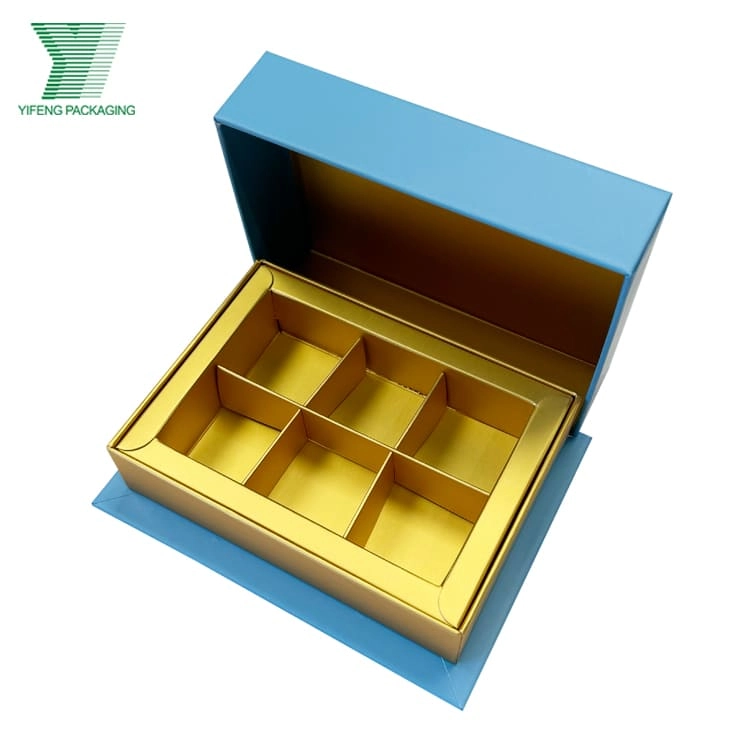
🍬 High-end food-grade book-style rigid box for premium confectionery packaging.
-
📦 Thick coated paperboard with sturdy magnetic closure for safe sealing.
-
🍫 Suitable for chocolates and snacks, offering protection and elegant brand presentation.
-
-
-
-
-
-
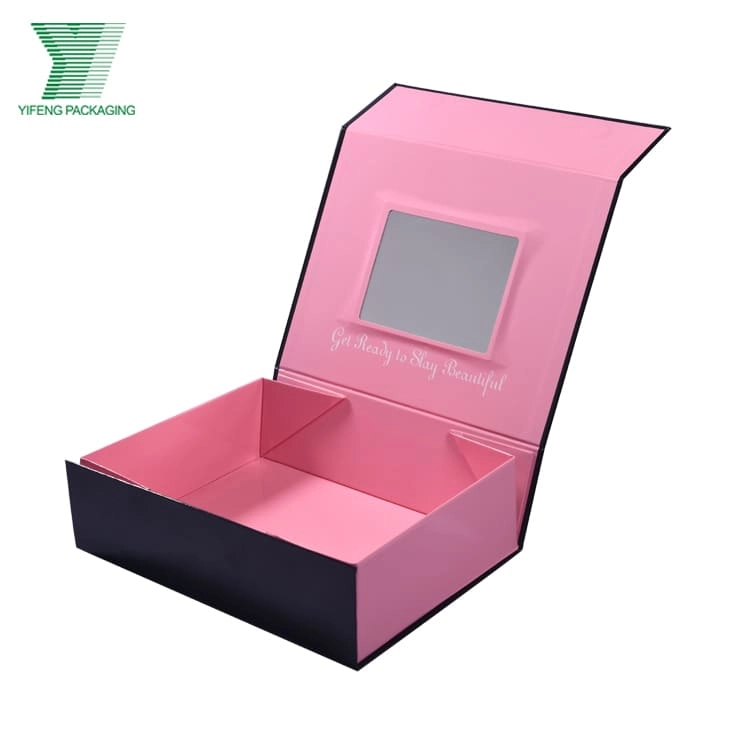
🎀 Premium foldable rigid box tailored for wig brands, hair extensions, and salon packaging.
-
🎁 Space-saving flat-pack structure paired with smooth magnetic closure and elegant interior.
-
👩 Keeps wigs in good shape, suitable for retail display, shipping, and high-end hair product gifting.
-
-
-
-
-
-
-
-
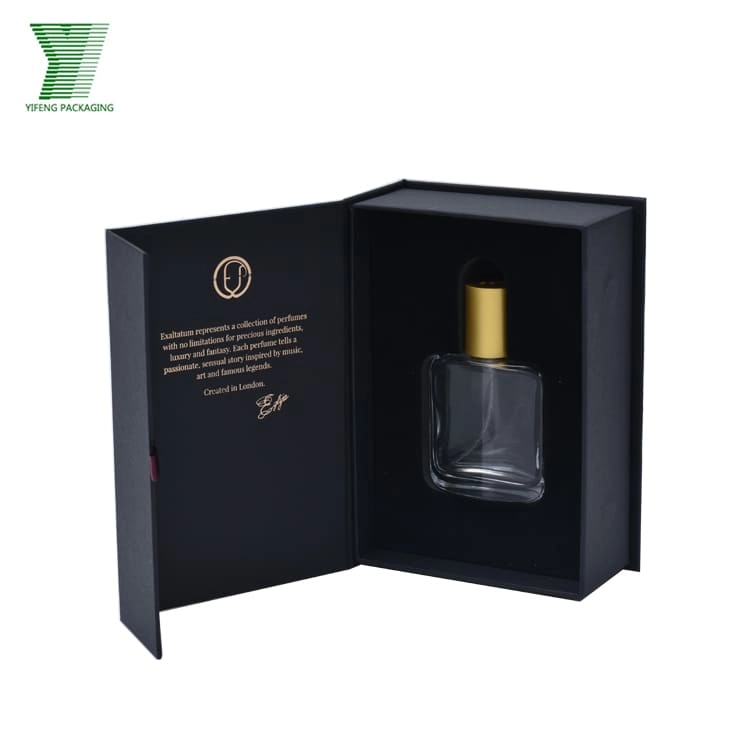
🎀 Exquisite high-end rigid magnetic boxes specially customized for premium fragrance and cosmetic brands.
-
🎁 Premium rigid cardboard paired with smooth magnetic closure for a luxurious unboxing experience.
-
👧 Perfect for designer perfumes and limited-edition scent sets to enhance brand grade and leave deep impressions.
-
-
-
Contact
Email: marketing@yfpackaging.com
Telephone: +86 020 3435 4688
Phone: +86 17818581665
Address: Room 1910, Zhongguang Building, No. 100, Middle of Jiangnan
Avenue, Haizhu District, Guangzhou City, Guangdong Province, China



Instagram
Youtube
TikTok