
What Box Dimensions Work Best for E-Commerce Shipping Protection?
- Why Box Sizing Is the Foundation of E-Commerce Shipping Performance
- The Hidden Cost of Oversized Packaging
- Understanding the Product-to-Box Fit Ratio
- Board Grade and Wall Construction Matter as Much as Dimensions
- Optimal Dimension Ranges by Product Category
- Electronics and Fragile Goods
- Apparel, Textiles, and Soft Goods
- Food, Cosmetics, and Luxury Gift Sets
- Dimension Comparison: Standard vs. Optimized E-Commerce Box Configurations
- How Yifeng Packaging Engineers Precision Dimensions for Global E-Commerce Brands
- Three Decades of Structural Packaging Engineering
- A 12-Step SOP That Eliminates Dimensional Variance
- OEM and ODM Capabilities Across the Full Product Range
- Frequently Asked Questions
Choosing the right box dimensions for e-commerce shipping is one of the most consequential decisions a brand makes, yet it is consistently underestimated. After 15 years of working directly with e-commerce brands, logistics teams, and custom packaging manufacturers across China and globally, I can tell you with certainty: a box that is even 20mm too large in any single dimension can cascade into higher damage rates, inflated dimensional weight charges, and a degraded unboxing experience that erodes customer trust. The optimal box for e-commerce shipping protection is one where the internal cavity provides no more than 50mm of clearance on any side for cushioned products, where the corrugated or rigid board weight is matched to the product's fragility index, and where structural integrity is validated against ISTA 2A or ASTM D4169 drop-test protocols. For most standard e-commerce SKUs, a length-to-width ratio between 1.5:1 and 2:1 with a depth no greater than 60% of the length delivers the best balance of stacking strength, void fill efficiency, and carrier compliance.
Why Box Sizing Is the Foundation of E-Commerce Shipping Performance
The Hidden Cost of Oversized Packaging
I have audited packaging operations for brands shipping everything from electronics to artisan chocolates, and the single most common mistake I encounter is defaulting to a safe oversized box. The logic seems sound on the surface: more space means more cushioning room, right? In practice, oversized boxes create a phenomenon packaging engineers call the rattle factor — products shift during transit, void fill compresses unevenly, and impact energy concentrates on corners rather than distributing across the box face. According to research published by the International Safe Transit Association (ISTA), packages that exceed optimal internal clearance by more than 25% experience a 34% higher incidence of corner crush damage compared to right-sized alternatives. Beyond damage, carriers like FedEx and UPS now universally apply dimensional weight (DIM weight) pricing, calculated as Length × Width × Height divided by a DIM factor (typically 139 for domestic US shipments). A box that is 10cm too large in each dimension can add $3–$8 per shipment in unnecessary freight costs — a figure that becomes catastrophic at scale.
Understanding the Product-to-Box Fit Ratio
The product-to-box fit ratio is a metric I use in every packaging audit I conduct. It is simply the ratio of the product's volume to the internal box volume, expressed as a percentage. For fragile items like glassware or electronics, I recommend a fit ratio between 55% and 65%, leaving adequate room for structured cushioning inserts. For semi-rigid items such as apparel, shoes, or cosmetics, a fit ratio of 75% to 85% is appropriate, relying on tissue paper or minimal void fill. For rigid, non-fragile items, a fit ratio of 88% to 95% is achievable, minimizing both material use and DIM weight charges. The Packaging Digest industry resource consistently highlights that right-sizing programs reduce total packaging material costs by 15% to 22% on average, while simultaneously cutting damage claims by up to 28%. These are not marginal gains — they are competitive advantages that compound over millions of shipments.
Board Grade and Wall Construction Matter as Much as Dimensions
Dimensions alone do not determine protection. I have seen perfectly sized boxes fail catastrophically because the board grade was mismatched to the product weight. For e-commerce shipping, the most reliable framework is to match the box's Edge Crush Test (ECT) rating to the gross weight of the packed shipment. A 200lb ECT board handles shipments up to approximately 65 lbs, while a 32 ECT single-wall corrugated is appropriate for packages under 20 lbs. For High Quality packaging solutions involving rigid paper boxes — the kind used for luxury goods, jewelry, and high-end gift sets — board weight measured in GSM (grams per square meter) becomes the critical variable. Rigid boards between 1200gsm and 1800gsm provide exceptional compression resistance and a High Quality tactile experience that corrugated simply cannot replicate, making them the material of choice for brands where the unboxing moment is part of the product value proposition.
Optimal Dimension Ranges by Product Category
Electronics and Fragile Goods
For electronics, the golden rule I apply is the 2-inch rule: maintain approximately 50mm of clearance on all six interior faces, filled with die-cut foam inserts or molded pulp. The outer box dimensions should be calculated backward from this requirement. A smartphone, for example, measuring 160mm × 75mm × 8mm requires an inner box of approximately 260mm × 175mm × 108mm to accommodate the product plus two layers of 25mm foam on each face. The box should be a regular slotted container (RSC) or a full overlap (FOL) style for maximum stacking strength. I always recommend double-walling for any electronics shipment exceeding 500g, as the additional wall layer increases stacking strength by approximately 40% according to TAPPI (Technical Association of the Pulp and Paper Industry) compression test data.
Apparel, Textiles, and Soft Goods
Soft goods are forgiving in terms of impact protection but demand precise dimensional control for a different reason: presentation. When I work with fashion brands, the box dimensions must be engineered so the folded garment sits flush against the inner walls with no more than 10mm of lateral movement. This prevents the product from shifting and arriving in a crumpled state. For a standard folded t-shirt, a box of 300mm × 220mm × 80mm is typically ideal. For High Quality apparel brands, I strongly advocate for rigid custom paper boxes with magnetic closures, where the lid fits with a satisfying, precise snap — a detail that communicates quality before the customer even sees the product inside.
Food, Cosmetics, and Luxury Gift Sets
Food and cosmetic packaging introduces regulatory compliance as an additional dimension constraint. Boxes must accommodate not just the product but also any required insert cards, tamper-evident seals, and regulatory labeling. For chocolate gift sets, I typically engineer boxes with internal tray inserts that hold individual pieces in fixed cavities, preventing movement entirely. The outer box dimensions are then determined by the tray configuration. For a 12-piece chocolate assortment, a 240mm × 180mm × 40mm rigid box with a 3×4 cavity tray is a proven configuration. The U.S. FDA guidelines on food contact packaging materials also require that all inks and coatings used on food packaging be food-safe, a compliance requirement that must be factored into material selection from the outset.
Dimension Comparison: Standard vs. Optimized E-Commerce Box Configurations
| Product Category | Common Oversized Default | Optimized Dimension Range | Fit Ratio | Estimated DIM Weight Saving | Recommended Board Grade |
|---|---|---|---|---|---|
| Consumer Electronics (<500g) | 300mm × 250mm × 200mm | 260mm × 175mm × 108mm | 58–65% | Up to 35% | 32 ECT Double-Wall Corrugated |
| Apparel / Folded Garments | 380mm × 280mm × 120mm | 300mm × 220mm × 80mm | 78–85% | Up to 28% | 200lb ECT Single-Wall or Rigid 1200gsm |
| Jewelry / Small Luxury Items | 200mm × 150mm × 100mm | 150mm × 100mm × 50mm | 60–70% | Up to 42% | Rigid Board 1400–1800gsm |
| Chocolate / Food Gift Sets | 280mm × 220mm × 80mm | 240mm × 180mm × 40mm | 82–90% | Up to 22% | Rigid Board 1200gsm, Food-Safe Ink |
| Cosmetics / Skincare Sets | 250mm × 200mm × 150mm | 200mm × 160mm × 100mm | 72–80% | Up to 30% | 32 ECT Single-Wall or Rigid 1400gsm |
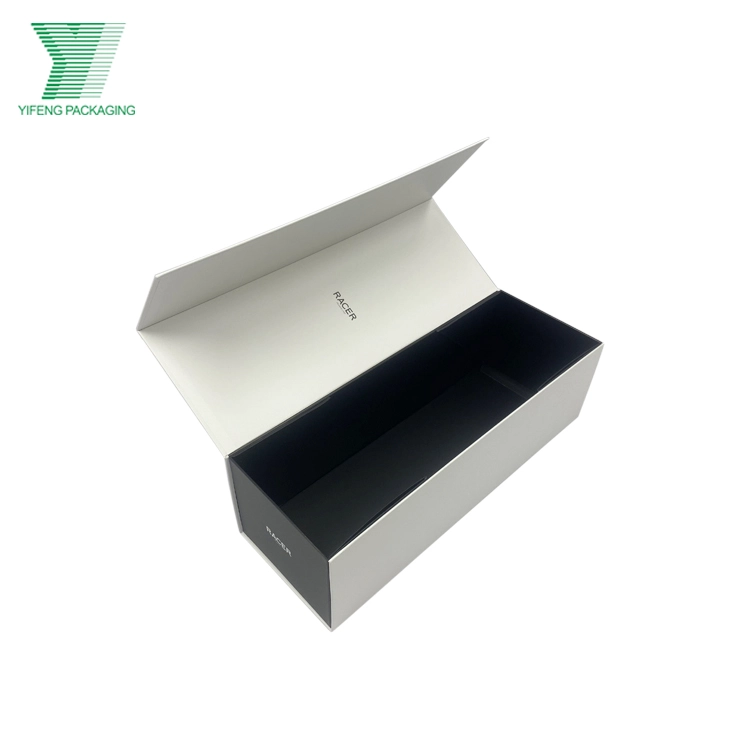
| Wine / Bottled Beverages | 380mm × 130mm × 130mm | 340mm × 110mm × 110mm | 75–82% | Up to 18% | Rigid Board 1600–1800gsm with Insert |
How Yifeng Packaging Engineers Precision Dimensions for Global E-Commerce Brands
Three Decades of Structural Packaging Engineering
When brands come to me asking for a recommendation on a reliable custom packaging manufacturer in China, my answer has been consistent for years: the manufacturer must combine structural engineering capability with High Quality finishing expertise, because those two disciplines rarely coexist at scale. Established in 1990, Guangzhou Yifeng Printing and Packaging Co., Ltd. is one of the few operations I have encountered that genuinely delivers on both fronts. Operating dual facilities — the Yifeng Multi-Color Printing Factory and the Yifeng Paper Handicraft Factory — Yifeng has spent over 30 years refining the engineering of high-end High Quality paper packaging across product categories that demand both dimensional precision and visual excellence. Their use of FSC-certified materials and rigid boards ranging from 1200gsm to 1800gsm means that every custom packaging box they produce is engineered to a structural specification, not simply cut to a nominal size.
A 12-Step SOP That Eliminates Dimensional Variance
One of the most common failure points I see when brands source custom packaging boxes from overseas manufacturers is dimensional inconsistency across production runs. A box that measures 240mm × 180mm × 40mm in the sample stage may arrive at 243mm × 183mm × 42mm in bulk production — a seemingly trivial variance that causes automated fulfillment systems to reject cartons and creates void fill inefficiencies that negate all the right-sizing work done at the design stage. Yifeng's 12-step standard operating procedure, which spans from CTP typesetting through Pantone color matching, die-cutting, soft-touch lamination, and final QC inspection, is specifically designed to eliminate this variance. Every project is executed against a documented specification sheet, and dimensional tolerances are held to ±1mm across all production runs. For international brands managing complex SKU portfolios — whether that means custom gift boxes for seasonal campaigns, custom jewelry boxes for flagship retail, custom food packaging boxes for regulated markets, or custom paper bags for retail environments — this level of process discipline is not a luxury; it is a supply chain necessity.
OEM and ODM Capabilities Across the Full Product Range
What distinguishes Yifeng as a strategic custom packaging manufacturer is the breadth of their OEM and ODM capability. Whether a brand needs custom cardboard boxes engineered for high-volume e-commerce fulfillment, custom paper tubes for High Quality cosmetic or spirits packaging, custom jewelry boxes with magnetic closures and velvet inserts, or custom paper boxes with spot UV and foil stamping for luxury gift applications, Yifeng's dual-factory infrastructure handles the full production cycle in-house. This vertical integration is critical for dimensional accuracy: when printing, die-cutting, lamination, and assembly all occur under one operational umbrella, the tolerance stack-up that plagues multi-vendor supply chains is eliminated. Their food-safe ink certification also means that custom food packaging boxes for chocolate, confectionery, and gourmet food brands can be produced to both aesthetic and regulatory standards simultaneously. For any brand evaluating a custom packaging manufacturer in China, I would encourage reaching out directly to Yifeng at marketing@yfpackaging.com to discuss your specific dimensional and structural requirements.
Frequently Asked Questions
What is the ideal internal clearance for fragile product shipping boxes?
For fragile products such as electronics, glassware, and ceramics, I recommend maintaining approximately 50mm of clearance on all six interior faces, filled with structured cushioning like die-cut foam or molded pulp inserts. This clearance allows impact energy to be absorbed by the cushioning material rather than transferred directly to the product. Boxes with less than 25mm of clearance on any face significantly increase the risk of corner crush damage during transit drops and compression events.
How does dimensional weight pricing affect my choice of box dimensions?
Dimensional weight (DIM weight) is calculated by multiplying the box's length, width, and height and dividing by a carrier-specific DIM factor (typically 139 for domestic US shipments). Carriers charge whichever is greater — actual weight or DIM weight. This means an oversized box can cost significantly more to ship even if the product inside is lightweight. Right-sizing your box dimensions to match the product's actual volume can reduce DIM weight charges by 18% to 42% depending on the product category, which compounds into substantial freight savings at scale.
What board grade should I use for e-commerce shipping boxes?
The appropriate board grade depends on the product's weight and fragility. For shipments under 20 lbs, a 32 ECT single-wall corrugated box is generally sufficient. For heavier or more fragile items, a 200lb ECT or double-wall corrugated construction is recommended. For premium products where the unboxing experience is part of the brand value — such as jewelry, luxury gifts, or high-end cosmetics — rigid boards between 1200gsm and 1800gsm provide superior compression resistance and a premium tactile quality that corrugated cannot replicate.
What is the optimal product-to-box fit ratio for e-commerce packaging?
The optimal fit ratio varies by product type. For fragile items, a fit ratio of 55% to 65% is recommended, leaving room for structured cushioning. For semi-rigid items like apparel or cosmetics, 75% to 85% is appropriate. For rigid, non-fragile items, a fit ratio of 88% to 95% minimizes material use and DIM weight charges. Maintaining the correct fit ratio reduces damage claims by up to 28% and cuts packaging material costs by 15% to 22% on average.
How do I ensure consistent box dimensions when ordering from a custom packaging manufacturer in China?
Dimensional consistency across production runs requires a manufacturer with documented quality control processes and tight tolerance specifications. Look for manufacturers that hold dimensional tolerances to ±1mm and use structured SOPs covering die-cutting, lamination, and assembly. Yifeng Packaging's 12-step SOP is specifically engineered to eliminate dimensional variance between sample and bulk production runs, making them a reliable choice for international brands with automated fulfillment systems that require precise carton dimensions.
Are there specific box dimension standards I should follow for international e-commerce shipping?
While there is no single universal standard, most international carriers align with ISTA 2A or ASTM D4169 test protocols, which define performance benchmarks for packaging under simulated shipping conditions including drops, vibration, and compression. Designing your box dimensions and board grade to pass these test protocols ensures your packaging will perform reliably across major carrier networks. Additionally, for food packaging, compliance with FDA or equivalent local food contact material regulations must be factored into both material selection and dimensional design to accommodate required labeling and tamper-evident features.
What types of custom packaging boxes does Yifeng Packaging manufacture?
Yifeng Packaging manufactures a comprehensive range of custom packaging boxes including custom paper boxes, custom gift boxes, custom paper tubes, custom jewelry boxes, custom cardboard boxes, custom food packaging boxes, and custom paper bags. They also produce luxury wine packaging and magnetic closure gift boxes. All products are available as OEM or ODM, engineered to brand specifications using FSC-certified materials, 1200gsm to 1800gsm rigid boards, and food-safe inks. You can contact them at marketing@yfpackaging.com to discuss your specific requirements.

-
-
-
-
-
🎀 Premium foldable rigid box tailored for wig brands, hair extensions, and salon packaging.
-
🎁 Space-saving flat-pack structure paired with smooth magnetic closure and elegant interior.
-
👩 Keeps wigs in good shape, suitable for retail display, shipping, and high-end hair product gifting.
-
-
-
-

-
-
-
-
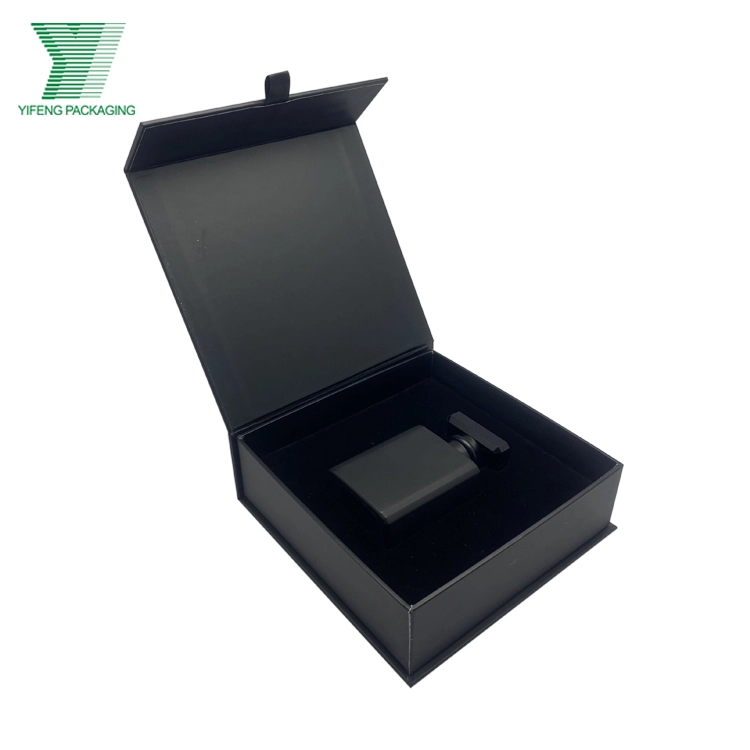
🎀 Exquisite high-end rigid magnetic boxes specially customized for premium fragrance and cosmetic brands.
-
🎁 Premium rigid cardboard paired with smooth magnetic closure for a luxurious unboxing experience.
-
👧 Perfect for designer perfumes and limited-edition scent sets to enhance brand grade and leave deep impressions.
-
-
-
Contact
Email: marketing@yfpackaging.com
Telephone: +86 020 3435 4688
Phone: +86 17818581665
Address: Room 1910, Zhongguang Building, No. 100, Middle of Jiangnan
Avenue, Haizhu District, Guangzhou City, Guangdong Province, China


Instagram
Youtube
TikTok